CM Fadnavis: Maharashtra tops nation in rooftop solar under PM Surya Ghar
Synopsis
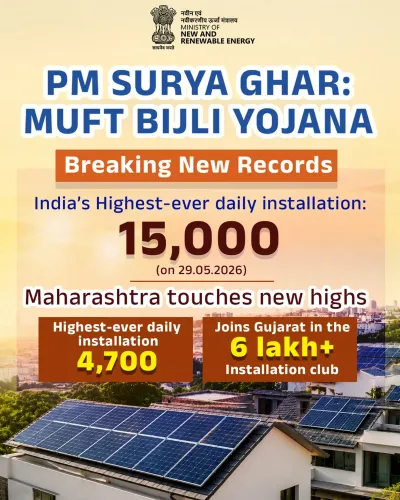
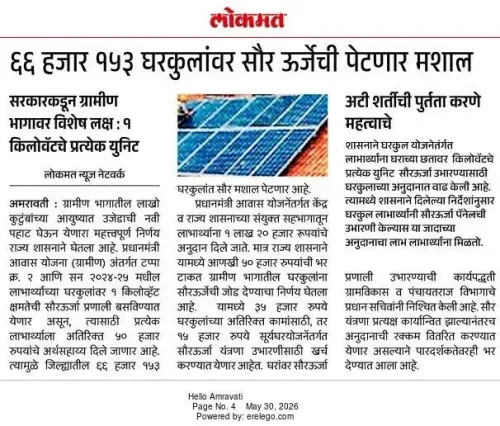
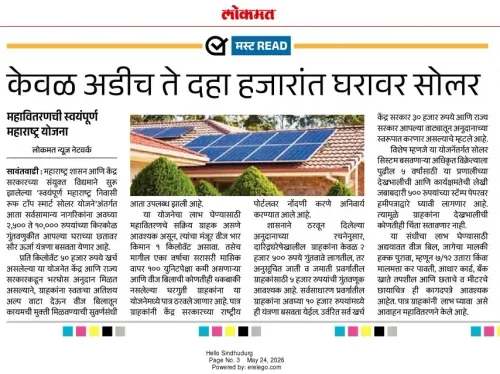
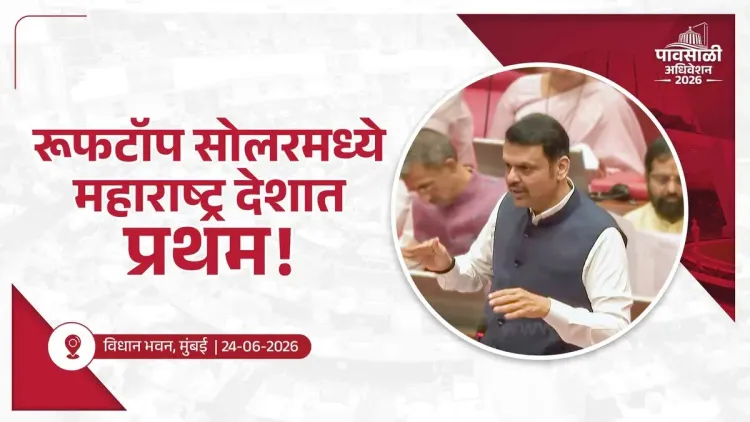
Maharashtra Chief Minister Devendra Fadnavis announced during the Vidhan Parishad Monsoon Session on 24 June 2026 that Maharashtra has topped the country in rooftop solar installations under the central PM Surya Ghar Muft Bijli Yojana, a scheme targeting one crore installations with over Rs 75,000 crore in central support.
Key Takeaways
Maharashtra has been declared the top-ranked state in India for rooftop solar installations under the PM Surya Ghar Muft Bijli Yojana .
The announcement was made by Chief Minister Devendra Fadnavis during the Monsoon Session 2026 of the Vidhan Parishad in Mumbai on 24 June 2026 .
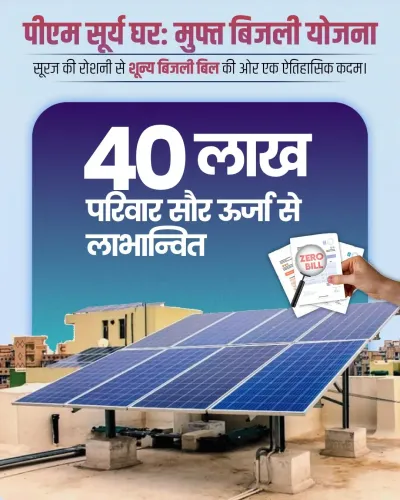
The PM Surya Ghar Muft Bijli Yojana was launched in Union Budget 2024 with a target of one crore rooftop solar installations and central outlay of over Rs 75,000 crore .
The scheme provides eligible households up to 300 units of free electricity per month through subsidised rooftop solar panels.
Maharashtra's ranking reflects the state's historically strong performance in solar capacity addition under national and state-level renewable energy programmes.
India aims for 500 GW of non-fossil energy capacity by 2030 , with distributed rooftop solar a key pillar of that target.
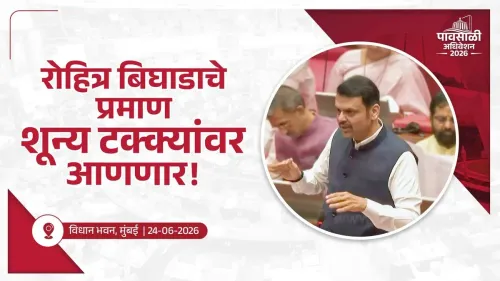
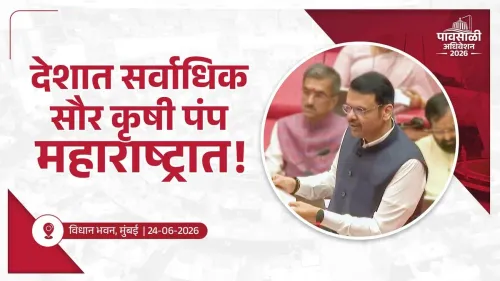
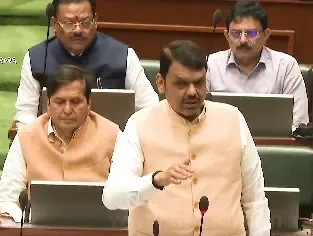
Maharashtra Chief Minister Devendra Fadnavis announced on Wednesday, 24 June 2026 that Maharashtra has secured the top position in the country for rooftop solar installations under the central scheme PM Surya Ghar Muft Bijli Yojana, making the declaration during the ongoing Monsoon Session 2026 of the Vidhan Parishad in Mumbai.
Context
Addressing the upper house of the Maharashtra legislature, Fadnavis stated — in a bilingual post mixing English and Marathi — that 'पीएम सूर्य घर मोफत वीज योजनेच्या माध्यमातून रूफटॉप सोलर बसवून घेण्याच्या बाबतीत महाराष्ट्र देशात प्रथम क्रमांकावर आहे' ('Maharashtra stands first in the country in rooftop solar installation under the PM Surya Ghar Free Electricity Scheme'). The claim positions the state as the national leader in a programme that carries significant political and policy weight for the ruling dispensation.
The Monsoon Session 2026 of the Vidhan Parishad has provided a legislative platform for the government to highlight flagship scheme achievements. Fadnavis, who has served as Chief Minister of Maharashtra since 2014 across multiple terms, has consistently championed renewable energy targets as a marker of governance performance.
Policy Backdrop
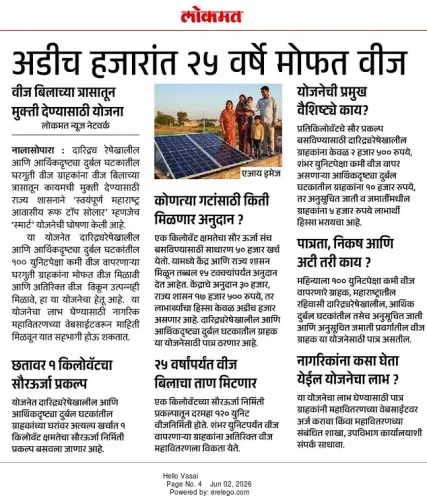
The PM Surya Ghar Muft Bijli Yojana was announced in the Union Budget 2024 with an ambitious national target of one crore rooftop solar installations and central financial support of over Rs 75,000 crore. The scheme offers subsidies enabling eligible households to receive up to 300 units of free electricity per month, making it one of the largest distributed solar programmes in the country's history.
Implementation flows through state agencies, and the scheme has generated visible inter-state competition in installation numbers tracked on a national dashboard. Maharashtra has historically ranked among the top states in solar capacity addition under both the National Solar Mission and earlier state-specific rooftop programmes, giving it a structural advantage in mobilising installers and urban households.
India's broader renewable energy policy targets 500 GW of non-fossil capacity by 2030, with distributed rooftop solar positioned alongside utility-scale parks as a critical pillar of that goal.
Stakeholders and Impact
Urban households across Maharashtra stand to benefit most directly, gaining access to subsidised solar installations and reduced electricity bills. The solar installation industry — comprising equipment manufacturers, local installers, and financing institutions — also gains from accelerated demand generated by the scheme's subsidy structure.
A top national ranking carries reputational and fiscal implications: states that demonstrate high absorption of central scheme funds and targets are typically better positioned during annual plan allocations and scheme reviews by the central government. For Fadnavis and the ruling coalition, the achievement provides a tangible data point ahead of future electoral cycles.
What's Next
Quarterly updates on the national PM Surya Ghar dashboard will be closely watched to see whether Maharashtra sustains its top position as other large states accelerate their own installation drives. Any comparative state performance data released during the remainder of the 2026 Monsoon Session could add further detail to the claim made on the floor of the Vidhan Parishad. The government is expected to follow up with district-level breakdowns and beneficiary numbers to substantiate the ranking to legislators and the public.
Point of View
The Chief Minister simultaneously credits New Delhi's policy architecture and his own government's execution — a dual dividend that reinforces the ruling coalition's narrative ahead of future electoral contests. The claim also intensifies inter-state competition on the PM Surya Ghar dashboard, which could accelerate installations nationally but may also invite scrutiny of the methodology behind state rankings. Whether the lead is sustained or contested by other large states will determine the political longevity of this particular data point.
NationPress
22 Sept 2026
Frequently Asked Questions
What is PM Surya Ghar Muft Bijli Yojana?
The PM Surya Ghar Muft Bijli Yojana is a central government scheme launched in 2024 that provides subsidies for rooftop solar installations, enabling eligible households to receive up to 300 units of free electricity per month. The scheme has a national target of one crore installations backed by over Rs 75,000 crore in central financial support.
Why has Maharashtra topped the country in rooftop solar installations?
Maharashtra Chief Minister Devendra Fadnavis attributed the top ranking to the state's performance under the PM Surya Ghar Muft Bijli Yojana. The state has historically ranked high in solar capacity addition and has strong urban infrastructure and installer networks that support rapid scheme rollout.
When did Fadnavis announce Maharashtra's top solar ranking?
Fadnavis made the announcement on 24 June 2026 during the Monsoon Session 2026 of the Maharashtra Vidhan Parishad in Mumbai.
How does PM Surya Ghar benefit households in Maharashtra?
Under the scheme, eligible households in Maharashtra can get subsidised rooftop solar panels installed and receive up to 300 units of free electricity per month, significantly reducing their electricity bills.
What is India's renewable energy target by 2030?
India aims to achieve 500 GW of non-fossil energy capacity by 2030. Distributed rooftop solar, promoted through schemes like PM Surya Ghar, is a key component of this national target alongside large utility-scale solar parks.