Maharashtra's CM Fadnavis Reveals Decrease in Electricity Rates Over Five Years
Synopsis
Maharashtra Chief Minister Devendra Fadnavis has announced an annual **1.2% reduction** in electricity rates for Mahavitaran over the next five years, thanks to innovative initiatives aimed at increasing solar energy usage and offering substantial discounts for industrial consumers.
Key Takeaways
Electricity rates for Mahavitaran to decrease by 1.2% annually.
25% discount offered to industries during solar energy hours.
Mahavitran surpasses Rs 1 lakh crore in annual revenue.
Significant investment in solar energy and infrastructure.
Industrial electricity rates projected to be the lowest in India.
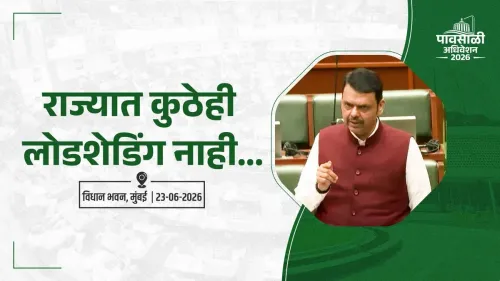
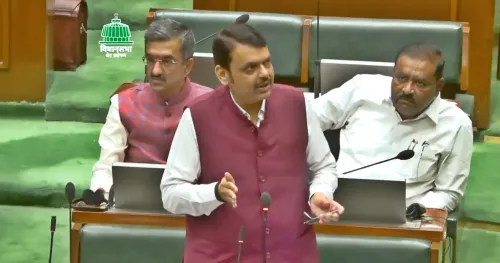
Mumbai, March 17 (NationPress) The Chief Minister of Maharashtra, Devendra Fadnavis, announced to the Legislative Assembly on Tuesday that a range of initiatives will lead to a 1.2% annual reduction in electricity rates for the state-owned power distribution entity Mahavitaran (Maharashtra State Electricity Distribution Company Limited) over the next five years, rather than an increase.
In response to a query from assembly member Chetan Tupe about rising electricity bills attributed to diminished solar energy benefits, Fadnavis, who oversees the energy department, highlighted that Mahavitran has become the largest power distribution company in India, surpassing the Rs 1 lakh crore annual revenue mark. With the growing adoption of solar energy, industries will receive a 25% discount on electricity consumed during “Solar Hours” (from 9:00 a.m. to 5:00 p.m.).
The Chief Minister detailed a revision in discount policies, rectification of regulatory inaccuracies, competitive rates for industries, relief for farmers, and incentives for battery storage. Previously, discounts were applicable during night hours (12:00 a.m. to 6:00 a.m.) when power was in surplus. However, with solar energy's rising prominence, the daytime offers the most availability. Thus, the state government has adjusted its approach to provide a 25% discount for daytime electricity use, favorably impacting industrial consumers.
Fadnavis explained that the Maharashtra Electricity Regulatory Commission (MERC) had made errors regarding power purchase projections and capital expenditures, which could have resulted in losses of approximately Rs 80,000 crore in energy charges and Rs 55,000 crore in infrastructure costs for Mahavitran. The state government flagged these discrepancies to the Commission, averting significant financial losses for the company and protecting consumers from probable price hikes.
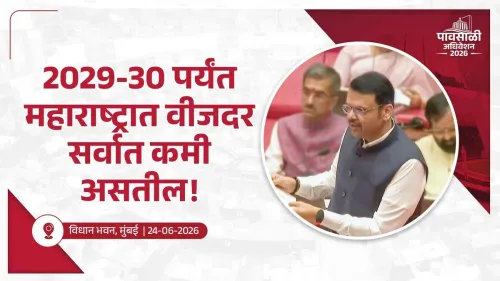
According to Fadnavis, the electricity rates for industries in Maharashtra are currently Rs 8.32 per unit, projected to decrease to Rs 7.38 per unit by the year 2029-30. Compared to the rates in Tamil Nadu (Rs 9.35) and Gujarat (Rs 8.43), Maharashtra's rates are set to be the most competitive, potentially the lowest nationwide. Initially, MERC had suggested a 30% increase for agricultural consumers while proposing lower rates for industries. Following governmental objections, the Commission retracted the previous order under its 'suo motu' powers and amended it, easing the burden on farmers.
Fadnavis also mentioned that those producing captive solar energy can benefit from discounted power around the clock when utilizing Battery Storage Systems. With the costs of battery storage dropping to between Rs 2.80 and Rs 2.90, he encouraged industries to consider this technology.
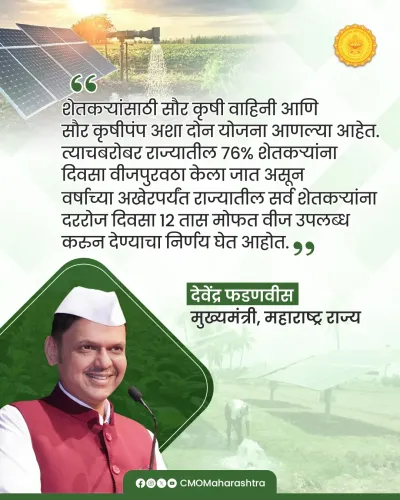
Furthermore, the CM pointed out that significant investments are being made through the 'Mukhyamantri Saur Krishi Vahini Yojana' and infrastructure enhancements. He noted that the demand for industrial electricity has surged by 23% in the past three years, clearly indicating a substantial influx of industries into the state.
Point of View
This announcement stands as a significant shift in Maharashtra's energy policy, aiming to support both industrial growth and consumer affordability. The proactive measures taken by the government reflect a balanced approach to energy management while promoting renewable sources.
NationPress
4 Oct 2026
Frequently Asked Questions
What is the expected change in electricity rates in Maharashtra?
Electricity rates for Mahavitaran are expected to decrease by **1.2% per year** over the next five years.
What discounts are available for industries using solar energy?
Industries can receive up to a **25% discount** on electricity during 'Solar Hours' from 9:00 a.m. to 5:00 p.m.
How has the Maharashtra Electricity Regulatory Commission (MERC) affected these rates?
MERC made errors in power purchase estimates, which were corrected after intervention by the state government, preventing potential losses.
What are the current and projected industrial electricity rates?
Current industrial electricity rates are **Rs 8.32 per unit**, expected to drop to **Rs 7.38 per unit** by 2029-30.
What is the Mukhyamantri Saur Krishi Vahini Yojana?
It is a government initiative aimed at enhancing solar energy usage and strengthening related infrastructure in Maharashtra.