CM Yogi Flags UP's 96 Lakh MSMEs as Economy's Engine
Synopsis
Chief Minister Yogi Adityanath highlighted that over 96 lakh MSMEs, 35,000 large industries and 22,000 startups are now driving Uttar Pradesh's economy, reflecting the state's multi-year industrial and startup policy push since 2017.
Key Takeaways
CM Yogi Adityanath cited 96 lakh-plus MSMEs , 35,000-plus large industries and 22,000-plus startups as active drivers of Uttar Pradesh's economy as of August 2026.
The UP Industrial Investment and Employment Promotion Policy 2017 and UP Startup Policy 2017 form the core policy foundation behind this growth narrative.
The One District One Product (ODOP) scheme, launched in 2018 , targeted district-level MSME expansion through product-specific value chains.
The state's strategy deliberately pairs mass-employment MSME growth with innovation-led startup development — a dual-track approach mirrored by other competitive Indian states.
Upcoming investor summits and state budget sessions will be the next checkpoints for translating these headline figures into verified investment and employment data.
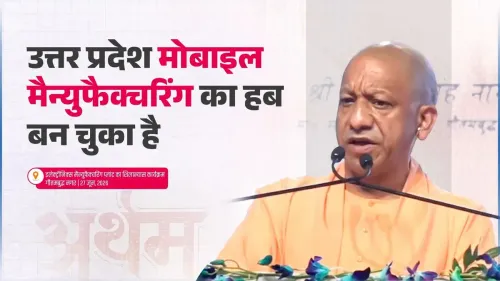
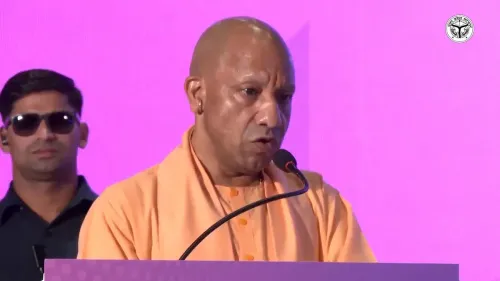
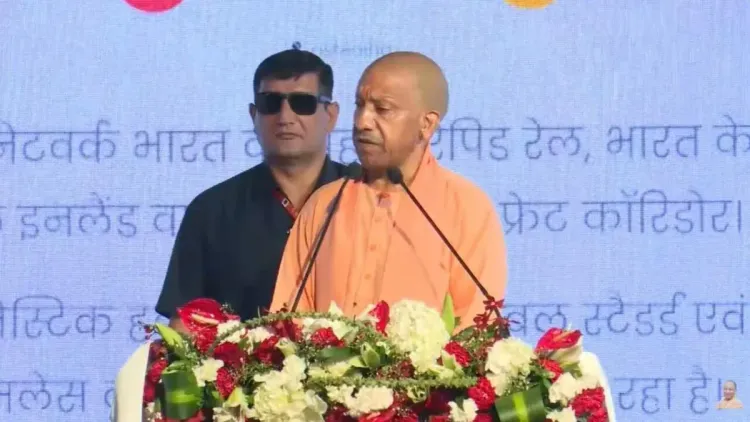
Uttar Pradesh Chief Minister Yogi Adityanath on Wednesday, August 19, 2026, pointed to a sweeping set of figures to make the case that the state's economy has been fundamentally reshaped — with over 96 lakh MSMEs, more than 35,000 large industries, and upwards of 22,000 startups now driving growth across India's most populous state.
In a post on X, the Chief Minister wrote: 'आज 96 लाख से अधिक MSMEs, 35,000 से अधिक बड़े उद्योग और 22,000 से अधिक Startups उत्तर प्रदेश की अर्थव्यवस्था को गति दे रहे हैं' — 'Today, more than 96 lakh MSMEs, 35,000-plus large industries and over 22,000 startups are powering the Uttar Pradesh economy.' The numbers, presented as a statement of current momentum, reflect the state government's sustained push to position Uttar Pradesh as a destination for both traditional manufacturing and new-age enterprise.
From Policy Blueprint to Industrial Footprint
The foundation for this growth narrative was laid through a cluster of policies introduced after 2017. The Uttar Pradesh Industrial Investment and Employment Promotion Policy 2017 set out to simplify business regulations and attract large-scale capital. The Uttar Pradesh Startup Policy 2017 followed with incentives, incubation support, and funding mechanisms designed to seed a new entrepreneurial class in a state historically associated with agriculture and small-scale trade.
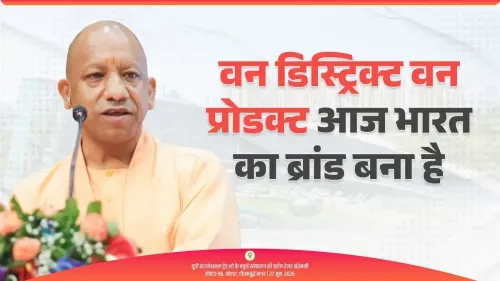
The One District One Product (ODOP) scheme, launched in 2018, added a ground-level dimension — identifying and scaling district-specific products and value chains to deepen the MSME base beyond the state's urban centres. Together, these initiatives form the policy architecture behind the figures CM Yogi cited.
The Dual Bet: MSMEs and Startups Together
What stands out in the framing is the deliberate pairing of MSMEs — the backbone of employment in Uttar Pradesh — with the startup ecosystem. MSMEs generate livelihoods at scale; startups signal innovation and attract investor attention. Highlighting both in the same breath is a conscious signal that the state is not choosing between mass employment and high-growth enterprise. It is chasing both simultaneously.
This dual strategy mirrors approaches seen across competitive Indian states, where ease-of-doing-business rankings, investor summits, and sector-specific incentives are deployed together to shift economic identity. For Uttar Pradesh — long ranked near the bottom of industrial attractiveness indices — the trajectory, if the figures hold, represents a significant repositioning.
The next test will come at the state's upcoming investor summits and in any revisions to industrial and startup policy in forthcoming budget sessions — where headline numbers will need to translate into verifiable investment flows and job data.
Point of View
However, will be independent verification of these figures and whether investment-summit commitments are converting into on-ground jobs and output at scale.
NationPress
3 Oct 2026
Frequently Asked Questions
How many MSMEs are there in Uttar Pradesh in 2026?
Chief Minister Yogi Adityanath stated on August 19, 2026 that Uttar Pradesh has more than 96 lakh MSMEs contributing to the state's economy, though these are official government figures whose independent verification is pending.
What is the One District One Product scheme in UP?
The One District One Product (ODOP) scheme was launched by the Uttar Pradesh government in 2018 to promote district-specific products and strengthen local MSME value chains across the state.
What is the Uttar Pradesh Startup Policy?
The Uttar Pradesh Startup Policy, introduced in 2017, provides incentives, incubation centre access and funding support to new ventures in the state, aiming to build a structured startup ecosystem.
How many startups are there in Uttar Pradesh?
According to Chief Minister Yogi Adityanath's post on August 19, 2026, Uttar Pradesh has over 22,000 startups, a figure attributed to the state government's sustained policy support since 2017.
What industrial policies has Yogi Adityanath introduced in Uttar Pradesh?
Key policies include the UP Industrial Investment and Employment Promotion Policy 2017, the UP Startup Policy 2017 and the One District One Product scheme of 2018, all aimed at attracting investment and expanding the state's industrial and MSME base.