CM Yogi Directs Inclusive Startup Policy Push for UP

Synopsis
Chief Minister Yogi Adityanath has directed that Uttar Pradesh's startup policy include special incentives for women, Divyangjan, transgender and economically weaker entrepreneurs, plus dedicated provisions for Purvanchal and Bundelkhand, while also calling for accelerator and investor linkages to make UP startups globally competitive.
Key Takeaways
CM Yogi Adityanath directed that special incentives be built into UP's startup policy for women entrepreneurs, Divyangjan, transgender entrepreneurs , and economically weaker sections .
Startups from Purvanchal and Bundelkhand — historically under-industrialised regions — are to receive dedicated promotional provisions.
The Chief Minister called for connecting UP startups with accelerator programmes, investors, industry bodies, and research institutions for mentorship, funding, and market access.
Uttar Pradesh's Startup Policy was first notified in 2017 and has been revised multiple times to expand its scope and beneficiary base.
The directive aligns with the national Startup India framework and the state's broader ease-of-doing-business and investment summit agenda.
Formal notification of revised policy clauses and dedicated budget allocations are the key next steps to watch.
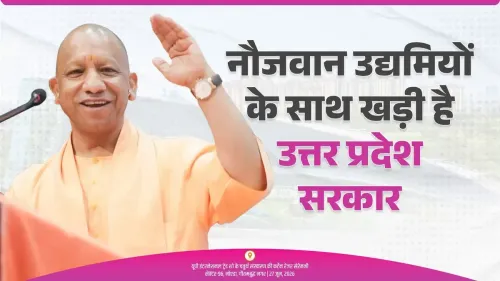
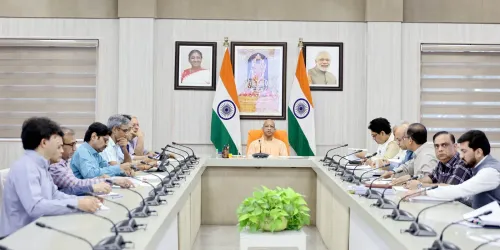
The Chief Minister's Office of Uttar Pradesh shared directions from Chief Minister Yogi Adityanath on Sunday, June 7, 2026, calling for dedicated incentives for marginalised entrepreneurs and stronger national and global linkages for the state's startup ecosystem.
Context
The Chief Minister's Office quoted CM Yogi Adityanath as saying that appropriate provisions should be included to offer vishesh protsahan ('special incentives') to women entrepreneurs, economically weaker sections, persons with disabilities (Divyangjan), transgender entrepreneurs, and startups from the Purvanchal and Bundelkhand regions. The directive signals a push to embed social inclusion directly into the state's startup policy framework rather than treating it as a supplementary measure.
The Chief Minister further stated that startups in the state should be connected with world-class accelerator programmes, investors, industry bodies, and research institutions so they can access mentorship, investment, technical collaboration, and new markets — enabling them to compete at the national and global level.
Policy Backdrop
Uttar Pradesh first notified its Startup Policy in 2017, offering fiscal incentives, single-window clearance, and incubation support for new ventures. The policy has been revised periodically; a 2018 update under the UP Electronics Manufacturing Policy introduced targeted provisions for women and SC/ST entrepreneurs.
After the 2022 assembly elections, the government announced renewed emphasis on regional balance, extending special packages to Purvanchal and Bundelkhand districts — two historically under-industrialised belts. The current directive appears to build on that trajectory, seeking to consolidate inclusion and competitiveness goals within a single revised framework.
The approach mirrors the national Startup India initiative, which similarly combines ecosystem-scaling measures with affirmative provisions for women, persons with disabilities, and entrepreneurs from backward regions. Uttar Pradesh has also hosted a series of investment summits since 2018 to attract domestic and foreign capital, and startup linkages with investor networks form a recurring theme in those commitments.
Stakeholders and Impact
Women entrepreneurs and transgender entrepreneurs stand to benefit from dedicated fiscal provisions, reducing barriers to formal registration and access to state-backed incubation. Divyangjan (persons with disabilities) and entrepreneurs from economically weaker sections are also explicitly named, reflecting a broader social equity lens in industrial policy.
For Purvanchal and Bundelkhand, regions that have historically lagged in industrial output and startup density, special incentives could help redirect entrepreneurial activity away from the state's more developed western districts. Connecting these startups with accelerators, investors, and research institutions addresses a structural gap — access to capital and mentorship networks — that geographic disadvantage tends to deepen.
What's Next
The immediate watch point is the formal notification of revised startup policy clauses that incorporate the Chief Minister's directions, along with any dedicated budget lines in the next state budget session. Stakeholders will also track whether UP startups secure berths in national accelerator cohorts or feature in global investor roadshows tied to the state's investment promotion calendar.
If the inclusion provisions are operationalised with measurable targets — registration numbers, funding disbursals, or accelerator placements for each category — they could set a replicable template for other large states seeking to balance startup competitiveness with equitable regional and social development.
Point of View
Divyangjan, transgender entrepreneurs, and lagging regions — into the startup policy signals that Uttar Pradesh is moving beyond a purely growth-metrics approach to entrepreneurship support. By explicitly naming Purvanchal and Bundelkhand, the government is acknowledging a persistent intra-state equity gap that investment summits alone have not bridged. The simultaneous push for accelerator and investor linkages reflects an understanding that access to networks, not just fiscal incentives, determines startup survival. Together, these directions position the revised policy as a potential model for large states navigating the tension between competitiveness and inclusion in their startup ecosystems.
NationPress
23 Oct 2026
Frequently Asked Questions
What did CM Yogi Adityanath say about UP startup policy?
CM Yogi Adityanath directed that the state's startup policy include special incentives for women entrepreneurs, Divyangjan, transgender entrepreneurs, economically weaker sections, and startups from Purvanchal and Bundelkhand, while also calling for linkages with accelerators, investors, and research institutions.
Which regions in UP will get special startup incentives?
Startups from Purvanchal (eastern Uttar Pradesh) and Bundelkhand (southern Uttar Pradesh) are to receive dedicated special incentives under the revised startup policy framework directed by CM Yogi Adityanath.
What is the Uttar Pradesh Startup Policy?
The Uttar Pradesh Startup Policy was first notified in 2017 to provide fiscal incentives, single-window clearance, and incubation support for new ventures, and has been revised periodically to expand its scope.
How will UP startups be connected to global investors?
CM Yogi Adityanath directed that UP startups be linked with world-class accelerator programmes, investors, industry bodies, and research institutions to access mentorship, investment, technical collaboration, and new markets at the national and global level.
What benefits are planned for transgender entrepreneurs in UP?
Transgender entrepreneurs are explicitly named in CM Yogi's directive as a category deserving special incentives within the revised UP startup policy, alongside women, Divyangjan, and economically weaker sections.