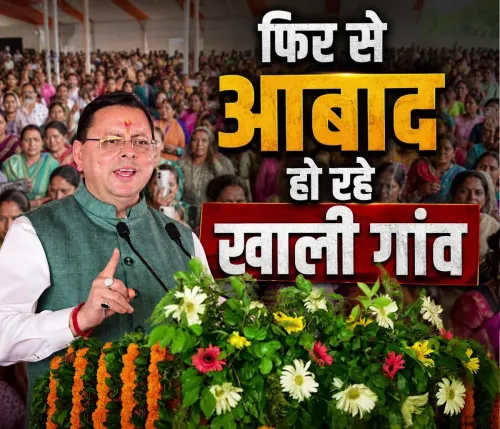
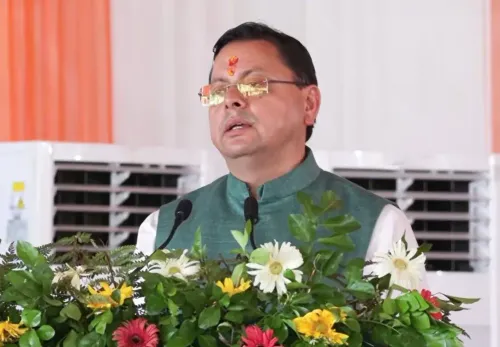
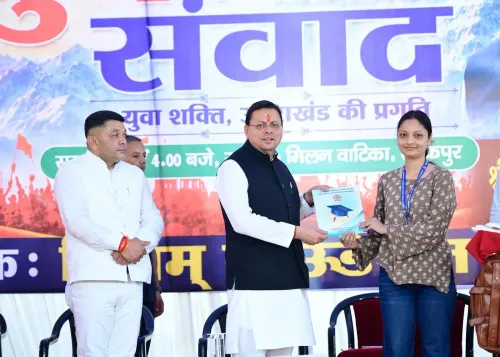
CM Dhami: Uttarakhand crosses 20,000 industries, 1,700 startups
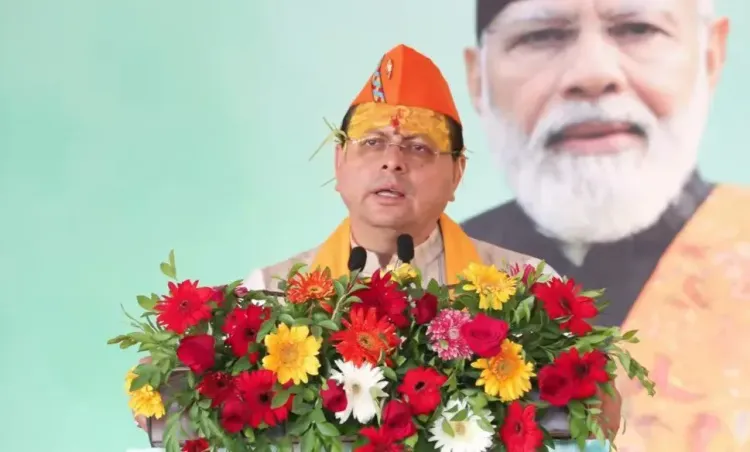
Synopsis
Chief Minister Pushkar Singh Dhami has cited over 20,000 industries, 1,700-plus startups, a 50% homestay surge, and 44% reverse migration growth as markers of Uttarakhand's economic progress, signalling a broad-based push to retain talent and attract investment in the hill state.
Key Takeaways
The Chief Minister's Office of Uttarakhand shared economic milestones on 16 July 2026 attributed to CM Pushkar Singh Dhami .
More than 20,000 industries have been established in Uttarakhand, according to the Chief Minister.
The state's startup count has crossed 1,700 , reflecting growth in entrepreneurship activity.
Homestay registrations have grown by over 50 per cent , boosting rural tourism livelihoods.
Reverse migration — workers returning to the state — has risen by 44 per cent , a key policy metric for the hill state.
The figures align with national priorities including Startup India and Atmanirbhar Bharat .
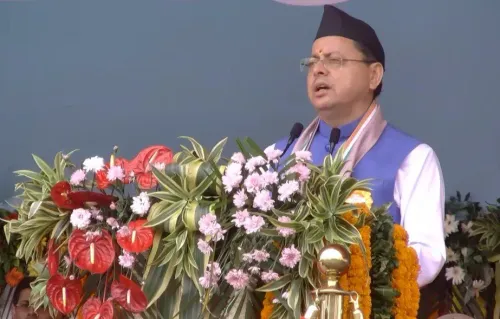
The Chief Minister's Office of Uttarakhand on Thursday, 16 July 2026 shared key economic milestones attributed to Chief Minister Pushkar Singh Dhami, citing growth in industrial establishments, startups, homestays, and reverse migration across the state.
Context
Addressing the state's economic trajectory, CM Dhami stated: 'Aaj pradesh mein 20 hazaar se adhik udyog sthapit hue hain' — 'Today, more than 20,000 industries have been established in the state.' He further noted that startups have crossed the 1,700 mark, homestays have registered a growth of over 50 per cent, and reverse migration has increased by 44 per cent.
The remarks underscore the state government's push to position Uttarakhand as an emerging investment and entrepreneurship destination, even as the hill state has historically grappled with high out-migration driven by limited local employment opportunities.
Policy Backdrop
Uttarakhand, carved out as a separate state in 2000, has long relied on tourism, hydropower, and small-scale industries as economic pillars. The state has aligned its startup ecosystem with the national Startup India initiative — launched in 2016 — which encourages states to set up local incubators, offer tax incentives, and ease regulatory burdens for first-time entrepreneurs.
The COVID-19 pandemic of 2020 triggered an unprecedented wave of reverse migration across Himalayan states, as workers returned from cities. Uttarakhand was among the states that attempted to convert this crisis into an opportunity by introducing schemes to absorb returning labour into local enterprise and agriculture. The 44 per cent rise in reverse migration cited by the Chief Minister suggests those retention efforts are being tracked as a policy metric.
The homestay sector, a cornerstone of mountain tourism, has emerged as a low-capital livelihood option for rural households. A growth of over 50 per cent in homestay registrations, if sustained, would signal both rising tourist footfall and greater community participation in the formal tourism economy — aligning with the national push for Atmanirbhar Bharat and sustainable mountain development.
Stakeholders and Impact
The figures, as cited, touch several constituencies simultaneously. Local entrepreneurs and youth stand to benefit from an expanding startup ecosystem, while rural households — particularly in remote hill districts — gain from the homestay boom. Returning migrants, who form the backbone of the reverse migration statistic, represent a workforce that the state is now attempting to anchor through industrial and self-employment opportunities.
For Uttarakhand's broader economy, the combination of industrial growth, entrepreneurship, and tourism diversification could reduce the state's structural dependence on government employment, which has historically been the primary aspiration of educated youth in the region.
What's Next
The state's next budget presentation and any revision to its industrial policy will be closely watched for updated targets and allocation details behind these headline numbers. Tourism department reports on homestay registrations during peak seasons — particularly the upcoming winter pilgrimage and summer tourist cycles — will provide a ground-level check on the claimed growth trajectory.
As Indian states increasingly compete on startup rankings and investment climate indices, Uttarakhand's ability to convert these metrics into sustained job creation and per-capita income growth will determine whether the current momentum translates into a structural economic shift for the Himalayan state.
Point of View
Enterprise, and migration reversal. The reverse migration figure is particularly significant: hill states have long treated out-migration as an intractable structural problem, and claiming a 44 per cent uptick reframes a demographic challenge as a policy success. The homestay surge, meanwhile, links grassroots rural livelihoods to the larger 'Brand Uttarakhand' tourism push, giving the government a narrative that resonates across both urban entrepreneurs and rural households. Whether these numbers hold up to independent audit will be the real test of the state's economic story.
NationPress
15 Oct 2026
Frequently Asked Questions
How many industries have been established in Uttarakhand according to CM Dhami?
CM Pushkar Singh Dhami has stated that more than 20,000 industries have been established in Uttarakhand, citing this as a marker of the state's industrial growth.
How many startups are there in Uttarakhand in 2026?
According to CM Dhami, Uttarakhand's startup count has crossed 1,700, reflecting the state's growing entrepreneurship ecosystem supported in part by the national Startup India initiative.
What is reverse migration and why is it significant for Uttarakhand?
Reverse migration refers to workers and residents returning to their home state after living in cities. For Uttarakhand, which has historically faced high out-migration due to limited local jobs, a 44 per cent rise in reverse migration is presented as evidence that state policies are successfully retaining and attracting people back.
How much have homestays grown in Uttarakhand?
CM Dhami cited a growth of over 50 per cent in homestays in Uttarakhand, reflecting increased participation by rural households in the state's tourism economy.
What national schemes support Uttarakhand's startup and industrial growth?
Uttarakhand has aligned its local entrepreneurship push with the national Startup India initiative, launched in 2016, and the broader Atmanirbhar Bharat framework, which encourages self-reliant local economies across Indian states.