CM Fadnavis: Maharashtra supplies record 32,000 MW, eyes 45,000 MW by 2031
Synopsis
Chief Minister Devendra Fadnavis told the Maharashtra Assembly on 23 June 2026 that the state has achieved a record 32,000 MW electricity supply with zero load shedding and set a target to scale capacity to 45,000 MW within five years, marking a significant milestone in the state's long-running push for uninterrupted power.
Key Takeaways
Maharashtra Chief Minister Devendra Fadnavis announced on 23 June 2026 that the state has eliminated load shedding entirely.
The state has achieved a record electricity supply of 32,000 MW , the highest in its history.
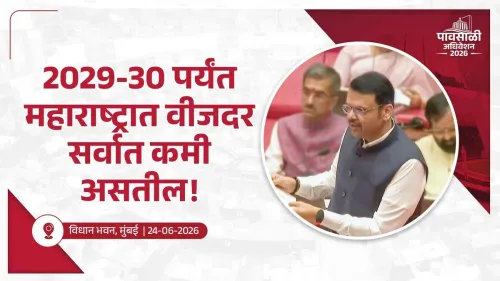
The government has set a target to expand generation and transmission capacity to 45,000 MW within the next five years .
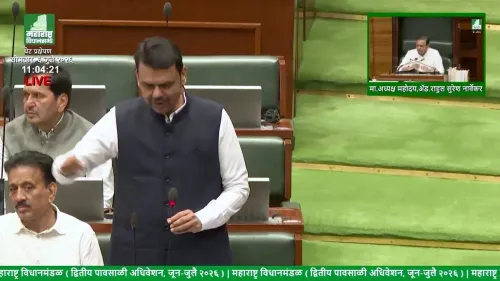
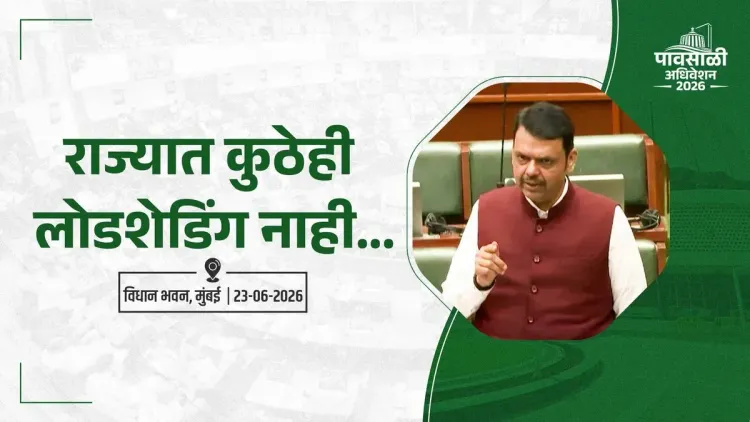
The announcement was made from the Maharashtra Legislative Assembly, Mumbai , during the Monsoon Session 2026 .
The capacity push aligns with India's national drive that has taken total installed power capacity beyond 400 GW by the mid-2020s.
Key beneficiaries include industrial consumers, urban households, the agricultural sector, and emerging demand segments such as data centres.
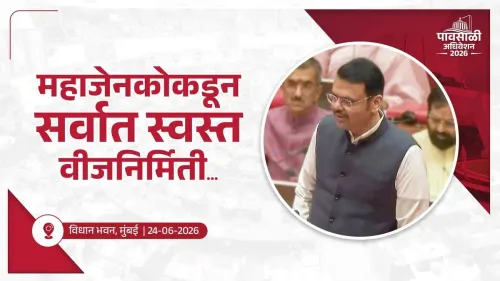
Maharashtra Chief Minister Devendra Fadnavis declared on 23 June 2026 that the state has achieved a record electricity supply of 32,000 MW with zero load shedding, and announced a target to expand capacity to 45,000 MW over the next five years. The announcement was made from the floor of the Maharashtra Legislative Assembly, Mumbai, during the ongoing Monsoon Session 2026.
Context
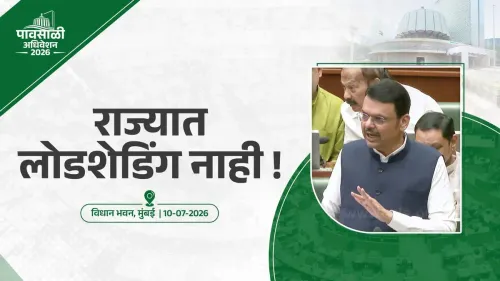
Addressing the assembly, CM Fadnavis stated in both English and Marathi: 'राज्यात लोडशेडिंग केलेले नाही' ('No load shedding in the state'). He underlined that a record 32,000 megawatts of electricity has been supplied to Maharashtra, a milestone he presented as evidence of the government's infrastructure delivery. The remarks came amid the legislature's monsoon sitting, a session that traditionally sees major policy statements from the treasury benches.
Load shedding has been a recurring political flashpoint in Maharashtra since the early 2000s, when industrial hubs around Mumbai and Pune faced chronic outages that disrupted manufacturing and daily life. Eliminating it has therefore carried symbolic as well as economic weight for successive state governments.
Policy Backdrop
During Fadnavis's earlier term between 2014 and 2019, the state government commissioned new thermal and renewable generation plants and strengthened transmission infrastructure specifically to reduce outages. A 2015–2030 power plan had already set a target of adding over 20,000 MW through a mix of public and private projects to achieve round-the-clock supply.
The new 45,000 MW target — to be reached within five years — builds on that framework and aligns with India's national capacity addition drive, which saw the country's total installed power capacity cross 400 GW by the mid-2020s. Maharashtra, as one of India's most industrialised states, accounts for a disproportionately large share of national electricity demand, driven by industry, urban households, and a rapidly growing data-centre sector.
Stakeholders and Impact
Industrial consumers across the state's manufacturing belts stand to benefit most immediately from sustained, uninterrupted supply, as power cuts have historically forced factories to rely on expensive captive generation. Urban households in Mumbai, Pune, Nagpur, and other cities gain from grid stability, while the agricultural sector — which depends on reliable pump-set power for irrigation — has long been among the most vocal constituencies demanding an end to scheduled outages.
The expansion to 45,000 MW would also support emerging demand centres such as data centres and electric-vehicle charging networks, both of which require stable, high-quality power supply to operate at scale.
What's Next
Attention will now turn to the specific generation and transmission projects that underpin the 45,000 MW roadmap, details of which are expected in upcoming state energy policy documents and budget presentations. Analysts and opposition legislators are likely to seek a project-by-project breakdown, including the renewable-versus-thermal mix and timelines for commissioning new capacity.
Progress on the target will serve as a benchmark for the Fadnavis government's infrastructure record heading into the next state electoral cycle, making mid-term reviews of the capacity addition programme a politically significant exercise.
Point of View
000 MW target anchors the BJP government's infrastructure narrative in a measurable, time-bound commitment that opposition parties will now be expected to scrutinise project by project. Placed in the context of India's national capacity addition drive, the announcement also signals Maharashtra's intent to attract power-intensive industries such as data centres and electric-vehicle manufacturing. Whether the generation mix — and the pace of transmission upgrades — can keep pace with the headline target will determine how durable this political dividend proves to be.
NationPress
22 Sept 2026
Frequently Asked Questions
Has Maharashtra really stopped load shedding completely?
Chief Minister Devendra Fadnavis declared on 23 June 2026 in the Maharashtra Legislative Assembly that there is no load shedding in the state and that a record 32,000 MW is being supplied, though independent verification of round-the-clock zero outages across all districts is pending.
What is Maharashtra's electricity capacity target for the next five years?
The Fadnavis government has set a target of expanding Maharashtra's electricity supply capacity from the current record of 32,000 MW to 45,000 MW within the next five years, that is, by approximately 2031.
Why was 32,000 MW described as a record for Maharashtra?
Maharashtra has historically struggled with electricity shortages and load shedding, particularly in the 2000s and early 2010s; a sustained supply of 32,000 MW represents the highest level the state grid has delivered, making it a benchmark figure for the current administration.
Where did CM Fadnavis make this electricity announcement?
The announcement was made from the floor of the Maharashtra Legislative Assembly in Mumbai on 23 June 2026, during the Monsoon Session 2026.
Who benefits from Maharashtra's power expansion plan?
Industrial consumers, urban households in cities like Mumbai and Pune, the agricultural sector dependent on irrigation pump-sets, and emerging sectors such as data centres and electric-vehicle charging networks are the primary beneficiaries of the planned capacity expansion to 45,000 MW.