CM Fadnavis: BESS with Solar to Stabilise Power Tariffs for 25 Years
Synopsis
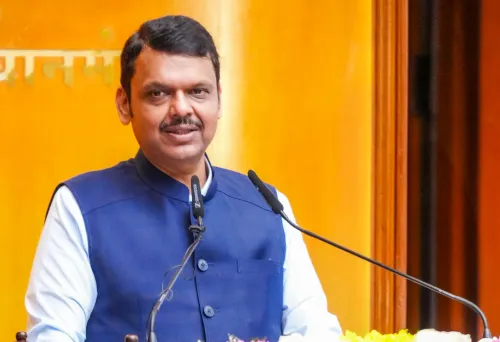
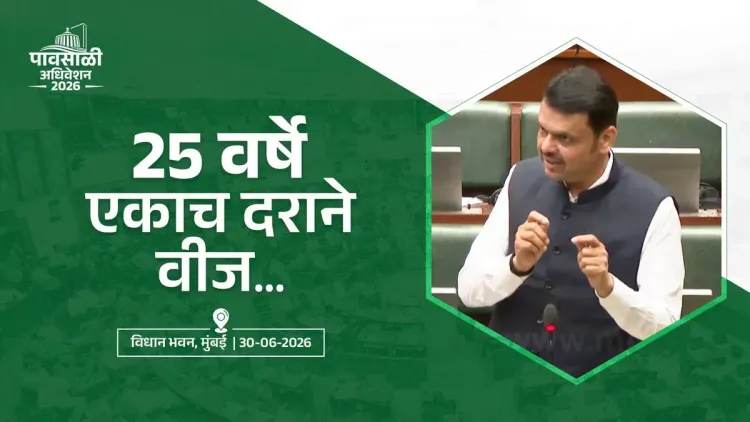
Maharashtra CM Devendra Fadnavis told the Vidhan Sabha on 30 June 2026 that coupling Battery Energy Storage Systems with solar projects can lock in stable electricity tariffs for consumers for the next 25 years, signalling a major storage-led energy push for the state.
Key Takeaways
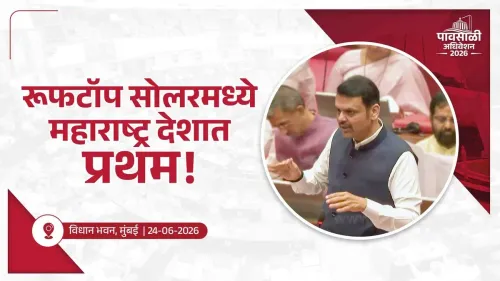
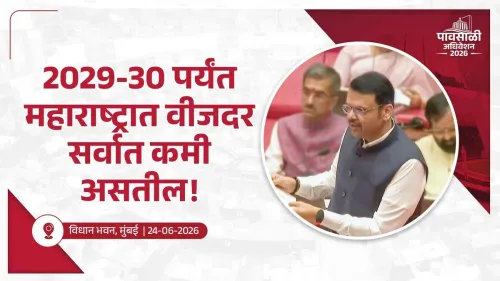
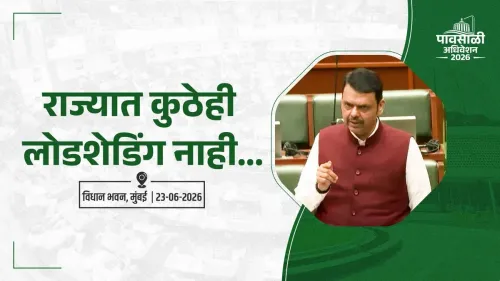
Maharashtra CM Devendra Fadnavis made the announcement on 30 June 2026 at the Maharashtra Vidhan Sabha during the Monsoon Session 2026 .
He stated that integrating Battery Energy Storage Systems (BESS) with solar power projects could deliver stable electricity tariffs for consumers for 25 years .
The proposal aims to address long-standing consumer grievances over frequent and unpredictable electricity tariff revisions in Maharashtra .
BESS technology stores surplus solar energy for dispatch during demand peaks, reducing grid volatility and enabling long-term power purchase agreements.
The announcement was made in both English and Marathi, underscoring its intended reach to a broad public audience.
Concrete follow-up measures — tenders, capacity targets, and regulatory frameworks — are awaited from the state government and MERC .
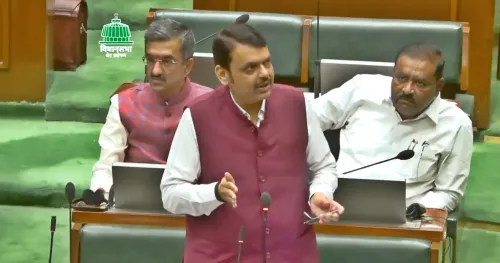
Maharashtra Chief Minister Devendra Fadnavis on Tuesday, 30 June 2026, stated that integrating Battery Energy Storage Systems (BESS) with solar power projects could guarantee stable electricity tariffs for consumers across the state for the next 25 years. The remarks were made on the floor of the Maharashtra Vidhan Sabha in Mumbai during the Monsoon Session 2026.
Speaking in the legislature, Fadnavis said — in both English and Marathi — that pairing solar generation infrastructure with battery storage would insulate consumers from the volatility that has historically plagued electricity pricing. In Marathi, he noted: 'सौर ऊर्जा निर्मिती प्रकल्पासोबत बॅटरी एनर्जी स्टोरेज सिस्टीम उभारल्यास ग्राहकांना पुढील 25 वर्षे स्थिर दरात वीज मिळू शकेल' ['If a Battery Energy Storage System is established alongside solar power generation projects, consumers can receive electricity at stable rates for the next 25 years'].
Context
The statement comes during the Monsoon Session 2026 of the Maharashtra Vidhan Sabha, a period when the legislature typically takes up key infrastructure and public-utility legislation. Electricity pricing and supply reliability are perennial concerns for both urban and rural Maharashtra, where industrial demand and agricultural consumption place competing pressures on the grid.
Maharashtra is among India's largest electricity consumers, with significant load centres in Mumbai, Pune, Nagpur, and Aurangabad. Frequent tariff revisions by the Maharashtra Electricity Regulatory Commission (MERC) have drawn criticism from domestic and commercial consumers alike, making long-term tariff stability a politically salient promise.
Policy Backdrop
India's national energy policy has increasingly emphasised the coupling of renewable generation with storage to address the intermittency of solar and wind power. The Ministry of New and Renewable Energy (MNRE) has promoted BESS deployment through viability-gap funding mechanisms, and several states have already tendered standalone and co-located battery storage projects.
BESS technology allows surplus solar energy generated during peak sunlight hours to be stored and dispatched during evening demand peaks or cloudy periods, smoothing out supply fluctuations. By locking in long-term power purchase agreements tied to solar-plus-storage projects, state utilities can theoretically offer consumers a predictable, inflation-resistant tariff over multi-decade horizons — the basis of Fadnavis's 25-year claim.
Maharashtra has set ambitious renewable energy targets, aiming to substantially expand its solar capacity as part of broader commitments under India's national clean-energy agenda. The integration of storage is seen as the critical missing link that would make those targets meaningful for grid reliability.
Stakeholders and Impact
If implemented, a large-scale solar-plus-BESS rollout would affect multiple stakeholders: residential consumers seeking predictable monthly bills, industries requiring reliable baseload power, farmers dependent on subsidised agricultural electricity, and distribution companies (DISCOMs) burdened by cross-subsidisation obligations.
Investors and developers in the renewable energy sector are likely to watch closely for follow-up policy instruments — such as state-level tenders, land allocation, and grid-connectivity norms — that would translate the Chief Minister's legislative statement into actionable projects. Battery storage supply chains, dominated by imports from China and a nascent domestic manufacturing base, also remain a cost and procurement variable.
What's Next
The Monsoon Session provides the Maharashtra government an opportunity to table enabling legislation or budgetary provisions that could back the BESS-solar vision outlined by Fadnavis. Observers will look for concrete announcements on tendering timelines, capacity targets, and consumer tariff frameworks in the weeks following the session.
The success of the initiative will ultimately depend on execution speed, financing structures, and coordination between MERC, state-owned utilities, and private developers — factors that have historically determined whether Maharashtra's energy ambitions translate into tangible consumer relief.
Point of View
Signalling that the state government is willing to use legislative sessions to build political consensus around capital-intensive clean-energy infrastructure. The 25-year tariff stability promise is a politically calculated message aimed at both urban middle-class consumers weary of rising electricity bills and rural constituencies dependent on affordable agricultural power. However, the gap between a floor statement and a tendered, financed, and commissioned project is wide — and Maharashtra has a history of ambitious energy announcements that have moved slowly through execution. The real test will come when concrete procurement and regulatory mechanisms are tabled, and whether the state can attract financing at a scale that makes the tariff-lock promise credible.
NationPress
29 Sept 2026
Frequently Asked Questions
What did CM Devendra Fadnavis say about electricity tariffs in Maharashtra?
CM Devendra Fadnavis said on 30 June 2026 that establishing Battery Energy Storage Systems alongside solar power projects could ensure stable electricity tariffs for Maharashtra consumers for the next 25 years.
What is a Battery Energy Storage System (BESS) and why does it matter for solar power?
A Battery Energy Storage System (BESS) stores surplus electricity generated by solar panels during peak sunlight hours and releases it during periods of high demand or low generation, making solar power more reliable and enabling utilities to offer predictable long-term tariffs.
Where did Fadnavis make the BESS-solar announcement?
Fadnavis made the announcement on the floor of the Maharashtra Vidhan Sabha in Mumbai during the Monsoon Session 2026 on 30 June 2026.
How will solar plus BESS help reduce electricity bills in Maharashtra?
By pairing solar generation with battery storage, the state can enter long-term power purchase agreements at fixed rates, shielding consumers from fuel-price volatility and frequent tariff revisions — potentially locking in stable rates for up to 25 years.
What are the next steps for Maharashtra's BESS-solar energy plan?
Observers are watching for follow-up policy instruments such as state tenders, capacity targets, land allocation, and regulatory frameworks from MERC that would convert the Chief Minister's legislative statement into operational projects.