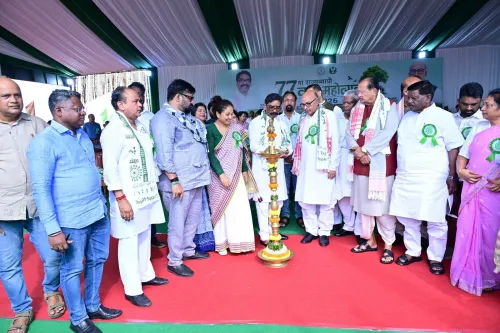
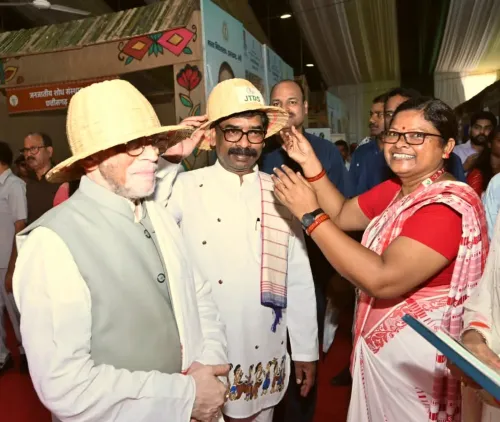
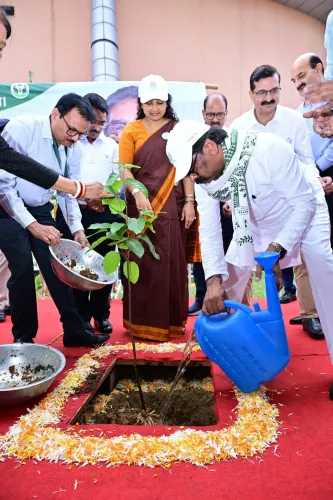
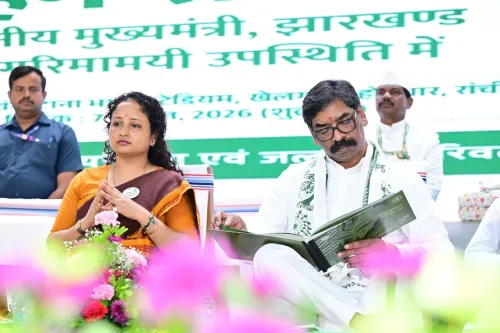
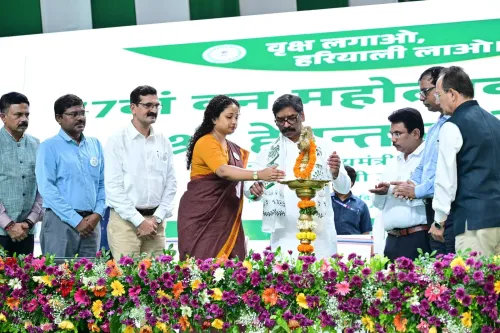
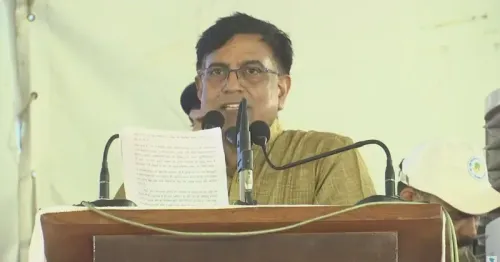
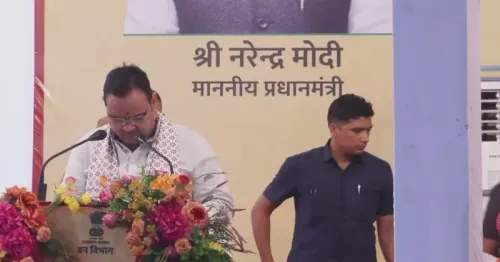
CM Hemant Soren leads Van Mahotsav 2026 in Ranchi
Synopsis
At Van Mahotsav 2026 in Ranchi, Jharkhand CM Hemant Soren linked rising human-elephant conflict and climate extremes directly to forest encroachment, and committed his government to prioritising multi-use tree species — reframing a 76-year-old festival as an urgent conservation mandate.
Key Takeaways
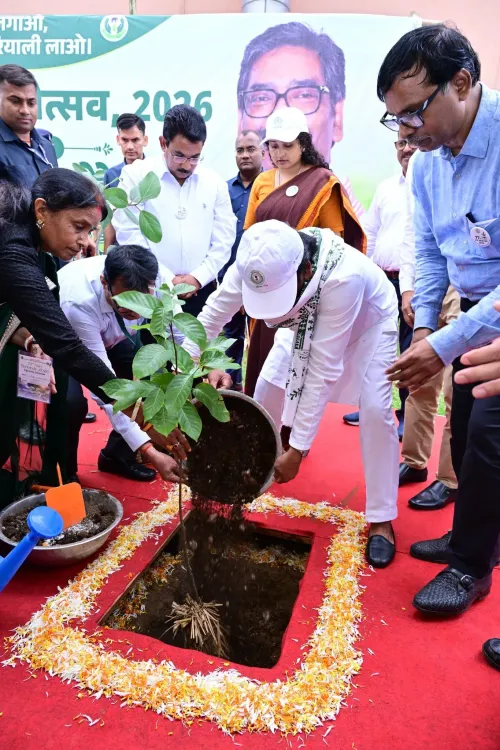
Jharkhand CM Hemant Soren attended the state-wide Van Mahotsav 2026 in Ranchi on 7 August 2026 .
He called Van Mahotsav 'a pledge of responsibility towards nature,' not merely a tree-planting event.
Soren directly linked elephant incursions into villages to shrinking forest cover caused by encroachment.
He backed development — roads, industries, cities — but ruled out forest, water or land as the price.
The state government will prioritise tree species beneficial to humans, animals and the environment under its planting programmes.
Van Mahotsav was originally launched in 1950 by Agriculture Minister K.M.
Munshi as a national afforestation campaign.
Elephants wandering into villages. Cloudburst after drought after heatwave. Jharkhand Chief Minister Hemant Soren stood in Ranchi on Friday, 7 August 2026 and named these not as isolated disasters — but as nature's escalating warning to a civilisation that has been borrowing against its forests.
Speaking at the state-wide Van Mahotsav 2026 celebration, Soren framed the annual tree-planting festival as something far larger than a ceremonial exercise. 'Van Mahotsav kewal vriksharopan ka karyakram nahin' ('Van Mahotsav is not merely a tree-planting programme'), he said, calling it 'a pledge of our responsibility towards nature.'
Elephants at the doorstep — the cost of a broken balance
Soren pointed directly to human-elephant conflict as a symptom, not a standalone crisis. 'When we encroach on forests, wildlife will come among us,' he said. 'Elephants moving towards villages and towns today is the result of this shifting balance.' It is a pattern well-documented across Jharkhand and its neighbouring states, where shrinking forest corridors have pushed large animals into human settlements with deadly consequences for both.
The observation carries particular weight in a state whose identity — and whose politics — have long been inseparable from what activists and tribal communities call jal, jungle aur zameen (water, forest and land). Jharkhand's forest cover is among the most significant in eastern India, and its tribal population has historically been the first to bear the cost when that cover is stripped away.
Development yes — but not at the price of jal, jungle, zameen
Soren was careful not to frame conservation as an obstacle to growth. 'Roads must be built, industries must come, cities must grow,' he said — then added the condition that has defined Jharkhand's recurring policy tension: 'but not at the cost of water, forest and land.' The state sits on enormous mineral wealth, and the pressure to open forest land for mining and industrial use has been a live conflict for decades.
His government, he announced, has taken a clear decision: tree-planting under state programmes will prioritise species that are useful to humans, animals and the environment alike — a multi-use approach that moves beyond the monoculture plantations that have drawn criticism from ecologists in the past.
Van Mahotsav at 76 — a festival with renewed urgency
Van Mahotsav was launched in 1950 by then Agriculture Minister K.M. Munshi as a nationwide afforestation drive, making it one of India's oldest environment campaigns. Seventy-six years on, the festival's original impulse — plant trees, protect forests — has been overtaken by a far more complex climate reality: erratic monsoons, extreme heat, flash floods and landslides that Soren listed as the visible face of a planet under stress.
'The entire world is feeling the effects of climate change,' he said. 'Excessive rain, drought, scorching heat, unusual cold, cloudbursts, landslides — these are all signs that nature is continuously warning us.' The line between ceremonial pledge and urgent policy has never been thinner.
Planting a tree is the easy part. The harder commitment — protecting what is planted, and protecting what already stands — is the one Soren put at the centre of his message. Jharkhand's forests will define whether that commitment holds.
Point of View
Mining interests and forest conservation have collided for decades, invoking jal, jungle, zameen is a direct signal to his core JMM constituency. By naming human-elephant conflict as a consequence of encroachment rather than a wildlife management problem, he shifts the moral frame toward forest protection and away from industrial expansion. The multi-use species policy, if implemented, would mark a meaningful departure from the monoculture plantation drives that have often served optics more than ecology. Whether the pledge survives the perennial pressure from Jharkhand's mineral economy is the real test.
NationPress
21 Sept 2026
Frequently Asked Questions
What is Van Mahotsav and when was it started?
Van Mahotsav is India's annual tree-planting festival, launched in 1950 by then Agriculture Minister K.M. Munshi to promote afforestation across the country. It is held every year, typically in the monsoon season.
What did Hemant Soren say at Van Mahotsav 2026?
Soren said Van Mahotsav is not merely a tree-planting programme but a pledge of responsibility towards nature. He linked climate extremes and human-elephant conflict to forest encroachment and announced that Jharkhand will prioritise multi-use tree species in state planting drives.
Why are elephants entering villages in Jharkhand?
CM Soren attributed elephant incursions into villages and towns to the encroachment of forest land, which shrinks wildlife habitat and forces animals into human settlements. Human-elephant conflict is a documented and recurring issue in Jharkhand and neighbouring eastern Indian states.
What is jal jungle zameen and why is it important in Jharkhand?
Jal, jungle aur zameen — water, forest and land — is a phrase central to tribal rights movements and politics in Jharkhand. The state's large tribal population and its mineral-rich forests have long been at the centre of conflicts between industrial development and conservation.
What tree-planting policy did the Jharkhand government announce?
CM Soren stated that the Jharkhand government has decided to prioritise tree species that are simultaneously useful to humans, animals and the environment, moving away from single-purpose plantation drives.