CM Hemant Soren Calls Van Mahotsav a People's Revolution

Synopsis
At Van Mahotsav on 7 August 2026, Jharkhand CM Hemant Soren urged every attendee to plant and protect one locally useful tree — mahua, jackfruit, jamun, or karanj — arguing that collective civic action outweighs any government campaign, and invoking the JMM's core jal-jungle-jameen mandate.
Key Takeaways
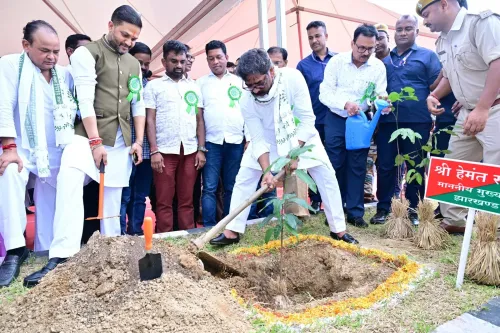
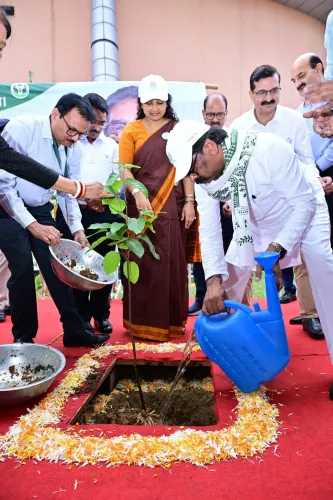
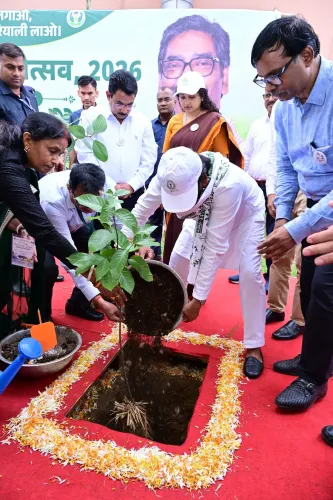
CM Hemant Soren addressed a Van Mahotsav gathering on 7 August 2026 , urging each person to plant at least one fruit-bearing or locally useful tree.
He specifically named mahua, jackfruit (kathal), jamun, and karanj as trees that strengthen rural economy, nutrition, livelihood, and biodiversity.
Soren declared that mass individual commitment would constitute a greater revolution than any government-run afforestation campaign.
The Jharkhand government has introduced urban tree-planting incentives, including free electricity , for those who plant trees in cities.
The appeal invokes the JMM's foundational principle of community stewardship over jal, jungle aur zameen — water, forest, and land.
Van Mahotsav has been observed nationally since 1950 , originally launched by K.M.
Munshi to promote afforestation across India.
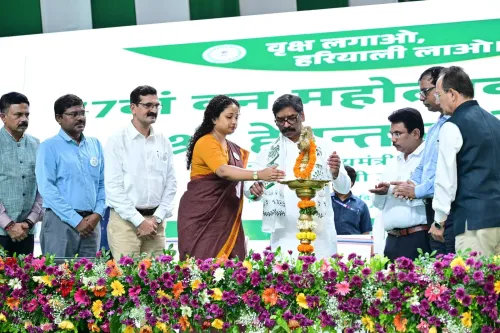
At a Van Mahotsav gathering on Friday, 7 August 2026, Jharkhand Chief Minister Hemant Soren issued a challenge to every person in the crowd: plant at least one fruit-bearing or locally useful tree, and protect it as you would a member of your own family. The ask was simple. The argument behind it was anything but.
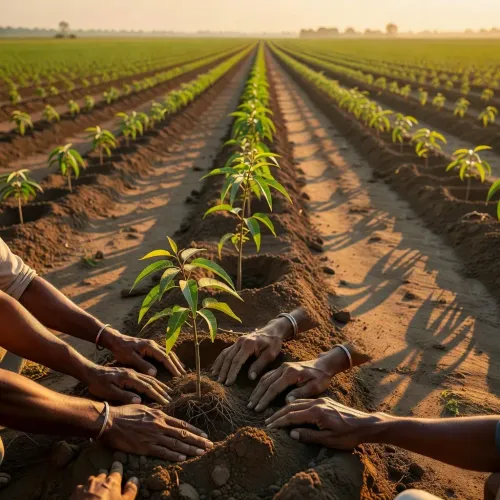
Addressing thousands of attendees, Soren named specific trees — mahua, jackfruit (kathal), jamun, and karanj — as the real engines of rural Jharkhand's economy. These are not ornamental plantings. Mahua flowers are a food source and the basis of traditional beverages; jamun and jackfruit feed families and generate income through minor forest produce markets. Karanj has long been used in traditional medicine and as a biopesticide. Each tree, Soren argued, is a node in a living network of nutrition, livelihood, and biodiversity.
A people's movement over any government scheme
The sharpest line of the address was a direct provocation: if every one of the thousands present today commits to planting and keeping alive a single tree, 'yeh kisi bhi sarkari abhiyan se badi janakranti hogi' — 'this will be a greater people's revolution than any government campaign.' It is a striking thing for a sitting Chief Minister to say — essentially conceding that state machinery has limits, and that collective civic will is the more powerful force.
His government has, he noted, already launched urban tree-planting incentives including free electricity for those who plant trees in cities. But Soren was explicit that no subsidy substitutes for what he called 'apni sanvedanshilata' — our own sensitivity and conscience — as the deepest motivator.
Jal, jungle, jameen — from slogan to shared duty
The closing call — that the protection of water, forest, and land (jal, jungle aur zameen) is not the government's responsibility alone but a shared civic duty — lands with particular weight in Jharkhand. These three words are not merely an environmental slogan here; they are the foundational political grammar of the Jharkhand Mukti Morcha, the party Soren leads as executive president. For tribal communities across the state, forest access is livelihood, identity, and legal right wrapped into one.
Van Mahotsav itself has been observed nationally since 1950, launched by then Union Agriculture Minister K.M. Munshi to reverse post-independence deforestation. Seventy-six years on, the festival's survival as a civic ritual — and its reinvention as a platform for community stewardship rather than ceremonial planting drives — reflects exactly the tension Soren was naming: the gap between trees planted and trees that actually live.
The real test of this Van Mahotsav will not be in the photographs of saplings going into the ground. It will be in how many of those trees are still standing next monsoon.
Point of View
Jungle aur zameen, while simultaneously positioning community will above state capacity. By naming specific trees with direct economic value to rural households, he avoids the trap of urban-centric green symbolism and grounds the message in livelihood politics. The free-electricity incentive for urban planters, if it scales, could become a replicable model; but the speech's real political work is in reasserting that forest stewardship is a civic identity, not just a policy target. Watch whether the government follows with verifiable survival-rate tracking — that would separate this from routine Van Mahotsav optics.
NationPress
21 Sept 2026
Frequently Asked Questions
What did Hemant Soren say at Van Mahotsav 2026?
Hemant Soren urged every attendee to plant at least one fruit-bearing or locally useful tree and protect it like a family member, arguing that such collective action would be a greater revolution than any government campaign.
Which trees did Hemant Soren recommend planting?
Soren specifically named mahua, jackfruit (kathal), jamun, and karanj as trees that not only add greenery but also strengthen rural livelihoods, nutrition, and biodiversity in Jharkhand.
What incentives has the Jharkhand government offered for tree planting?
The Jharkhand government has announced free electricity as an incentive for people who plant trees in urban areas, though full details of the scheme's rollout are awaited.
What is Van Mahotsav and when did it start?
Van Mahotsav is India's annual tree-planting festival, launched in 1950 by K.M. Munshi to promote afforestation. It is observed each year to encourage widespread tree planting across the country.
What does 'jal jungle jameen' mean in JMM politics?
'Jal, jungle aur zameen' — water, forest, and land — is the foundational political slogan of the Jharkhand Mukti Morcha, encapsulating tribal communities' rights over natural resources and forming the core of JMM's governance philosophy.