CM Bhajan Lal Sharma launches Van Mahotsav 2026 in Udaipur
Synopsis
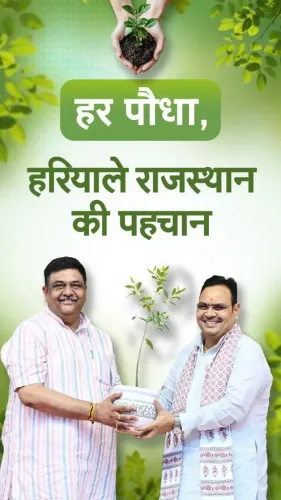
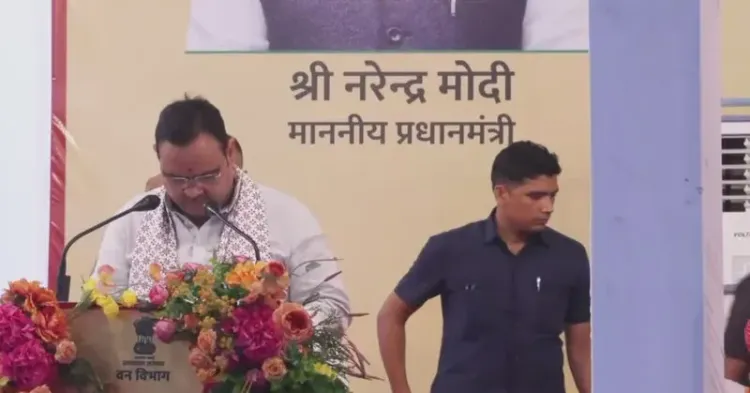
Rajasthan Chief Minister Bhajan Lal Sharma inaugurated the state-level Van Mahotsav 2026 in Udaipur on 1 August, continuing a national afforestation tradition started in 1950 that holds special significance for Rajasthan's arid landscape.
Key Takeaways
CM Bhajan Lal Sharma inaugurated the state-level Van Mahotsav 2026 in Udaipur on 1 August 2026 .
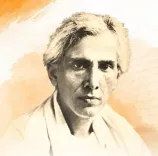
Van Mahotsav was first organised in 1950 by Agriculture Minister K.M.
Munshi as a national afforestation movement.
The festival is held annually during the monsoon months of July–August , when saplings establish most effectively.
Rajasthan's predominantly arid and semi-arid terrain makes tree-planting drives particularly significant for the state.
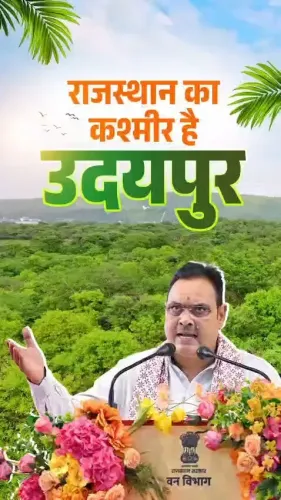
Udaipur , set in the ecologically sensitive Aravalli range , hosted the state-level ceremony, which was also livestreamed.
Plantation targets and forestry budget commitments from the event are expected in the Forest Department's seasonal report .
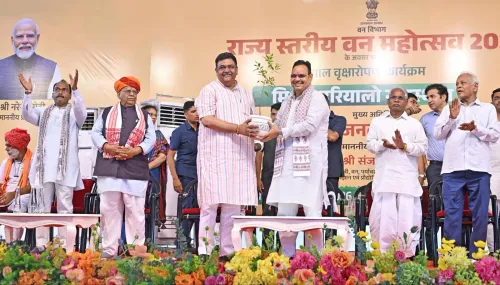
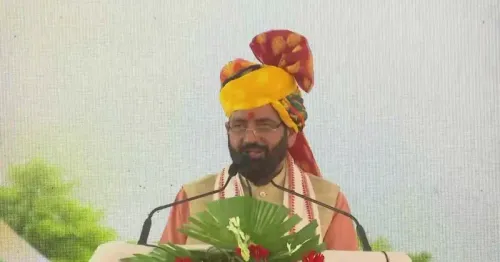
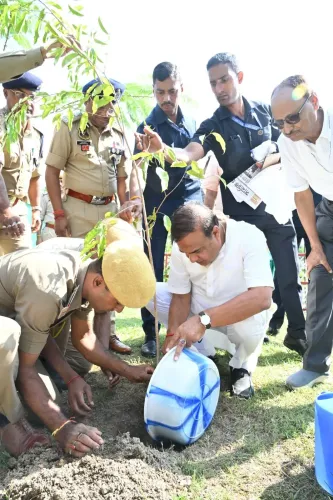
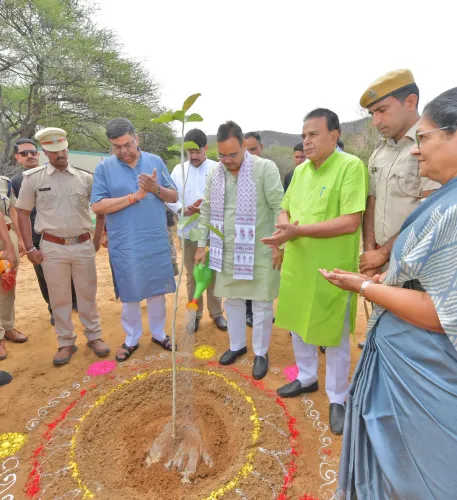
In the city of lakes, Rajasthan Chief Minister Bhajan Lal Sharma on Saturday, 1 August 2026 inaugurated the state-level Van Mahotsav celebration in Udaipur — kicking off the annual afforestation festival that has been a fixture of India's environmental calendar for over seven decades.
A 75-year-old tradition, still rooted in the soil
Van Mahotsav is no newcomer to India's public life. First organised in 1950 by then Agriculture Minister K.M. Munshi, the festival was conceived as a mass movement to plant trees across a newly independent nation acutely aware of its land's fragility. Held every year in the sawan season — the monsoon months of July and August when saplings take root most readily — it has since become a state-by-state ritual of soil and solidarity.
Why Rajasthan's arid forests make this count
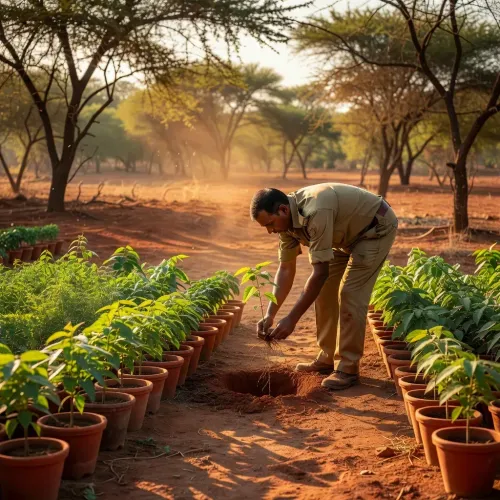
Rajasthan is not the first state that comes to mind when one pictures lush canopy. More than 60 per cent of the state is arid or semi-arid, making every tree planted a small act of defiance against desertification. The state's Forest Department conducts Van Mahotsav drives annually, with local communities as the front-line participants — digging pits, planting saplings, and tending to green patches that the landscape does not give up easily.
Udaipur, nestled in the Aravalli range in southern Rajasthan, provides a fitting stage: its surrounding hills and lakes are among the state's more ecologically sensitive zones, and community forestry here carries both symbolic and practical weight.
Sharma's environmental signalling
CM Sharma, who took office in December 2023, has used state-level ceremonial platforms to align the BJP government's image with development and environmental stewardship simultaneously. A Van Mahotsav inauguration — broadcast live, held in a heritage city — fits that register precisely. The event was livestreamed, widening its reach beyond the gathering in Udaipur.
What the Udaipur ceremony ultimately delivers in plantation numbers and budget commitments will be the real measure — and those figures are the ones to watch when the Forest Department releases its seasonal report.
Point of View
Hosting the state-level event in Udaipur rather than the capital Jaipur suggests a deliberate outreach to southern Rajasthan, a region with its own political calculus. The BJP has consistently used environmental ceremonialism to project a developmental-yet-rooted image, and a livestreamed Van Mahotsav fits that template neatly. The harder question — whether plantation targets translate into surviving tree cover — will be answered not by the inauguration but by the audit that follows.
NationPress
16 Sept 2026
Frequently Asked Questions
What is Van Mahotsav and when is it celebrated?
Van Mahotsav is India's annual tree-planting festival, held every year during the monsoon months of July and August. It was first organised in 1950 by Agriculture Minister K.M. Munshi to promote afforestation across the country.
Where was the Rajasthan state-level Van Mahotsav 2026 held?
The state-level Van Mahotsav 2026 inauguration was held in Udaipur , a historic city in southern Rajasthan set in the Aravalli hills.
Who inaugurated Van Mahotsav 2026 in Rajasthan?
Rajasthan Chief Minister Bhajan Lal Sharma inaugurated the state-level Van Mahotsav 2026 ceremony in Udaipur on 1 August 2026 .
Why is Van Mahotsav important for Rajasthan?
Rajasthan is predominantly arid and semi-arid, making afforestation drives especially critical for combating desertification and expanding the state's limited tree cover.
Who started Van Mahotsav in India?
Van Mahotsav was started by K.M. Munshi , India's Agriculture Minister, in 1950 , as a nationwide movement to encourage tree planting and forest conservation.