Maharashtra CM Fadnavis pitches nuclear energy push, invites US investors
Synopsis
A day after signing MoUs for 25,400 MW of nuclear capacity, Maharashtra CM Fadnavis stood before US nuclear industry leaders and made a direct pitch: invest here, and the state will back you with land, subsidies, and a $660 billion industrial ecosystem. With Mahagenco targeting 7,000 MW of nuclear output and Maharashtra eyeing SMR hub status, India's richest state is making the most aggressive nuclear bet by any Indian state government to date.
Key Takeaways
CM Devendra Fadnavis addressed the Nuclear Energy Institute (NEI) and USISPF on 20 May , inviting US companies to invest in Maharashtra's nuclear sector.
Maharashtra signed MoUs for nuclear projects totalling 25,400 MW of generation capacity a day earlier.
The state's power demand is 31 GW currently and projected to hit 42 GW by 2030 .
Mahagenco , with a current capacity of 14.5 GW , targets 7,000 MW of nuclear energy over the next two decades.
Maharashtra aims to become an early hub for Small Modular Reactors (SMRs) and nuclear manufacturing clusters.
The state offers industrial land, subsidies, and special incentives to early-stage nuclear ventures, according to Fadnavis.
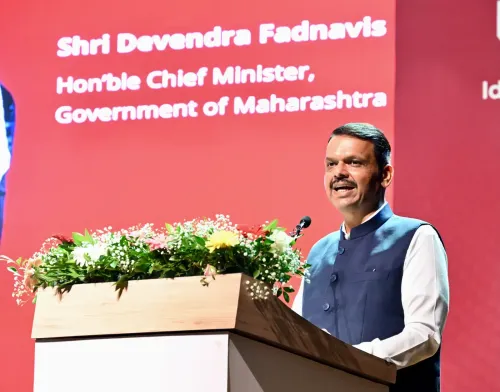
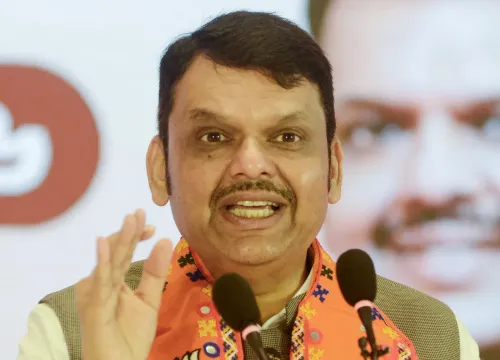
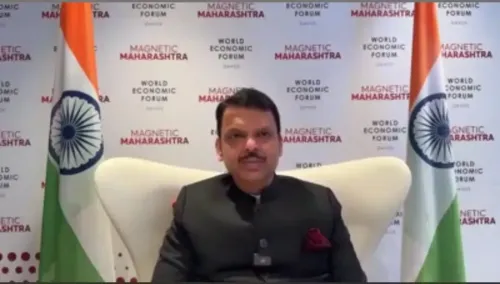
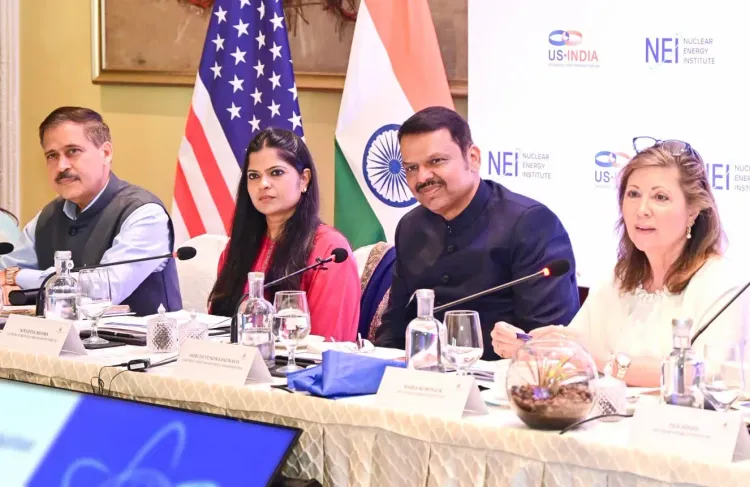
Maharashtra Chief Minister Devendra Fadnavis on Wednesday, 20 May declared that Maharashtra is primed to lead India's nuclear energy transition, directly appealing to American companies to invest in the state. Speaking at a high-level session hosted by the Nuclear Energy Institute (NEI) and the US-India Strategic Partnership Forum (USISPF) under the US Nuclear Executive Mission in India, Fadnavis positioned Maharashtra as the country's most investment-ready destination for nuclear manufacturing, technology partnerships, and global exports.
The Nuclear Opportunity
The Chief Minister's address came a day after the Maharashtra government signed MoUs for nuclear power projects with a combined generation capacity of 25,400 MW. Fadnavis argued that while solar and wind energy remain important, long-term industrial growth demands stable, baseload power that renewables alone cannot guarantee.
'Long-term industrial growth cannot rely solely on solar and wind energy; nuclear power will be critical for the future industrial economy,' he said. He cited surging demand from Artificial Intelligence (AI), data centres, semiconductors, green hydrogen, electric mobility, and advanced manufacturing as key drivers of this energy inflection point.
Maharashtra's Industrial Case
Fadnavis underscored Maharashtra's economic weight to make his pitch to US investors. The state commands a $660 billion economy, attracts over 40 per cent of India's total Foreign Direct Investment (FDI), and hosts nearly 60 per cent of India's data centre capacity, concentrated in the Mumbai and Navi Mumbai regions.
'In the coming days, demand for electricity will multiply due to advancements in semiconductors, AI, logistics, and advanced manufacturing,' Fadnavis said. He also noted that recent positive shifts in US-India civil nuclear cooperation — including private sector participation, reforms under the 'SHANTI' framework, technology transfer, and industrial cooperation — have opened new growth pathways.
SMRs, Manufacturing Clusters, and Incentives
A key element of Maharashtra's nuclear ambition is becoming an early hub for Small Modular Reactors (SMRs), which Fadnavis described as an ideal match for next-generation energy needs. The state intends to develop nuclear manufacturing clusters backed by world-class ports, logistics infrastructure, skilled technical manpower, and pro-industry policies.
Fadnavis assured American companies of extensive state support for early movers, including industrial land, infrastructure, skill development, research collaboration, and special subsidies and incentives for early-stage ventures.
What Officials and Industry Said
NEI President Maria Korsnick acknowledged the scale of opportunity in India's nuclear sector, noting that Maharashtra's skilled workforce, industrial technology, and existing supply chains make it a highly attractive investment destination.
Additional Chief Secretary (Energy) Abha Shukla presented data on the state's escalating power needs: Maharashtra's current demand stands at 31 GW and is projected to reach 42 GW by 2030. The state has set a target to source 65 per cent of its energy from renewables by 2035, while simultaneously preparing nuclear power as its next major energy pillar.
Mahagenco CEO Radhakrishnan B. revealed that the state utility — India's largest state-owned power generation company with a current capacity of 14.5 GW — has set a target to generate 7,000 MW of nuclear energy over the next two decades. Mahagenco is actively pivoting away from coal-based generation and is exploring SMR technology for high-density industrial clusters including steel, cement, fertiliser, and data centre sectors.
The Bigger Picture
Fadnavis framed civil nuclear cooperation as potentially the next defining chapter in the US-India strategic partnership, which is already deepening across technology, defence, AI, and supply chains. 'Nuclear energy is not just about power generation; it is tied to industrial competitiveness, technological leadership, energy sovereignty, climate responsibility, and long-term trust,' he said. With India's power demand projected to skyrocket over coming decades, Maharashtra is positioning itself as the primary engine of that transition.
Point of View
400 MW, a 7,000 MW Mahagenco target, SMR ambitions, and a direct appeal to US capital, all within 48 hours. But ambition and execution are different animals in Indian infrastructure. The SHANTI framework and US-India civil nuclear cooperation have been 'unlocking new avenues' for years without a single large reactor breaking ground in the private sector. The real test is whether Maharashtra's offer of land, subsidies, and logistics can cut through the liability and regulatory thicket that has historically stalled nuclear investment in India. If it does, it sets a template every other state will copy; if it doesn't, it risks becoming another headline number in a long line of energy pledges.
NationPress
7 Oct 2026
Frequently Asked Questions
What did Maharashtra CM Devendra Fadnavis announce regarding nuclear energy?
CM Fadnavis declared that Maharashtra is ready to lead India's nuclear energy transition and directly invited US companies to invest in the state. He made the appeal at a session hosted by the Nuclear Energy Institute and the US-India Strategic Partnership Forum on 20 May, a day after Maharashtra signed MoUs for nuclear projects totalling 25,400 MW.
What is Mahagenco's nuclear energy target?
Mahagenco, India's largest state-owned power generation company with a current capacity of 14.5 GW, has set a target to generate 7,000 MW of nuclear energy over the next two decades. The utility is also exploring Small Modular Reactor technology for industrial clusters including steel, cement, fertiliser, and data centre sectors.
Why is Maharashtra pushing for nuclear energy alongside renewables?
Maharashtra argues that rapid industrialisation, AI, data centres, and advanced manufacturing require stable baseload power that solar and wind alone cannot provide. The state's power demand is currently 31 GW and is projected to reach 42 GW by 2030, making weather-dependent renewables insufficient for heavy industry needs.
What incentives is Maharashtra offering to US nuclear investors?
CM Fadnavis assured US companies of industrial land, infrastructure support, skill development, research collaboration, manufacturing cluster development, and special subsidies and incentives for early-stage ventures. The state is also positioning itself as an early hub for Small Modular Reactors.
What is the SHANTI framework mentioned by CM Fadnavis?
The SHANTI framework refers to a reform structure governing private sector participation in India's civil nuclear sector. Fadnavis cited it as one of the recent positive shifts in US-India nuclear cooperation that has opened new avenues for technology transfer and industrial collaboration, though detailed implementation specifics were not disclosed at the session.