Maharashtra eyes $1 trillion economy by 2030, CM Fadnavis says state leads India in innovation
Synopsis
Maharashtra CM Devendra Fadnavis has put a number and a deadline on the state's ambition: $1 trillion by 2030. With the economy already at $660 billion, a world-beating 85% Davos MoU conversion rate, and a new AI department in place, Fadnavis is making the case that Maharashtra isn't just India's largest state economy — it's closing in on Singapore and the UAE.
Key Takeaways
Maharashtra's economy has grown from ₹14 lakh crore in 2015 to ₹54 lakh crore today, more than tripling in a decade.
The state's current GDP stands at $660 billion , growing at a 10% CAGR , with a $1 trillion target by 2030 .
Maharashtra ranks as the 30th largest economy in the world and is projected to surpass Singapore and the UAE within two to three years.
MoU-to-investment conversion rate stands at 55–60% overall and a remarkable 85% for Davos commitments.
A dedicated AI department and Commissionerate have been established; over 65% of the population is under 35.
The 'Viksit Maharashtra 2047' vision document sets milestones for 2030 , 2035 , and 2047 .
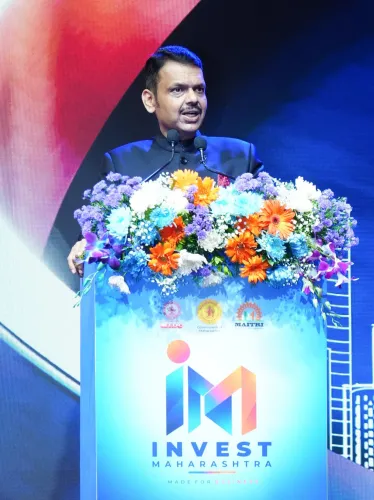
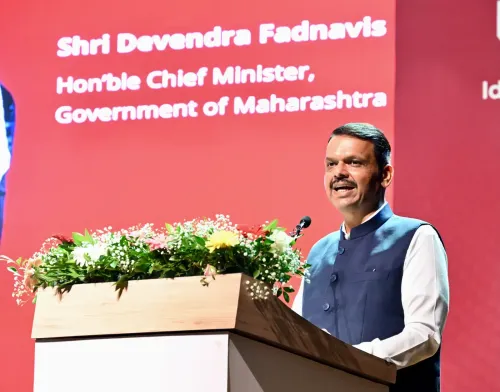
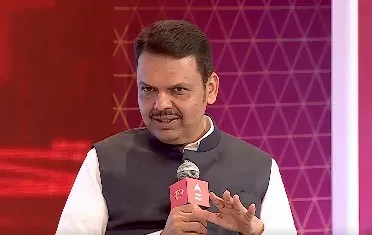
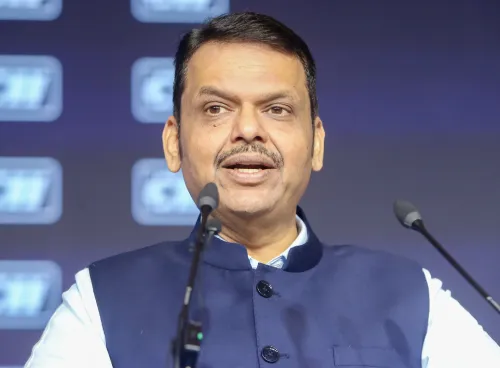
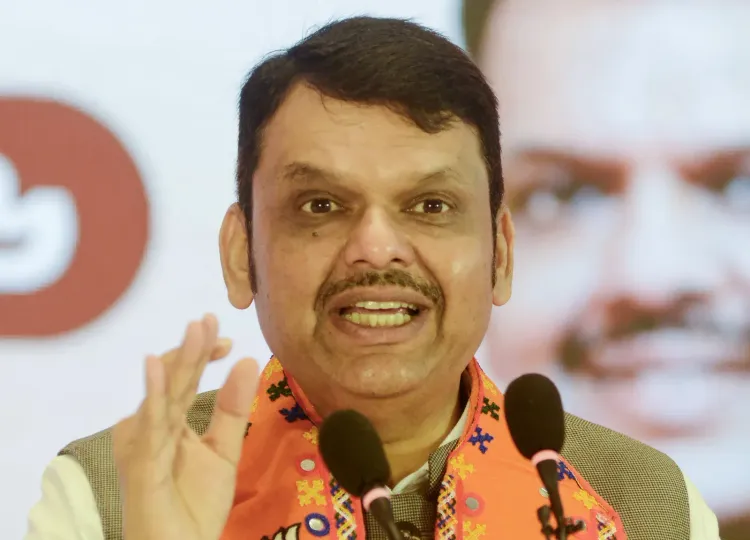
Chief Minister Devendra Fadnavis on Friday, 22 May asserted that Maharashtra is surging ahead in research, innovation, and global economic stature, positioning the state as India's undisputed leader in technology-driven growth and startup culture. Speaking in a detailed interview to an English television channel, Fadnavis laid out an ambitious roadmap anchored in Artificial Intelligence (AI), structural planning, and aggressive investment conversion.
Maharashtra's Economic Scale
Fadnavis highlighted that Maharashtra's economy has grown from approximately ₹14 lakh crore in 2015 to ₹54 lakh crore today — more than tripling in a decade. The state's economy currently stands at $660 billion, growing at a steady Compound Annual Growth Rate (CAGR) of 10 per cent. At this pace, Fadnavis projected Maharashtra will achieve its $1 trillion economy target by 2030, even accounting for short-term disruptions such as the El Niño weather patterns recorded in 2025–2026.
Notably, Maharashtra has already emerged as the 30th largest economy in the world, and Fadnavis claimed that within the next two to three years, the state is on course to surpass the economies of Singapore and the United Arab Emirates (UAE).
AI and Technology as Growth Engines
The Chief Minister emphasised that rapid AI adoption is central to sustaining Maharashtra's economic leadership. The state government has established a dedicated department for Artificial Intelligence along with a specialised Commissionerate. Technology tools including Geographic Information Systems (GIS), data tracking, and centralised data pools are being deployed as force multipliers across governance and industry.
'As we enter the era of AI, we must welcome it with an open mind. The more data we generate, the better trained our AI models become,' Fadnavis said. He added that with over 65 per cent of Maharashtra's population under the age of 35, AI adoption across the state is 'entirely seamless.'
Viksit Maharashtra 2047 and Structural Planning
To institutionalise this growth, the government has drafted the 'Viksit Maharashtra 2047' vision document, which outlines short-term goals up to 2030, mid-term milestones up to 2035, and long-term targets up to 2047. An Economic Advisory Council has been constituted to develop a dedicated development blueprint for every sector.
On administrative efficiency, Fadnavis said the government has mapped 2,000 specific data points across state departments, with a Vision Management Unit monitoring real-time progress. Department performance rates currently range between 75 per cent and 95 per cent, according to the Chief Minister.
Investment Conversion: Maharashtra Ahead of National Average
Fadnavis underscored Maharashtra's exceptional track record in converting intent into investment. While the national average for converting Memorandums of Understanding (MoUs) into on-ground investments stands at 35 per cent, Maharashtra maintains a conversion rate of 55 to 60 per cent.
The Chief Minister pointed to an even more striking figure: MoUs signed at the World Economic Forum in Davos carry an investment conversion rate of 85 per cent. He attributed this to a dedicated 'Relationship Manager' assigned to every MoU, with progress monitored directly through the Chief Minister's War Room.
Maharashtra as Startup and Unicorn Capital
Fadnavis reiterated that Maharashtra remains the startup and unicorn capital of India, with no other state matching it in research output, innovation infrastructure, or revenue generation. The state's ecosystem, he argued, is uniquely positioned for new industries, tech-driven businesses, and data centres. With the structural frameworks now in place, the administration is betting that Maharashtra's economic trajectory will be self-sustaining through the decade.
Point of View
The math works if growth holds. The more interesting claim is the 85% Davos MoU conversion rate, which, if independently verified, would be a genuine governance outlier in India. What the interview does not address is distributional quality: Maharashtra's GDP leadership has historically coexisted with stark intra-state inequality between Mumbai's financial corridor and Vidarbha's agrarian distress. A $1 trillion economy means little if its gains remain geographically concentrated.
NationPress
8 Oct 2026
Frequently Asked Questions
What is Maharashtra's $1 trillion economy target?
Maharashtra aims to become a $1 trillion economy by 2030, up from its current size of $660 billion. Chief Minister Devendra Fadnavis said a steady 10% CAGR and structural reforms make the target achievable even with short-term disruptions like El Niño weather patterns.
How much has Maharashtra's economy grown in the last decade?
Maharashtra's economy has grown from approximately ₹14 lakh crore in 2015 to ₹54 lakh crore today, more than tripling in size over ten years, according to CM Fadnavis.
What is the Viksit Maharashtra 2047 vision document?
Viksit Maharashtra 2047 is a state government blueprint that sets short-term goals up to 2030, mid-term milestones up to 2035, and long-term targets up to 2047. It is backed by an Economic Advisory Council and a Vision Management Unit that tracks 2,000 data points across departments in real time.
Why is Maharashtra's Davos MoU conversion rate significant?
Maharashtra converts 85% of MoUs signed at the World Economic Forum in Davos into actual on-ground investments, compared to a national average of 35%. Fadnavis attributed this to a dedicated Relationship Manager assigned to each MoU and direct oversight through the Chief Minister's War Room.
What is Maharashtra doing with Artificial Intelligence?
The Maharashtra government has set up a dedicated AI department and a specialised Commissionerate to drive AI adoption across governance and industry. The state is also deploying GIS, data tracking, and centralised data pools as part of its technology-first growth strategy.