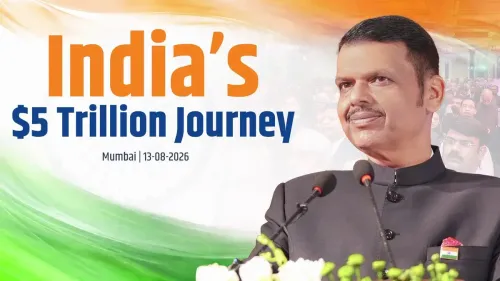
CM Fadnavis Eyes $5 Trillion Economy Goal for Maharashtra
Synopsis
The Chief Minister's Office of Maharashtra invoked the $5 trillion economy goal on June 12, 2026, spotlighting CM Devendra Fadnavis's push to position the state as the lead driver of India's most ambitious macroeconomic target.
Key Takeaways
The Chief Minister's Office of Maharashtra posted on June 12, 2026 , spotlighting CM Devendra Fadnavis 's commitment to the $5 trillion economy target.
India's $5 trillion GDP goal was first announced by Prime Minister Narendra Modi in 2019 as a national economic ambition.
Maharashtra is India's most industrialised state and the single largest contributor to national GDP .
The state has used successive investment summits and industrial policy revisions to position itself as the primary driver of the national target.
Mumbai 's financial ecosystem — stock exchanges, banking headquarters, and capital markets — gives Maharashtra a structural edge in national output conversations.
Upcoming state budget presentations and NITI Aayog assessments will be key indicators of concrete progress toward the stated goal.
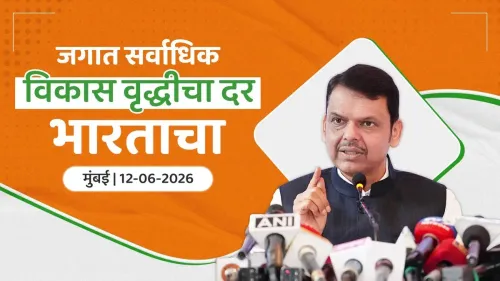
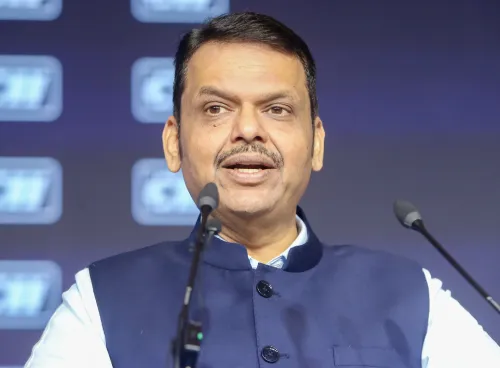
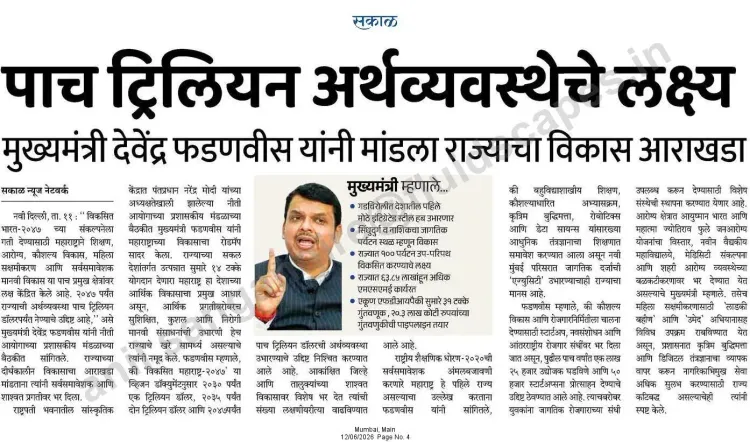
The Chief Minister's Office of Maharashtra on Friday, June 12, 2026, posted on X highlighting Chief Minister Devendra Fadnavis's focus on the $5 trillion economy target, signalling the state's continued alignment with India's most ambitious macroeconomic goal.
Context
The post, captioned '$5 ट्रिलियन अर्थव्यवस्थेचे लक्ष्य' ('The $5 trillion economy target'), places Maharashtra firmly within the national conversation on economic scale. The reference is to the long-standing national goal of building a $5 trillion GDP economy, first articulated at the highest levels of the Union government in 2019. The brevity of the post, directed at Chief Minister Fadnavis, underscores that this target remains a live political and policy commitment for the state.
Policy Backdrop
Prime Minister Narendra Modi announced the $5 trillion economy ambition in 2019, framing it as a national mission requiring every large state to contribute meaningfully. Maharashtra, as India's most industrialised state and the single largest contributor to national GDP, has consistently positioned itself as the engine of this drive. The state's industrial policy frameworks and successive investment summits have been calibrated to attract foreign direct investment and domestic capital in line with this overarching target.
Devendra Fadnavis, a BJP leader who has served multiple terms as Chief Minister, has made industrial growth and investment attraction central planks of his administration. Mumbai's financial ecosystem — housing the country's premier stock exchanges, banking headquarters, and capital markets — gives Maharashtra a structural advantage in any conversation about aggregate national output.
Stakeholders and Impact
The primary beneficiaries of a Maharashtra-led push toward the $5 trillion milestone are the state's industrial sector, foreign and domestic investors, and the broader workforce dependent on manufacturing and services growth. For FDI investors, signals from the Chief Minister's Office carry weight because Maharashtra's regulatory environment and infrastructure connectivity directly affect project viability. Competitive federalism — where states publicly commit to ambitious targets to differentiate themselves — means this kind of messaging also influences how capital allocation decisions are made at the national level.
Smaller states and industry bodies watch Maharashtra's policy posture closely, as the state's commitments often set a benchmark for investment-readiness across the country.
What's Next
Concrete indicators of how Maharashtra plans to advance its $5 trillion economy contribution will emerge through the state's upcoming budget presentations, any announced investment summits, and revisions to industrial or infrastructure policy. NITI Aayog assessments of state-wise GDP contributions will also provide a measurable benchmark against which the Chief Minister's Office's stated ambitions can be evaluated. If the Fadnavis administration follows through with specific sectoral targets or investment commitments, Maharashtra could sharpen its claim as the indispensable driver of India's macroeconomic aspirations.
Point of View
Industry, and the Union government that the Fadnavis administration views the $5 trillion target not as a distant aspiration but as an active policy frame. By anchoring the Chief Minister's identity to this goal, the state is staking a claim on credit for national economic outcomes, a pattern Maharashtra has pursued across successive governments. The timing and brevity of the post suggest it may precede a larger policy announcement or investment event. For the BJP, aligning state-level ambition with a nationally branded economic goal reinforces ideological continuity and makes Maharashtra's growth story inseparable from the party's broader governance narrative.
NationPress
26 Oct 2026
Frequently Asked Questions
What is the $5 trillion economy target for India?
The $5 trillion economy target refers to India's national goal of reaching a GDP of $5 trillion, first announced by Prime Minister Narendra Modi in 2019 as a benchmark for the country's economic scale and development.
What is Maharashtra's role in India's $5 trillion economy goal?
Maharashtra is India's most industrialised state and its largest contributor to national GDP, making it central to any strategy aimed at achieving the $5 trillion economy target.
Who is Devendra Fadnavis?
Devendra Fadnavis is a BJP leader who has served multiple terms as Chief Minister of Maharashtra, with a focus on industrial growth, investment attraction, and infrastructure development.
What does the CMO Maharashtra post about $5 trillion mean?
The post signals that the Chief Minister's Office is actively aligning Maharashtra's economic agenda with India's $5 trillion GDP goal, using the platform to reinforce the state's commitment to this national target.
How does Maharashtra plan to contribute to India's $5 trillion economy?
Maharashtra has historically pursued this goal through industrial policy frameworks, investment summits, and leveraging Mumbai's financial ecosystem to attract foreign and domestic capital.