CM Fadnavis: India Now World's 4th-Largest Economy
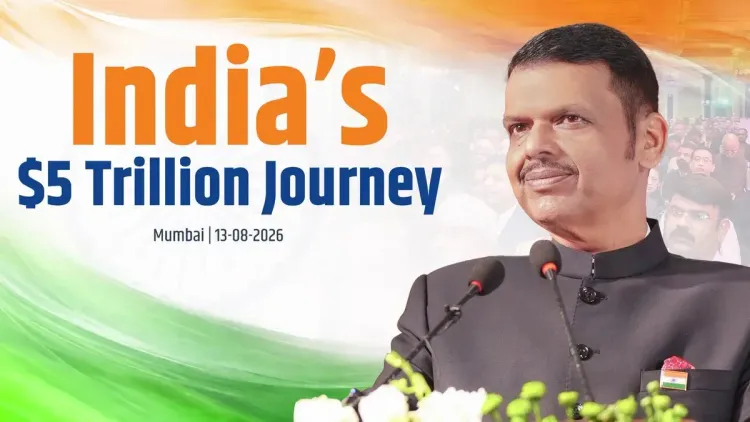
Synopsis
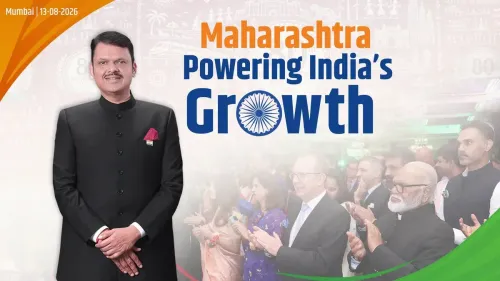
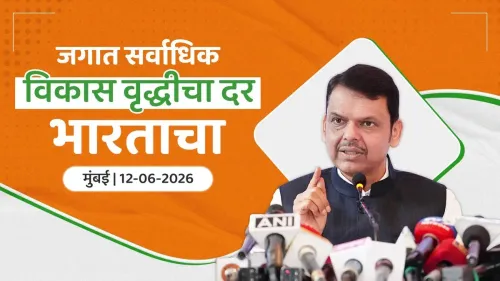
Maharashtra CM Devendra Fadnavis, speaking at a Welcome Ceremony on 13 August 2026, declared India the world's fourth-largest economy under PM Modi's leadership and reaffirmed the government's push toward a $5 trillion GDP — a target in focus since 2019.
Key Takeaways
Devendra Fadnavis declared India the world's fourth-largest economy at a Welcome Ceremony on 13 August 2026 .
He credited Prime Minister Narendra Modi's leadership for the country's rise in global GDP rankings.
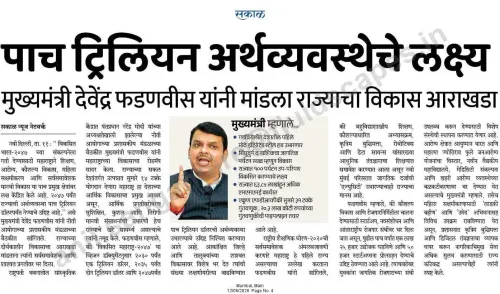
India is described as 'rapidly moving' toward a $5 trillion economy — a target first outlined in 2019–2020 .
Maharashtra , as India's largest state economy, is a key contributor to the national growth narrative.
The statement was made in both English and Marathi , signalling a dual audience of national investors and local constituents.
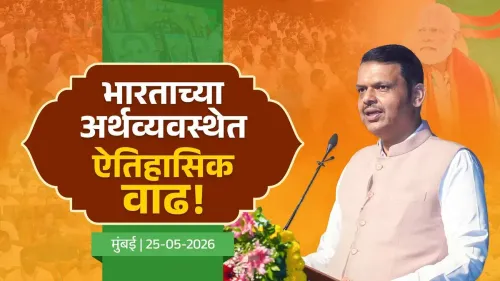
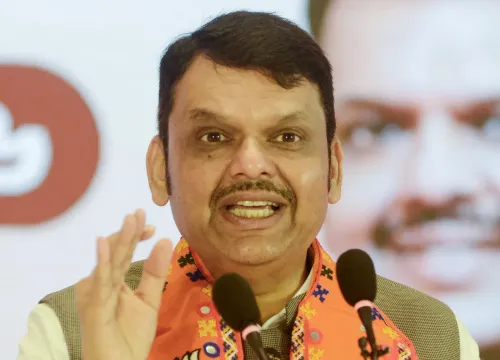
At a Welcome Ceremony on 13 August 2026, Maharashtra Chief Minister Devendra Fadnavis underscored India's ascent to the rank of the world's fourth-largest economy, crediting the vision of Prime Minister Narendra Modi and pointing to the country's accelerating march toward a $5 trillion GDP.
The $5 Trillion Milestone — and What It Means
Fadnavis stated, in both English and Marathi: 'मा. पंतप्रधान नरेंद्र मोदीजी यांच्या दूरदर्शी नेतृत्वात भारत आज जगातील चौथी सर्वात मोठी अर्थव्यवस्था' — 'Under the visionary leadership of Hon. Prime Minister Narendra Modi Ji, India today is the world's fourth-largest economy.' The $5 trillion GDP target was first prominently outlined by the Prime Minister in 2019–2020 and has since anchored successive Union Budget speeches as a north-star ambition for the Indian economy.
Reaching the fourth spot on the global GDP ladder — overtaking economies that have held that position for decades — is a milestone that reframes India's standing in every boardroom and diplomatic corridor that tracks emerging-market power. The number matters because of what it unlocks: greater weight in multilateral negotiations, stronger sovereign credit signals, and a louder voice in setting the rules of global trade.
Maharashtra's Stake in the National Growth Story
Maharashtra is India's single largest state economy, contributing a disproportionate share of national GDP through its financial capital Mumbai and its sprawling manufacturing and services belt. When Fadnavis invokes the national growth narrative at a state-level ceremony, the subtext is deliberate — the state's investment climate, infrastructure pipeline, and industrial policy are presented as integral engines of the broader $5 trillion drive.
State-level investment summits in Maharashtra and the next Union Economic Survey will be the clearest near-term indicators of whether the trajectory holds and how much of that growth story the state can credibly claim as its own.
Point of View
The framing is also strategic: positioning the state as an indispensable engine of national growth strengthens its hand in securing central investment and infrastructure allocations. The dual-language delivery — English for investors and global optics, Marathi for the home constituency — reflects a practiced political register that Fadnavis has refined over successive terms.
NationPress
28 Sept 2026
Frequently Asked Questions
Is India now the world's fourth-largest economy?
Maharashtra CM Devendra Fadnavis stated on 13 August 2026 that India is the world's fourth-largest economy under PM Modi's leadership. The precise ranking at that date is referenced in his speech but cannot be independently verified from available training data.
What is India's $5 trillion economy target?
The $5 trillion GDP target is a longstanding national ambition first prominently outlined by Prime Minister Narendra Modi in 2019–2020 and reiterated in multiple Union Budget speeches since then.
What did Devendra Fadnavis say about India's economy?
Fadnavis said that under PM Modi's 'visionary leadership,' India is the world's fourth-largest economy and is rapidly moving toward becoming a $5 trillion economy.
What is Maharashtra's role in India's economic growth?
Maharashtra is India's largest state economy, with Mumbai as its financial capital. It contributes significantly to national GDP through finance, manufacturing, and services sectors.
When did Fadnavis make this statement about India's economy?
Fadnavis made the statement at a 'Welcome Ceremony' on 13 August 2026 , and posted it on X on 14 August 2026 — the eve of India's Independence Day.