Fadnavis eyes $1 trillion Maharashtra economy by 2030, needs 10%+ growth
Synopsis
Maharashtra is already at $660 billion and Chief Minister Fadnavis says it is the closest any Indian state has come to the $1 trillion mark — but the real challenge is currency: a weaker rupee against the dollar has shifted the finish line, and only sustained double-digit growth can bring it back within reach by 2030.
Key Takeaways
Maharashtra CM Devendra Fadnavis confirmed the state’s economy stands at $660 billion , the closest any Indian state has come to the $1 trillion target.
The state’s current real growth rate is 8.8% ; Fadnavis said it must exceed 10% to comfortably hit the 2030 goal.
Maharashtra’s nominal growth rate is already close to 11% , but dollar-denominated targets are sensitive to Rupee-Dollar exchange rate shifts.
Global currency fluctuations linked to the oil crisis have pushed the original timeline; Fadnavis said the target will be met by 2030 , or by 2031 at the latest.
13 districts have already met development targets; remote regions like Gadchiroli , Palghar , and Nandurbar are receiving special focus.
River-linking projects are planned to end drought conditions in Marathwada , Vidarbha , North Maharashtra , and Western Maharashtra .
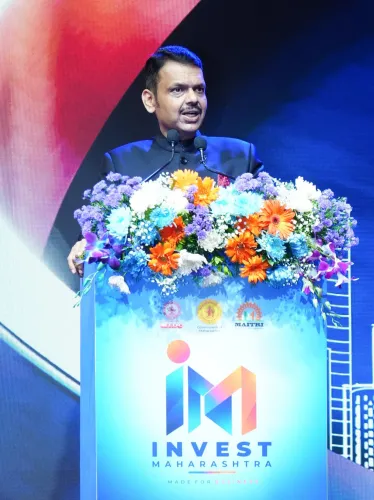
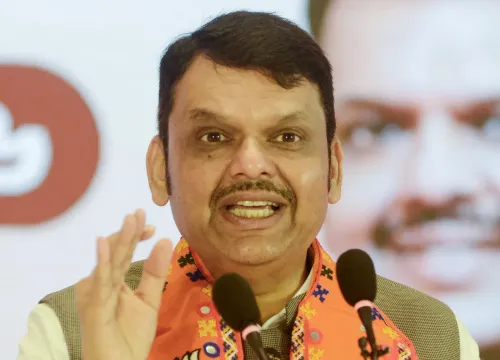
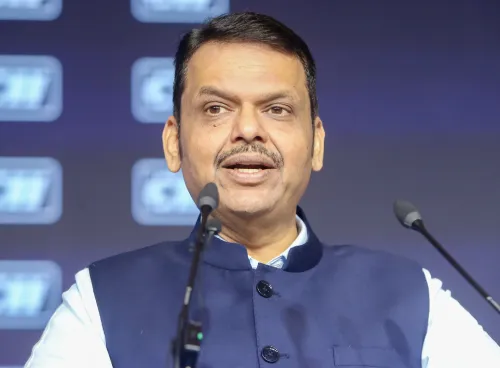
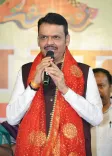
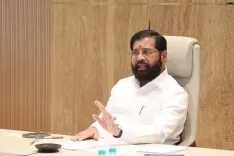
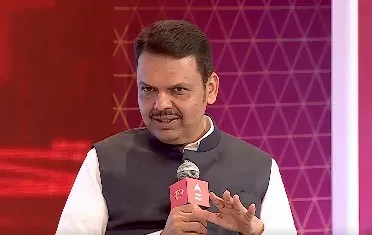
Maharashtra Chief Minister Devendra Fadnavis on Thursday, 3 September expressed confidence that the state is on track to become a $1 trillion economy by 2030, while acknowledging that the current growth rate of 8.8% must cross the 10% threshold to comfortably secure the milestone. He made the remarks at an infrastructure conclave organised by a Marathi television channel.
Where Maharashtra Stands Today
Fadnavis placed Maharashtra's current economic size at $660 billion, asserting it is the state closest to the trillion-dollar mark among all Indian states pursuing similar ambitions. “If any state is closest to achieving the $1 trillion dream today, it is Maharashtra,” he said. “If we maintain a sustained growth rate, we will undoubtedly become a $1 trillion economy by 2030.”
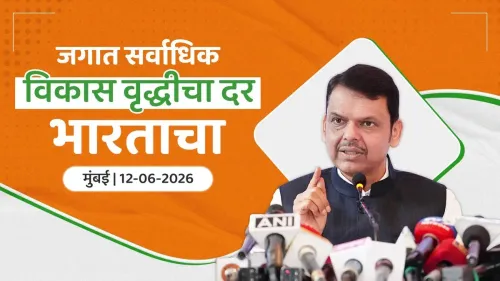
He contextualised the figure against global benchmarks, noting that major world economies are currently expanding at a modest 2% to 2.5%, while India is growing at 7.8% and Maharashtra is outpacing the national average at 8.8%.
The Growth Rate Challenge
The Chief Minister drew a distinction between nominal and real growth, pointing out that Maharashtra’s nominal growth rate already stands close to 11%. However, he cautioned that nominal growth alone is not the defining metric when the target is denominated in US dollars. “We must balance inflation and currency exchange rates. While 8.8% is a solid growth rate in the current climate, our effort will certainly be to cross the 10% threshold,” Fadnavis said.
He also addressed the impact of global currency fluctuations on the dollar-denominated target. Based on the Rupee-Dollar exchange rate prevailing when the goal was first announced, the milestone could have been reached as early as 2029. The global oil crisis, he explained, has since caused significant shifts in exchange rates, pushing the realistic timeline to 2030 — or, at the latest, 2031. “I remain confident that we will achieve this by 2030. Even if we fall slightly short, it will certainly be accomplished by 2031,” he remarked.
Maharashtra as India’s Growth Engine
Fadnavis described Maharashtra as the nation’s primary “growth engine” and underlined its position as India’s largest state economy and leading startup hub. The state continues to attract significant domestic and Foreign Direct Investment (FDI), generating employment opportunities for the youth, he said.
To spread development beyond urban centres, the administration is working to convert every district into an independent growth hub. So far, 13 districts have met their projected development targets, with special attention directed to remote regions including Gadchiroli, Palghar, and Nandurbar.
Water Security and Infrastructure Goals
On long-term infrastructure, Fadnavis pledged to eliminate drought conditions for future generations through comprehensive river-linking projects. Water from surplus basins will be redirected to historically vulnerable regions including Marathwada, Vidarbha, North Maharashtra, and drought-prone belts of Western Maharashtra. The state has also outlined agricultural welfare schemes and rural infrastructure investments as part of its broader development blueprint.
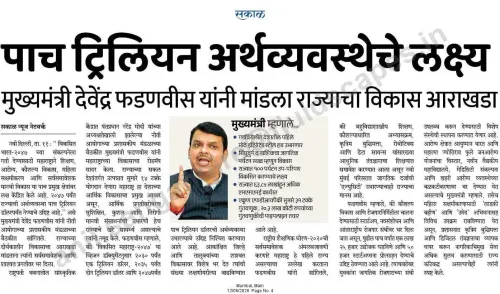
With sectoral investments, decentralised district development, and water security initiatives all converging, Maharashtra’s path to the trillion-dollar mark will be closely watched as a bellwether for India’s own $5 trillion economy ambition.
Point of View
But it also exposes the structural vulnerability of setting rupee-economy targets in dollar terms. Maharashtra’s 8.8% real growth is genuinely strong by global standards, yet the gap between that and the 10%-plus threshold required is not trivial, especially amid a global slowdown. The 13-district milestone is encouraging, but the real test of decentralised growth will be whether Gadchiroli and Nandurbar — not just Pune and Mumbai — show up meaningfully in the next GSDP revision.
NationPress
19 Oct 2026
Frequently Asked Questions
What is Maharashtra’s current economic size and its $1 trillion target?
Maharashtra’s economy currently stands at approximately $660 billion, according to Chief Minister Devendra Fadnavis. The state has set a target of reaching $1 trillion by 2030, which Fadnavis described as achievable if the state sustains a growth rate above 10%.
Why does Maharashtra need over 10% growth to hit the $1 trillion mark?
The target is denominated in US dollars, making it sensitive to Rupee-Dollar exchange rate movements. While Maharashtra’s nominal growth rate is close to 11%, the real growth rate of 8.8% must be balanced against inflation and currency shifts — factors that can move the effective finish line, as the global oil crisis has already demonstrated.
What happens if Maharashtra misses the 2030 deadline?
Fadnavis indicated the milestone would be achieved by 2031 at the latest if 2030 is narrowly missed. He attributed potential slippage to global oil-crisis-driven exchange rate shifts rather than domestic growth underperformance.
How is Maharashtra addressing uneven regional development?
The state government is working to make every district an independent growth hub. So far, 13 districts have met their projected development targets. Special focus has been extended to remote regions including Gadchiroli, Palghar, and Nandurbar.
What infrastructure plans support Maharashtra’s economic ambitions?
Fadnavis outlined river-linking projects to eliminate drought in Marathwada, Vidarbha, North Maharashtra, and Western Maharashtra. The state is also investing in agricultural welfare schemes and rural infrastructure as part of its long-term economic blueprint.