Puri Hails India-Australia Energy Pact on PM Modi's Visit
Synopsis
Union Petroleum Minister Hardeep Singh Puri has welcomed a landmark India-Australia joint statement issued during PM Modi's Australia visit, reaffirming bilateral commitments on LNG trade, energy transition, low-carbon fuels, and supply-chain resilience across the energy value chain.
Key Takeaways
India and Australia have issued a joint statement during PM Modi's Australia visit reaffirming energy security and transition cooperation.
Australia is recognised as an important LNG supplier to India ; India is recognised as an important supplier of liquid fuels and downstream products to Australia .
Both nations committed to supporting continued energy-product flows and enhancing bilateral energy trade.
The statement calls for investment across the energy value chain , including renewables, low-carbon fuels, and supply-chain resilience.
The commitment to 'deepening regional cooperation' aligns with broader Quad energy-security frameworks involving India, Australia, the US, and Japan.
Follow-up action is expected in hydrogen, critical minerals, and downstream refining sectors.
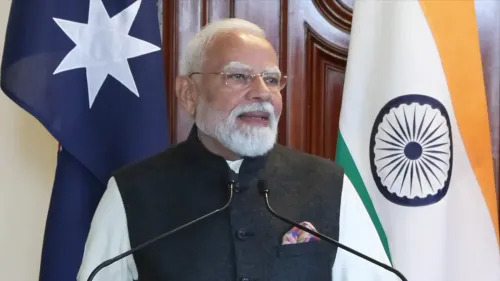
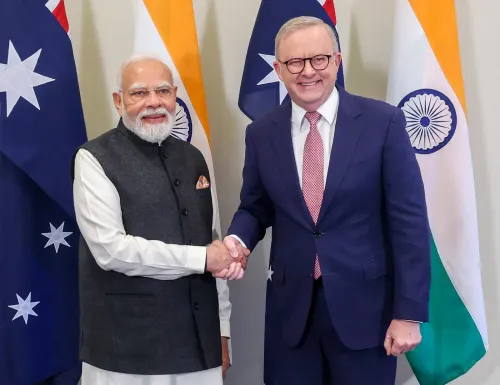
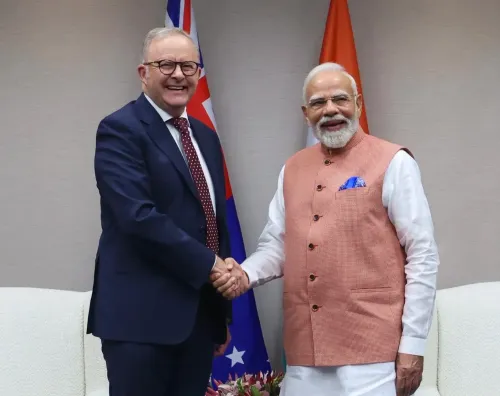
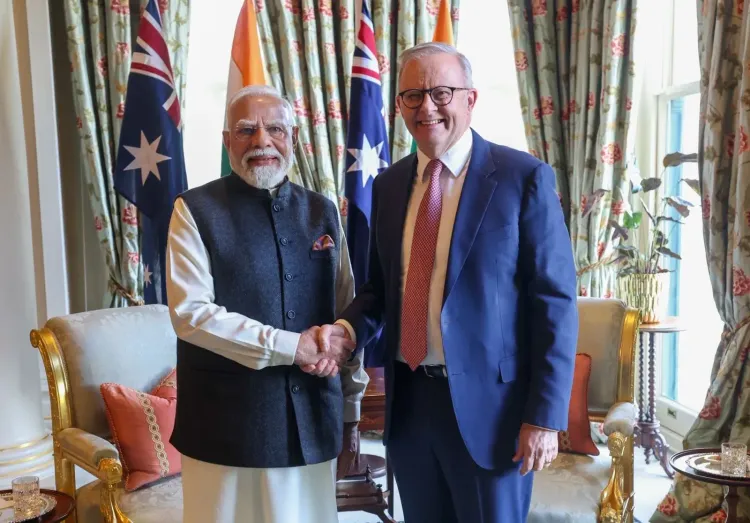
Union Petroleum Minister Hardeep Singh Puri on Thursday, 9 July 2026 welcomed a landmark joint statement issued during Prime Minister Narendra Modi's visit to Australia, reaffirming the two nations' commitment to deepen energy security cooperation, accelerate the energy transition, and strengthen trade in LNG, liquid fuels, and low-carbon energy products.
Context
The joint statement, released to coincide with PM Modi's Australia visit, describes the trip as 'momentous' and frames it as providing 'further momentum to India's quest towards energy self-sufficiency.' Minister Puri highlighted that both countries have reaffirmed their intent to work together on energy security, energy transition, and low-carbon fuels.
The statement specifically recognises Australia's role as an important supplier of LNG to India and India's role as an important supplier of liquid fuels and other downstream products to Australia — a mutual dependency that underpins the bilateral energy relationship.
Policy Backdrop
India and Australia elevated their ties to a Comprehensive Strategic Partnership in 2020, and signed the India-Australia Economic Cooperation and Trade Agreement in 2022, which liberalised trade in energy and resources. The latest joint statement builds on that foundation, extending commitments into supply-chain resilience and the clean-energy transition.
India, the world's third-largest energy consumer, has been systematically diversifying its import sources to reduce dependence on any single supplier. Australia, a major LNG exporter and holder of significant critical-mineral reserves, has positioned itself as a stable Indo-Pacific energy partner for both fossil and low-carbon flows.
The dual emphasis on 'open trade arrangements for energy and liquid fuels' alongside 'accelerating the energy transition' reflects a pragmatic approach: maintaining reliable conventional energy flows while co-investing in renewables and low-carbon alternatives.
Stakeholders and Impact
Indian energy importers, particularly those reliant on LNG for industrial and power-generation needs, stand to benefit from reinforced supply-chain commitments that reduce price and availability risk. Australian LNG producers and downstream refiners, in turn, gain a more structured market access framework into one of the world's fastest-growing energy markets.
The joint statement's call to 'encourage investment opportunities across the energy value chain' signals potential downstream activity in areas such as hydrogen, critical minerals, and refining — sectors that both governments have identified as priorities under their respective clean-energy agendas. Renewable energy developers and low-carbon fuel technology firms in both countries could see new bilateral investment channels open up.
The broader regional dimension is also significant: the commitment to 'deepening regional cooperation' aligns with parallel energy-security dialogues under the Quad framework, of which both India and Australia are members alongside the United States and Japan.
What's Next
Attention will now turn to follow-up investment announcements and working-group formations under the energy value-chain commitments flagged in the joint statement. Hydrogen, critical minerals, and downstream refining are the sectors most likely to attract early-mover announcements.
The Ministry of Petroleum and Natural Gas, tagged by Minister Puri in his post alongside PMO India, MEA India, and the High Commission of India in Canberra, is expected to lead the domestic implementation of the energy-trade and investment commitments. How quickly both sides convert the joint-statement language into bankable projects will determine the real-world impact of PM Modi's Australia visit on India's energy security roadmap.
Point of View
India for liquid fuels — the statement creates a framework of mutual dependency that is harder to walk back than generic cooperation pledges. For Minister Puri, amplifying the statement publicly reinforces the BJP government's 'energy self-sufficiency' narrative at home while signalling to markets that supply-chain diversification is institutionally backed. The real test will be whether the investment-across-the-value-chain language translates into signed deals in hydrogen and critical minerals — the sectors where both governments have the most to gain and where bilateral momentum has so far lagged behind rhetoric.
NationPress
9 Jul 2026
Frequently Asked Questions
What did India and Australia agree on energy during PM Modi's Australia visit?
India and Australia issued a joint statement committing to strengthen energy security, accelerate the energy transition, support continued LNG and liquid-fuel trade, and encourage investment across the energy value chain, including renewables and low-carbon fuels.
What is Australia's role in India's energy supply?
Australia is recognised as an important supplier of LNG to India, helping India diversify its natural gas import sources as part of its broader energy security strategy.
What is India's role in Australia's energy supply?
India is recognised as an important supplier of liquid fuels and other downstream petroleum products to Australia, reflecting a two-way energy trade relationship between the two countries.
What is the India-Australia Comprehensive Strategic Partnership?
The Comprehensive Strategic Partnership was established in 2020 during a virtual summit between PM Modi and the Australian Prime Minister, elevating bilateral ties and providing a framework for cooperation in trade, defence, and energy.
What sectors could see investment after the India-Australia energy joint statement?
Hydrogen, critical minerals, renewable energy, and downstream refining are the sectors most likely to attract follow-up investment announcements under the energy value-chain commitments made in the joint statement.