Modi in Australia: Defence corridor, uranium deal set to reshape India-Australia ties
Synopsis
Modi's Australia visit is shaping up to be one of the most substantive bilateral engagements in years — a uranium deal, a Defence Industrial Corridor, a critical minerals corridor, and a cybersecurity pact all on the table simultaneously. The breadth of the agenda signals that India and Australia are moving from strategic intent to institutional architecture.
Key Takeaways
PM Narendra Modi formally began his Australia visit on 9 July , starting in Melbourne .
A Joint Defence Declaration is expected to establish a Defence Industrial Corridor and enhance military interoperability between the two countries.
A historic uranium agreement is anticipated to secure long-term uranium supplies for India's civilian nuclear energy programme .
India is expected to increase imports of LNG, coal, and diesel from Australia as part of an energy diversification strategy.
A critical mineral corridor and the Australia-India PACTS agreement on cybersecurity and critical technologies are also expected to be concluded.
Both nations are set to adopt a Maritime Security Roadmap to strengthen Indo-Pacific cooperation.
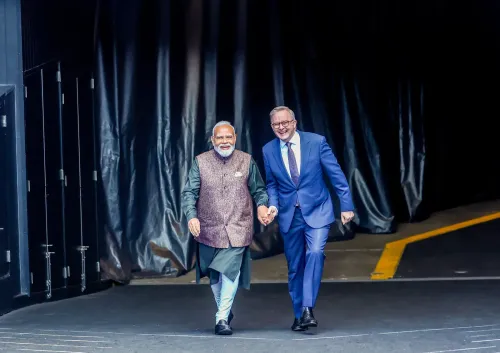
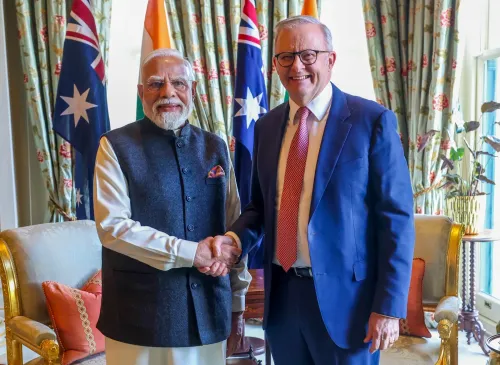
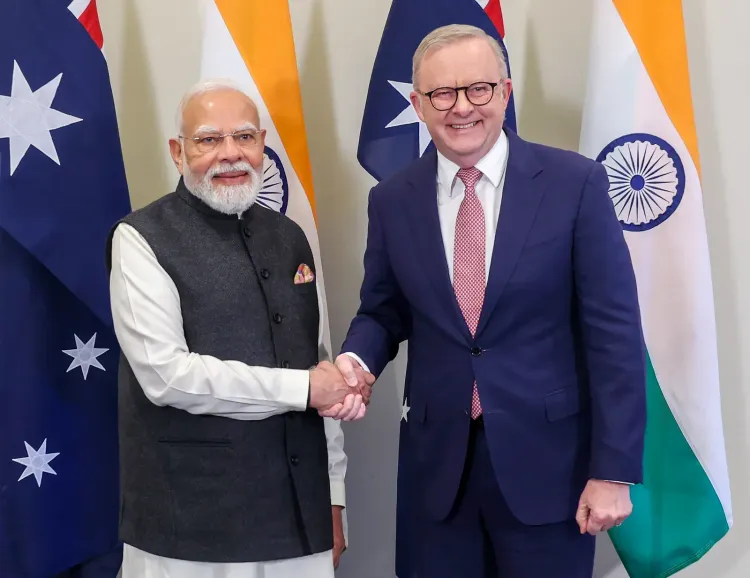
Prime Minister Narendra Modi on Thursday, 9 July formally launched his visit to Australia, with Melbourne as the starting point of engagements expected to produce a sweeping set of agreements spanning defence manufacturing, maritime security, energy supply and critical technology — according to sources familiar with the bilateral agenda.
The visit is poised to mark a significant deepening of the Comprehensive Strategic Partnership between the two nations, with multiple landmark outcomes anticipated across sectors that carry strategic weight for both capitals.
Defence Industrial Corridor and Military Cooperation
A Joint Defence Declaration is expected to anchor the visit's security dimension, paving the way for the creation of a Defence Industrial Corridor designed to foster collaboration between defence startups and expand manufacturing capabilities in both countries. The declaration is also expected to enhance interoperability between the two nations' armed forces through greater operational cooperation and joint initiatives, according to sources.
Separately, sources indicated that an Indian Army officer is expected to be deployed at the Australian Defence College — a step that would mark a meaningful expansion of military-to-military engagement. Counter-terrorism cooperation is also expected to feature prominently in the bilateral discussions.
Historic Uranium Agreement and Energy Security
Energy security is set to emerge as one of the most consequential pillars of the visit. India and Australia are expected to sign a historic uranium agreement aimed at securing long-term uranium supplies for India's civilian nuclear energy programme, according to sources. This would represent a significant milestone in the bilateral energy relationship.
Beyond nuclear energy, India is expected to increase imports of liquefied natural gas (LNG), coal, and diesel from Australia, reinforcing New Delhi's broader strategy of diversifying its energy sources and reducing supply-chain vulnerabilities. This comes amid a global recalibration of energy partnerships following supply disruptions in recent years.
Critical Minerals Corridor and Maritime Roadmap
The two countries are also expected to establish a critical mineral corridor to strengthen supply chains and secure access to resources essential for advanced manufacturing and clean energy technologies, sources said. Australia holds some of the world's largest reserves of minerals such as lithium, cobalt, and rare earths — all central to India's clean energy and electronics manufacturing ambitions.
On maritime security, both sides are expected to adopt a Maritime Security Roadmap focused on enhancing maritime domain awareness, coastal surveillance, and ensuring a free, open, and peaceful Indo-Pacific. Notably, this framework aligns closely with the priorities of the Quad grouping, of which both India and Australia are members.
PACTS Agreement on Cybersecurity and Critical Technologies
The two countries are expected to conclude the Australia-India PACTS agreement, which will focus on cybersecurity collaboration, critical technologies, and strengthening the resilience of critical technology supply chains, according to sources. The agreement is intended to expand cooperation in strategically important sectors at a time when both nations are deepening their technology partnerships with like-minded democracies.
What to Watch
The full scope of signed agreements will become clearer as the visit progresses. Analysts will be watching whether the defence and energy commitments translate into binding timelines and implementation frameworks, or remain aspirational — a distinction that has historically separated high-profile bilateral visits from lasting strategic shifts. India's engagement with Australia has accelerated sharply since the elevation of ties to a Comprehensive Strategic Partnership in 2020, and this visit is expected to add further institutional depth to that relationship.
Point of View
Defence corridor, critical minerals pact, cybersecurity agreement, maritime roadmap — is unusual for a single bilateral visit and reflects how rapidly the India-Australia relationship has matured since 2020. What deserves scrutiny is implementation: past high-profile visits have produced long lists of MOUs that stalled at the execution stage. The uranium agreement, if concluded, would be the most consequential item — it directly enables India's civilian nuclear expansion at a time when domestic uranium supply constraints are a real bottleneck. The critical minerals corridor is equally significant, given China's dominance of global rare earth supply chains. Whether these agreements come with binding timelines will determine whether this visit is a turning point or a well-staged photo opportunity.
NationPress
7 Oct 2026
Frequently Asked Questions
What is the purpose of PM Modi's Australia visit?
PM Modi's visit to Australia, which formally began on 9 July in Melbourne, is aimed at deepening the Comprehensive Strategic Partnership between the two countries. A series of major agreements covering defence, energy, critical minerals, maritime security, and cybersecurity are expected to be concluded during the visit.
What is the historic uranium agreement between India and Australia?
India and Australia are expected to sign a uranium supply agreement that would secure long-term uranium for India's civilian nuclear energy programme, according to sources. Such a deal would be a landmark in bilateral energy cooperation and help address India's domestic uranium supply constraints.
What is the proposed Defence Industrial Corridor between India and Australia?
The Defence Industrial Corridor is expected to emerge from a Joint Defence Declaration and is designed to promote collaboration between defence startups and boost manufacturing capabilities in both countries. It would also enhance interoperability between the armed forces of India and Australia through joint operational initiatives.
What is the Australia-India PACTS agreement?
The PACTS agreement is expected to focus on cybersecurity collaboration, critical technologies, and the resilience of critical technology supply chains. It is intended to expand strategic cooperation in sectors that both nations consider vital to their long-term security and economic interests.
How does this visit fit into the broader India-Australia relationship?
India and Australia elevated their relationship to a Comprehensive Strategic Partnership in 2020, and bilateral engagement has accelerated significantly since then. The 9 July visit is expected to add institutional depth to that partnership through binding agreements across defence, energy, and technology sectors.