Modi's Australia visit: Defence pact, uranium deal mark strategic leap
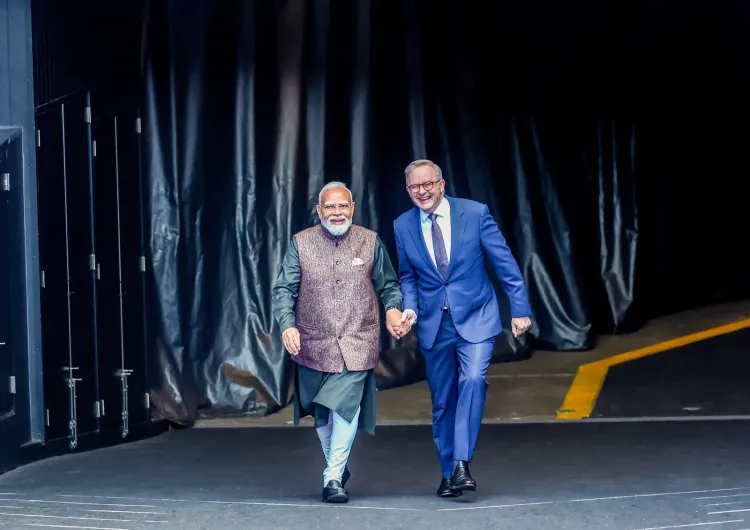
Synopsis
Modi's Australia visit produced two landmark outcomes that would have seemed unlikely just a few years ago: a Joint Defence Declaration with language analysts compare to a formal alliance treaty, and a breakthrough on uranium exports that India had long sought. Together, they signal a decisive tilt in how both democracies are repositioning against China's regional weight.
Key Takeaways
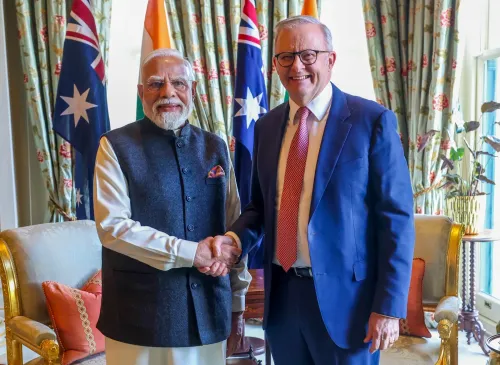
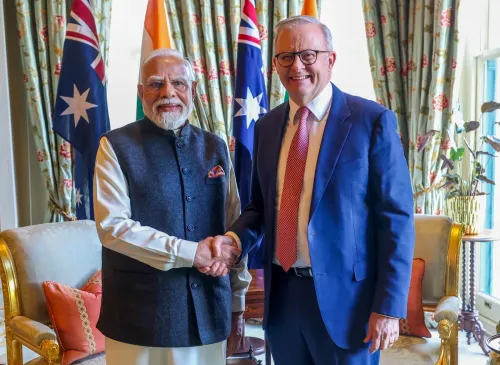
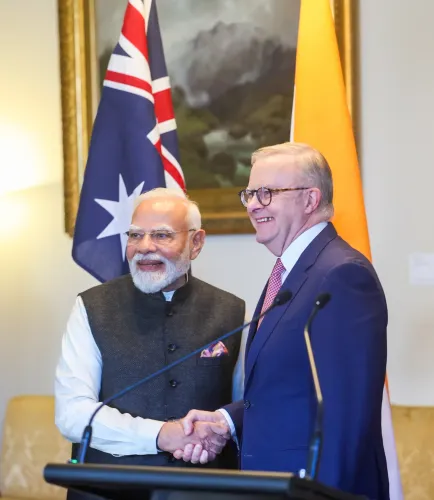
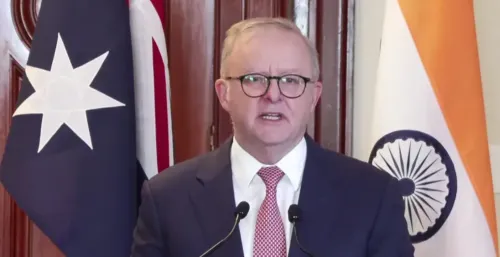
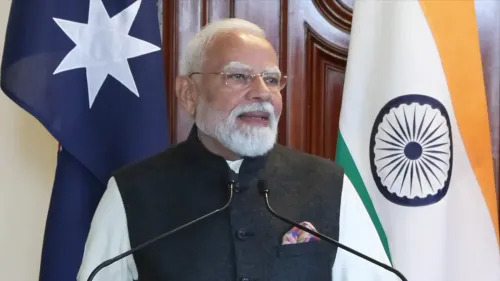
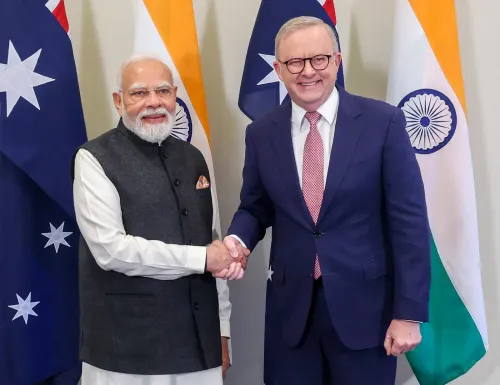
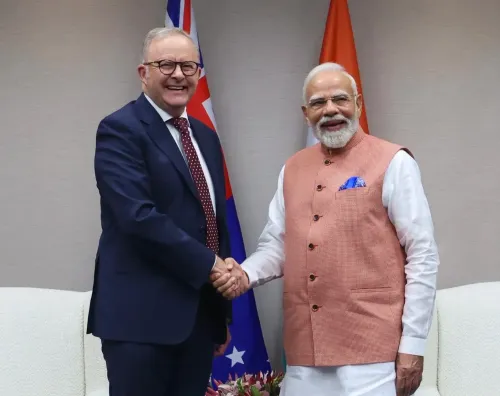
PM Narendra Modi and Australian PM Anthony Albanese held the third Australia-India Annual Summit , finalising MoUs across defence, maritime security, nuclear energy, critical technology, and education.
A Joint Declaration on Defence commits both nations to interoperability , information sharing , and deeper joint exercises — language analysts describe as 'almost alliance-like'.
The declaration includes a pledge to consult on Indo-Pacific defence developments affecting shared interests, drawing comparisons to Article 3 of the ANZUS Treaty .
A breakthrough on civil nuclear energy and uranium exports to India addresses a longstanding friction point, given India's position outside the NPT .
Analysts warn that India and Australia still lack a joint framework to counter China's coercive trade tactics in the Indo-Pacific.
Prime Minister Narendra Modi's visit to Australia has yielded significant outcomes in the defence and security sectors, with analysts describing the results as a meaningful step-change in the bilateral relationship. The trip, which included the third Australia-India Annual Summit with Australian Prime Minister Anthony Albanese, comes at a moment when both nations are reassessing their strategic dependencies amid rising concern over China's regional assertiveness.
Summit Outcomes and MoUs Signed
The two leaders reviewed cooperation across trade and investment, critical minerals, clean energy, technology, defence and security, education, skills, science and innovation, and people-to-people ties. Both sides also exchanged views on regional and global developments, reaffirming their commitment to a free, open, inclusive and prosperous Indo-Pacific.
The Ministry of External Affairs stated that the summit saw the finalisation of several Memoranda of Understanding spanning defence, maritime security, energy including nuclear, critical technology, education, and skilling, among other areas.
The Joint Defence Declaration: Near-Alliance Language
A Joint Declaration on Defence signed during the visit has drawn particular attention. According to an analysis published by the Australian Strategic Policy Institute (ASPI)'s platform The Strategist, the declaration commits both nations to building interoperability and information sharing between their defence forces, as well as deepening the complexity of joint exercises.
Analyst Rajeswari Pillai Rajagopalan, writing in The Strategist, highlighted the declaration's undertaking to 'consult on defence-related developments in the Indo-Pacific that affect shared interests' as especially significant. She noted that Griffith University professor Ian Hall had described this as language 'almost alliance-like', drawing a parallel with Article 3 of the ANZUS Treaty, which calls for consultation when the territorial integrity or security of any party is threatened.
'This is notable because India has for decades avoided being confined to alliances, fearing this would restrict its manoeuvrability,' Rajagopalan wrote, adding that the shift follows a highly successful visit by Japanese Prime Minister Sanae Takaichi to India in early July.
Civil Nuclear Energy and the Uranium Question
A second major outcome involves civil nuclear energy and the potential sale of uranium to India. Australia had historically restricted uranium exports to nations with strong non-proliferation commitments, and India's position outside the Nuclear Non-Proliferation Treaty (NPT) had long been a barrier.
India has consistently argued that, despite not being an NPT signatory, it has adhered to the treaty's principles more rigorously than several signatories. This was, according to reports, a source of considerable frustration in New Delhi, particularly given that Australia had previously supplied uranium to China — a country critics argue has violated both its NPT and Nuclear Suppliers Group (NSG) commitments.
What Remains Unfinished
Despite the progress, analysts caution that significant gaps remain. The Strategist report noted that India and Australia have yet to develop sufficient joint mechanisms to counter China's coercive trade tactics. It called for Indo-Pacific partners to build a coordinated format for responding to Beijing's economic pressure, arguing that commerce has historically been a tool of great power competition — from Napoleon's Continental System to Cold War-era technology controls.
The declaration also calls for resolving disputes through peaceful means in line with international law — a commitment that carries added weight on the 10th anniversary of the UN Tribunal award that favoured the Philippines in its territorial dispute with China. As both governments move toward implementation, the depth of follow-through on defence interoperability and nuclear cooperation will be the true measure of this summit's legacy.
Point of View
A double standard that rankled New Delhi for years. Both shifts reflect less a change in Indian or Australian policy preference and more a shared recalibration driven by Beijing's behaviour. The harder question — whether this translates into coordinated action on China's economic coercion, which The Strategist explicitly flags as unfinished — will define whether this summit is a turning point or a well-worded communiqué.
NationPress
13 Oct 2026
Frequently Asked Questions
What were the key outcomes of PM Modi's Australia visit?
PM Modi's visit produced a Joint Declaration on Defence committing both nations to interoperability and information sharing, along with MoUs in maritime security, civil nuclear energy, critical technology, education, and skilling. The visit also marked a breakthrough on uranium exports to India, which had previously been blocked by Australia due to India's non-NPT status.
Why is the Joint Defence Declaration significant?
The declaration includes language pledging both countries to 'consult on defence-related developments in the Indo-Pacific that affect shared interests' — phrasing analysts at the Australian Strategic Policy Institute compare to Article 3 of the ANZUS Treaty. For India, which has historically avoided formal alliances to preserve strategic autonomy, this represents a notable shift in posture.
What is the significance of the uranium deal between India and Australia?
Australia had long restricted uranium exports to countries with strong non-proliferation credentials, and India's status outside the Nuclear Non-Proliferation Treaty (NPT) was a barrier. The civil nuclear breakthrough during Modi's visit removes a longstanding obstacle, allowing India access to Australian uranium despite not being an NPT signatory.
What challenges remain in the India-Australia relationship?
According to analysts, the two countries still lack a coordinated mechanism to respond to China's coercive trade tactics. The Strategist report called on Indo-Pacific partners to develop a joint format for countering Beijing's economic pressure, arguing that trade has always been a tool in great power competition.
How does Modi's Australia visit fit into India's broader foreign policy?
The visit follows Japanese PM Sanae Takaichi's visit to India in early July, reflecting a broader pattern of India deepening ties with like-minded Indo-Pacific democracies amid shared concern over China's regional assertiveness. The near-alliance language in the defence declaration signals India is recalibrating its traditional aversion to formal security commitments.