India-Australia uranium trade deal signed, energy security pact sealed
Synopsis
Years after the 2015 nuclear cooperation pact, India and Australia have finally cleared the administrative path for Australian uranium to flow into Indian reactors — exclusively for peaceful use and under IAEA oversight. Paired with a sweeping Joint Statement on Energy Security, the Melbourne summit signals that the India-Australia relationship has moved well beyond diplomatic goodwill into concrete strategic resource architecture.
Key Takeaways
India and Australia finalised administrative arrangements for Australian uranium exports to India on 9 July in Melbourne .
Uranium will be used exclusively for peaceful purposes and subject to IAEA safeguards , under the Australia-India Nuclear Cooperation Agreement (2015) .
A Joint Statement on Energy Security was issued, covering LNG, liquid fuels, renewables, low-carbon fuels, and supply chain resilience.
Australia acknowledged India's Global Biofuels Alliance initiative as part of global energy transition efforts.
Both sides expressed concern over the West Asia situation and its impact on global energy supply chains and commodity prices.
PM Modi described the two nations as 'two important ocean powers' with a 'common worldview' and 'deep mutual trust.'
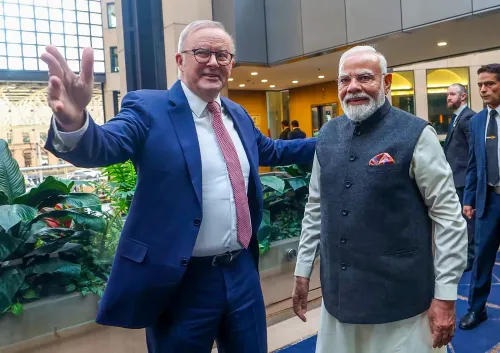
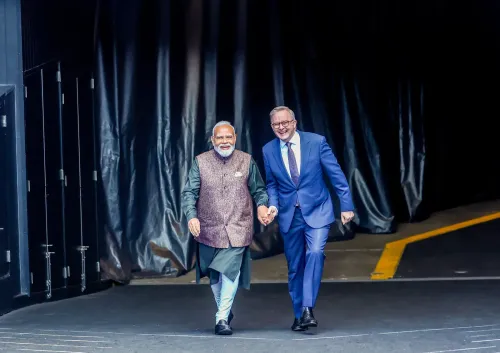
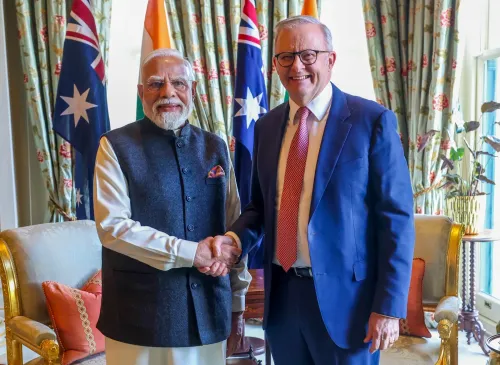
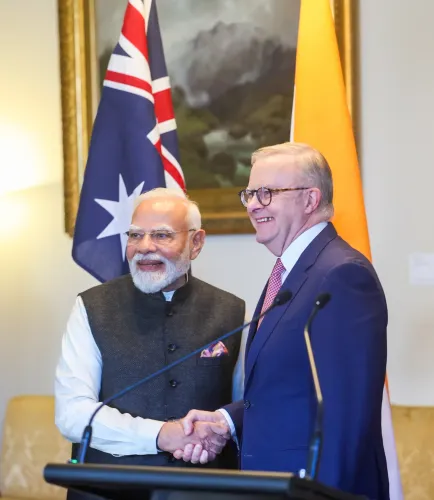
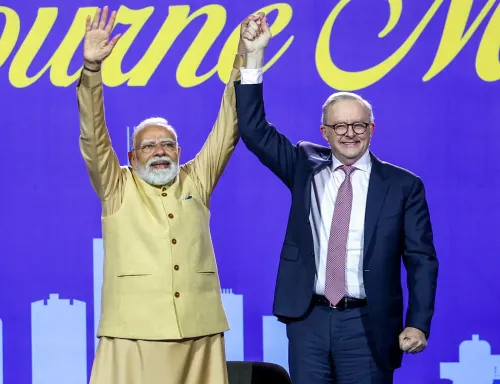
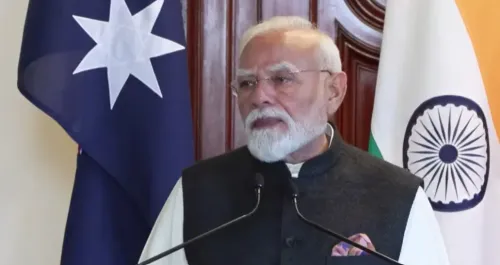
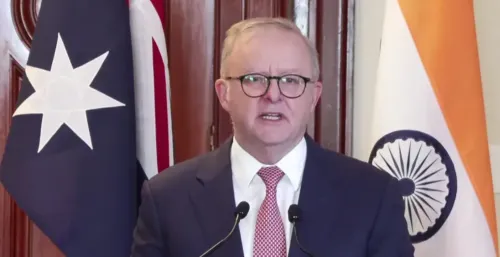
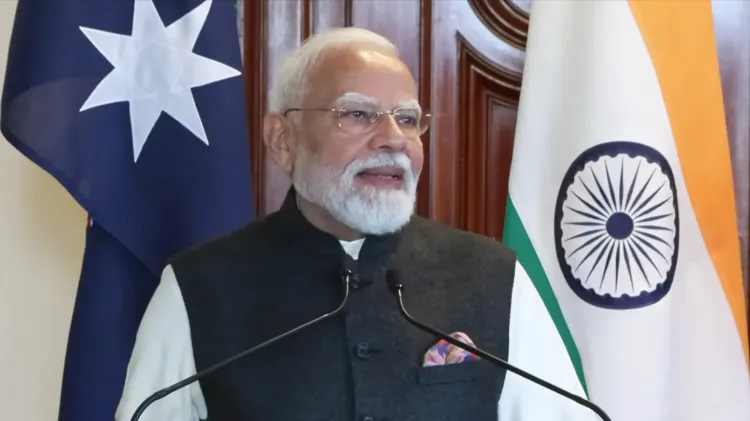
Prime Minister Narendra Modi and Australian Prime Minister Anthony Albanese on Thursday, 9 July finalised the administrative arrangements enabling the export of Australian uranium to India for exclusively peaceful purposes, marking a significant milestone under the Australia-India Nuclear Cooperation Agreement (2015). The announcement was made at a joint press conference in Melbourne following the Annual Leaders' Summit, with Modi describing it as a landmark step for India's clean energy future.
What the Agreement Covers
The two governments have completed the administrative framework necessary to operationalise uranium exports under the 2015 bilateral nuclear cooperation pact. All uranium supplied by Australia will be used exclusively for peaceful purposes and will remain subject to safeguards enforced by the International Atomic Energy Agency (IAEA).
'Today, we have reached an important agreement in the field of nuclear energy. This will open the path for uranium supply from Australia to India and give new strength to our clean energy objectives,' Modi said at the joint press meet.
Joint Statement on Energy Security
Alongside the uranium arrangement, the two countries issued a Joint Statement on Energy Security, reaffirming their commitment to energy trade, supply chain resilience, and the transition to cleaner energy sources. The statement acknowledged Australia's role as a key supplier of liquefied natural gas (LNG) to India, and India's role as an important supplier of liquid fuels and downstream petroleum products to Australia.
Both sides committed to maintaining uninterrupted energy flows and pledged to deepen regional cooperation to accelerate the energy transition, promote renewable energy and low-carbon fuels, and encourage greater investment across the energy value chain. The joint statement also reaffirmed a shared commitment to stable, secure, and reliable supply of coal, diesel, natural gas, and other liquid fuels.
West Asia Concerns and Open Markets
The two governments also expressed concern over the ongoing situation in West Asia and its potential impact on global energy supply chains and commodity prices. Both sides reaffirmed their commitment to open markets and rules-based trade — a signal that energy security, not just bilateral cooperation, is driving the agenda.
Notably, Australia acknowledged India's Global Biofuels Alliance initiative as part of broader efforts to accelerate the global energy transition, lending international weight to one of New Delhi's flagship multilateral initiatives.
Strategic and Indo-Pacific Dimension
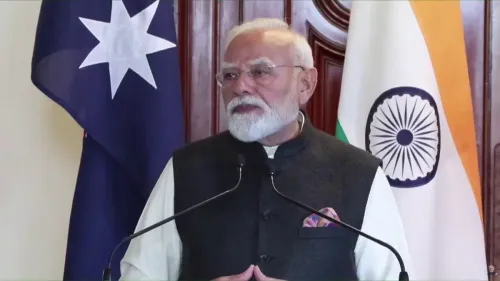
Modi used the occasion to underscore the depth of the broader bilateral relationship, framing the two nations as natural partners in the Indo-Pacific. 'India and Australia are two vibrant democracies, two multicultural societies and two important ocean powers. These similarities, and our common worldview, inspire us to keep moving forward with deep mutual trust,' he said.
This comes amid growing strategic alignment between the two countries across defence, trade, and technology — with energy now emerging as a critical new pillar. The uranium deal, years in the making since the 2015 agreement, signals that the administrative and diplomatic groundwork has finally been completed. How quickly Indian nuclear plants can absorb Australian uranium supply will be the next test of implementation.
Point of View
And Australian uranium alone will not change that without faster reactor commissioning. The Joint Statement on Energy Security is broader and arguably more immediately consequential, locking in supply commitments across LNG, liquid fuels, and renewables at a time when West Asia uncertainty makes diversified sourcing a strategic necessity, not a preference. The Global Biofuels Alliance endorsement is a diplomatic bonus for New Delhi, but its practical impact depends on how many other major economies follow Australia's lead.
NationPress
7 Oct 2026
Frequently Asked Questions
What is the India-Australia uranium trade agreement signed on 9 July?
India and Australia finalised the administrative arrangements enabling the export of Australian uranium to India for exclusively peaceful purposes, operationalising the Australia-India Nuclear Cooperation Agreement signed in 2015. All uranium exports will be subject to International Atomic Energy Agency (IAEA) safeguards.
Why did it take so long to implement the 2015 nuclear cooperation agreement?
The 2015 agreement established the legal framework for uranium trade, but required separate administrative arrangements — covering logistics, safeguards protocols, and regulatory alignment — before exports could begin. Those arrangements were finalised at the Melbourne summit on 9 July.
What does the Joint Statement on Energy Security cover?
The joint statement covers energy trade, supply chain resilience, LNG supply from Australia to India, liquid fuels supply from India to Australia, renewable energy investment, low-carbon fuels, and a shared commitment to stable supply of coal, diesel, and natural gas. It also acknowledges India's Global Biofuels Alliance.
Will the uranium be used for nuclear weapons?
No. Under the agreement, Australian uranium exported to India will be used exclusively for peaceful purposes and will be subject to International Atomic Energy Agency (IAEA) safeguards, which provide independent verification and monitoring.
What is India's Global Biofuels Alliance and why did Australia acknowledge it?
The Global Biofuels Alliance is an Indian-led multilateral initiative to accelerate the adoption of biofuels as part of the global energy transition. Australia's acknowledgement of the initiative at the Melbourne summit lends it additional international credibility and signals alignment on clean energy goals.