Australia names India top-tier security partner, signs defence and uranium pacts
Synopsis
Australia has activated a decade-old nuclear cooperation agreement with India, operationalising uranium exports for peaceful use — while simultaneously signing a joint defence declaration, a maritime security roadmap, and a cyber-and-critical-technology partnership. The Melbourne summit marks the most operationally dense upgrade in Australia-India ties since their Comprehensive Strategic Partnership began six years ago.
Key Takeaways
Australia formally designated India a top-tier security partner at a leaders' summit in Melbourne on 9 July .
A Joint Declaration on Defence and Security Cooperation was signed, covering military interoperability, joint exercises, and Indo-Pacific consultations.
Both sides endorsed a joint maritime security collaboration roadmap and a new partnership on cyber, critical technologies, and supply chains .
An administrative arrangement was signed to activate uranium exports to India under the 2015 Australia-India Nuclear Cooperation Agreement .
A joint statement on energy security commits both countries to supply chain resilience and accelerating the energy transition.
Australian PM Anthony Albanese described the six-year-old Comprehensive Strategic Partnership as being at its most consequential point to date.
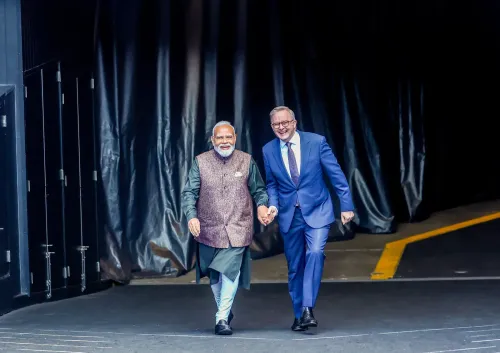
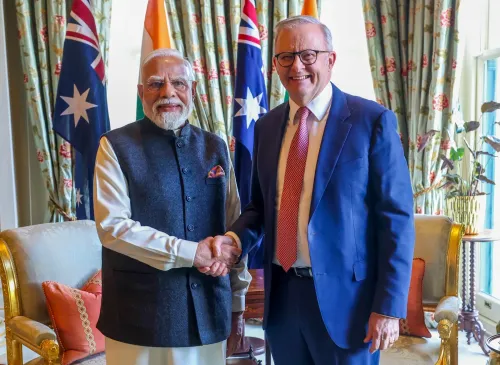
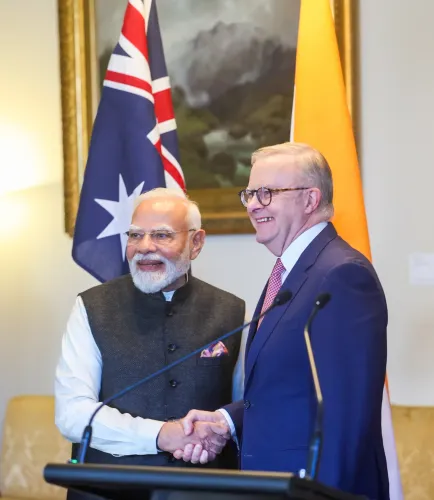
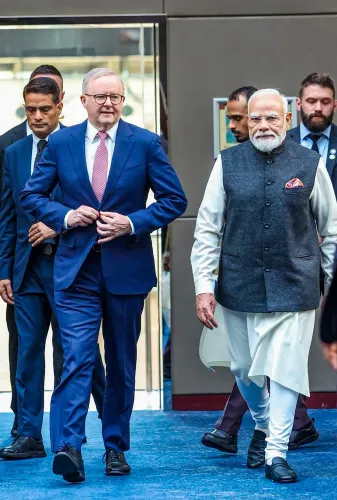
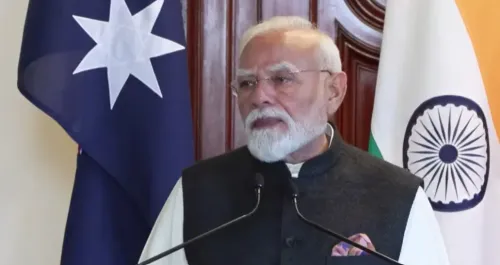
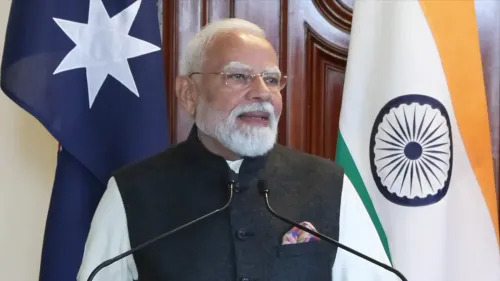
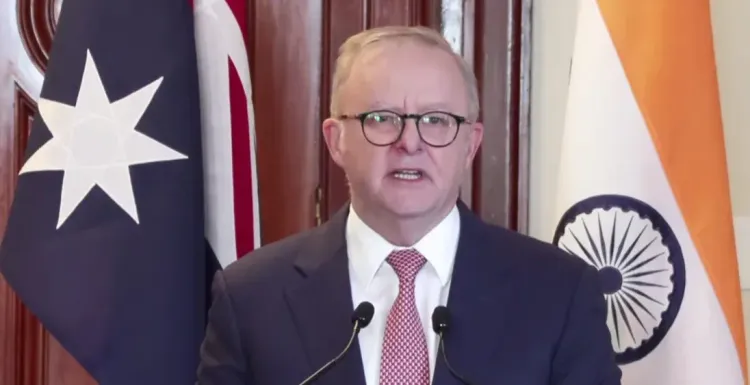
Australian Prime Minister Anthony Albanese on Thursday, 9 July formally designated India a top-tier security partner, unveiling a Joint Declaration on Defence and Security Cooperation alongside a new uranium export arrangement — the most substantive bilateral upgrade in years. The announcements came at a joint press conference with Prime Minister Narendra Modi following delegation-level talks in Melbourne.
What the Joint Declaration Covers
The defence and security declaration commits both countries to boosting strategic coordination and increasing the complexity of joint military exercises. Albanese said the two sides would 'further build interoperability between our defence forces' and agreed to consult on defence-related developments in the Indo-Pacific that affect shared interests.
A joint maritime security collaboration roadmap was also endorsed, alongside a new Australia-India partnership on cyber, critical technologies, and supply chains — signalling a shift from broad diplomatic language to operationally specific commitments.
Uranium Exports: A Historic Activation
One of the most consequential announcements was the signing of an administrative arrangement to operationalise uranium exports to India for peaceful purposes under the 2015 Australia-India Nuclear Cooperation Agreement. The arrangement had existed on paper for a decade; Thursday's signing activates it.
Albanese said the arrangement would facilitate Australian uranium exports to help India increase the share of non-fossil fuel power capacity, while simultaneously opening an additional market for Australia's resources sector. The move aligns with both nations' energy transition commitments amid ongoing supply chain disruptions linked to the conflict in West Asia.
Energy Security and Supply Chain Resilience
Both leaders welcomed a joint statement on energy security, with Albanese acknowledging that the two countries had long operated with 'connected supply chains but disconnected approaches.' The statement prioritises supply chain resilience and accelerating the energy transition, including greater uptake of renewable energy and electrification of energy systems.
This comes amid global volatility in critical minerals markets, where both India and Australia have significant stakes — Australia as a major supplier and India as a fast-growing consumer of inputs for its electric vehicle and semiconductor ambitions.
Six Years of Comprehensive Strategic Partnership
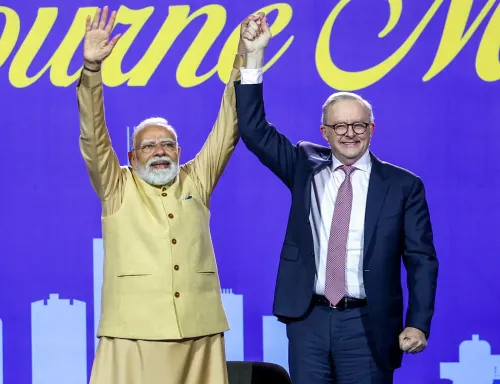
Albanese described the bilateral relationship as being at its most consequential point since the Comprehensive Strategic Partnership was launched six years ago. He called Modi 'a true friend of Australia' and said it was a 'great honour' to host the Indian Prime Minister for the annual leaders' summit.
'Our partnership has never been stronger,' Albanese said, adding that new agreements span defence and security, education, science and technology, and energy security and critical minerals — a breadth that signals the relationship has moved well beyond trade.
What Comes Next
The administrative arrangement on uranium exports is expected to move into implementation phase, with Indian nuclear operators likely to engage Australian suppliers under the framework of the 2015 Nuclear Cooperation Agreement. Analysts will watch whether the cyber and critical technology partnership produces a formal institutional mechanism, or remains a political commitment awaiting operationalisation.
Point of View
Not a diplomatic formality. Separately, the cyber and critical technology partnership deserves scrutiny: both countries have announced similar frameworks before without durable institutional follow-through. The real test is whether this one produces a standing mechanism or fades into the communiqué archive. On the Indo-Pacific dimension, designating India a 'top-tier' security partner is Australia's clearest signal yet that the Quad is hardening from a dialogue forum into an operational alignment — something Beijing will read carefully.
NationPress
7 Oct 2026
Frequently Asked Questions
What is the Joint Declaration on Defence and Security Cooperation between Australia and India?
It is a landmark bilateral agreement signed on 9 July in Melbourne that commits Australia and India to deeper military interoperability, more complex joint defence exercises, and regular consultations on Indo-Pacific security developments. It also endorses a joint maritime security collaboration roadmap and a new partnership on cyber, critical technologies, and supply chains.
What does the uranium export arrangement mean for India?
The administrative arrangement activates the 2015 Australia-India Nuclear Cooperation Agreement, enabling Australian uranium to be exported to India for peaceful purposes. It is designed to help India increase its non-fossil fuel power generation capacity and gives Australia's resources sector an additional export market.
Why did it take a decade to activate the 2015 nuclear cooperation agreement?
The 2015 agreement established the legal framework for uranium exports but required a separate administrative arrangement to become operational. Thursday's signing of that arrangement in Melbourne is what moves the deal from paper to practice, though the source material does not detail the specific reasons for the decade-long gap.
What is the significance of Australia calling India a 'top-tier' security partner?
The designation elevates India above routine partner classifications in Australia's security lexicon, signalling that Canberra views New Delhi as a core pillar of its Indo-Pacific strategy. It comes six years into the Comprehensive Strategic Partnership and reflects growing alignment on maritime security, supply chain resilience, and critical technology.
How does the energy security statement connect to the West Asia conflict?
Australian PM Albanese explicitly linked the joint energy security statement to the economic repercussions of the conflict in West Asia, which has disrupted global supply chains. The statement prioritises supply chain resilience and accelerating the energy transition through renewables and electrification, aiming to reduce dependence on vulnerable supply routes.