CM Bhupendra Patel Launches Viksit Gujarat Data Centre Policy
Synopsis
Gujarat Chief Minister Bhupendra Patel on 9 July 2026 announced the Viksit Gujarat Data Centre Policy, a dedicated framework to attract data centre investments and strengthen the state's digital economy, aligning with national Digital India and Viksit Bharat 2047 goals.
Key Takeaways
Gujarat Chief Minister Bhupendra Patel announced the Viksit Gujarat Data Centre Policy on 9 July 2026 .
The policy is designed to meet rising future demand for data centres and strengthen Gujarat's digital economy .
Gujarat's advantages in power supply, port connectivity and industrial land position it competitively for data centre investment.
The announcement aligns with the national Digital India programme and the Viksit Bharat 2047 technology self-reliance vision.
Multiple Indian states have rolled out similar dedicated data centre policies since 2020 , intensifying competition for global cloud investment.
Investment MoUs, land allotments and power allocation announcements are the key milestones to watch as the policy moves toward implementation.
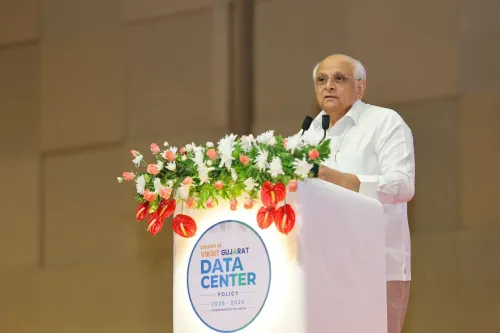
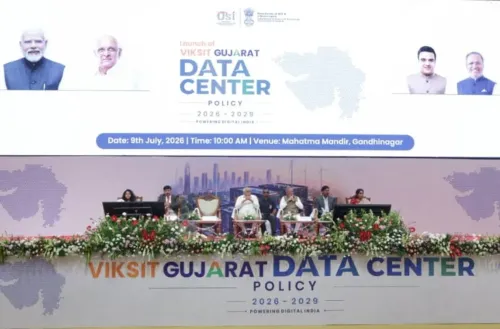
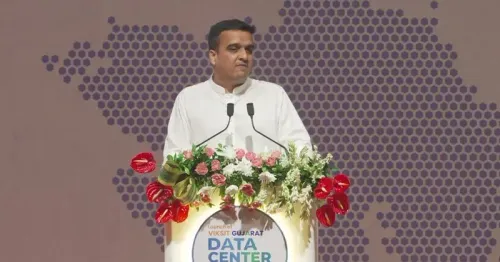
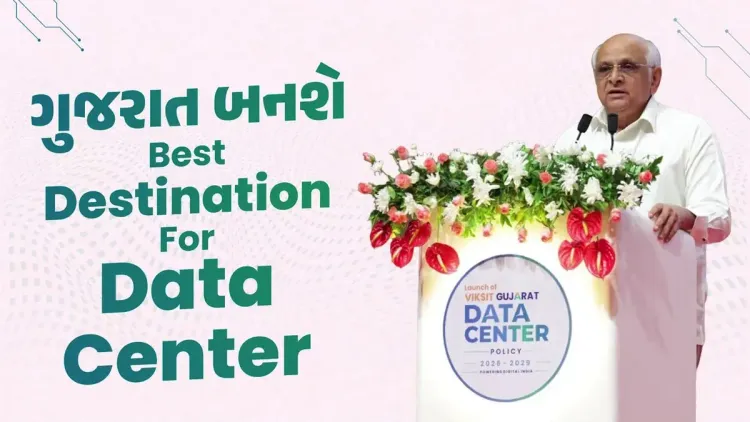
Gujarat Chief Minister Bhupendra Patel on Thursday, 9 July 2026 announced the launch of the 'Viksit Gujarat Data Centre Policy', a dedicated state-level framework aimed at meeting future data centre demand and strengthening the state's digital economy.
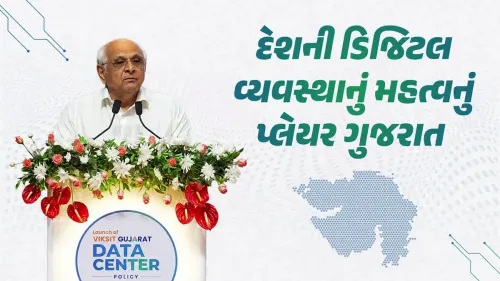
Posting on X in Gujarati, CM Patel stated: 'ભવિષ્યમાં ઉભી થનાર ડેટા સેન્ટર્સની માંગ અને રાજ્યમાં ડિજિટલ ઈકોનોમી વધુ મજબૂત બનાવવાના સંકલ્પ સાથે આપણે વિકસિત ગુજરાત ડેટા સેન્ટર પોલિસી જાહેર કરી છે' — ('With the resolve to meet the rising future demand for data centres and to further strengthen the digital economy in the state, we have announced the Viksit Gujarat Data Centre Policy.')
Context
Gujarat has long positioned itself as one of India's most investment-friendly states, consistently ranking high in ease-of-doing-business assessments. The new data centre policy is a direct response to the surging global and domestic demand for digital infrastructure, driven by cloud computing, artificial intelligence workloads and the rapid expansion of e-governance services.
CM Patel, who has served as Chief Minister since September 2021, has anchored his tenure on industrial and infrastructure-led growth. The Viksit Gujarat Data Centre Policy is among the more significant technology-sector moves under his administration.
Policy Backdrop
India's Ministry of Electronics and Information Technology released a Draft Data Centre Policy in 2020, laying out a national framework for hyperscale facilities and data localisation. Since then, multiple Indian states have introduced their own dedicated policies to attract global cloud providers and domestic IT companies seeking large-scale compute capacity.
Gujarat enters this race with structural advantages: reliable power supply, major port connectivity through Mundra and Kandla, and large tracts of developed industrial land. The new policy is designed to leverage these assets to draw data centre operators who need land, power and logistics at scale.
The announcement also aligns with the national Digital India programme — launched in 2015 — and the broader Viksit Bharat 2047 vision for technology self-reliance, which includes ambitions in semiconductor manufacturing and data sovereignty.
Stakeholders and Impact
Primary beneficiaries of the policy are expected to be data centre operators, cloud computing companies and IT infrastructure firms looking to establish or expand facilities in western India. Domestic digitisation trends — from UPI transactions to government data storage requirements — have sharply increased the demand for local data centre capacity.
For Gujarat, successful implementation could translate into significant capital investment, technology-sector employment and deeper integration into global cloud supply chains. Smaller IT-enabled services firms and startups that depend on affordable cloud infrastructure may also benefit indirectly from increased supply.
What's Next
Observers will watch for investment memoranda of understanding, land allotment announcements and power allocation commitments tied to the new policy in the coming months. Any linkages with the national semiconductor mission or provisions in the upcoming state budget will signal how aggressively Gujarat intends to operationalise the framework.
CM Patel congratulated all those involved in formulating the policy, signalling that the groundwork has already been laid across multiple government departments. The pace at which the state converts policy intent into on-ground infrastructure will determine whether Gujarat consolidates its lead over rival states competing for the same pool of data centre investment.
Point of View
With states from Telangana to Maharashtra having already staked out similar frameworks since 2020. For CM Patel, the announcement reinforces a governance identity built on industrial policy and ease of doing business rather than political confrontation. The timing — as global hyperscalers accelerate India expansion plans and data localisation norms tighten — gives Gujarat a credible window to lock in major commitments. Whether the policy translates into ground-level investment will depend on the specifics of incentive structures and clearance timelines, which remain to be detailed.
NationPress
9 Jul 2026
Frequently Asked Questions
What is the Viksit Gujarat Data Centre Policy?
The Viksit Gujarat Data Centre Policy is a state-level framework announced by Gujarat Chief Minister Bhupendra Patel on 9 July 2026 to attract data centre investments and strengthen the state's digital economy.
Why has Gujarat announced a data centre policy?
Gujarat announced the policy to meet rising future demand for data centre capacity, capture investment from global cloud providers and domestic IT companies, and align with national goals under Digital India and Viksit Bharat 2047 .
How does Gujarat's data centre policy compare with other Indian states?
Multiple Indian states have introduced dedicated data centre policies since 2020 . Gujarat differentiates itself through existing advantages in power supply, major port infrastructure and large industrial land banks.
Who benefits from the Viksit Gujarat Data Centre Policy?
Primary beneficiaries include data centre operators, cloud computing companies and IT infrastructure firms . Indirectly, startups and IT-enabled services businesses that rely on affordable cloud infrastructure may also benefit from increased supply.
What should investors watch for after this policy announcement?
Investors and observers should track investment MoUs, land allotments and power allocation announcements tied to the policy, as well as any linkages with the national semiconductor mission or provisions in Gujarat's upcoming state budget.