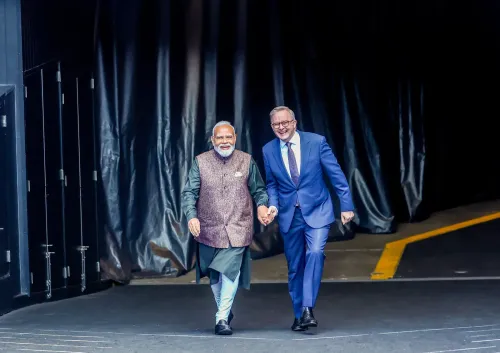
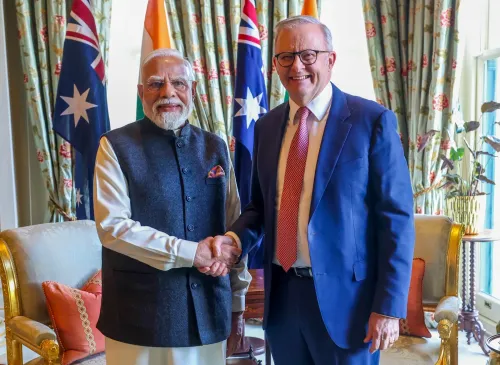
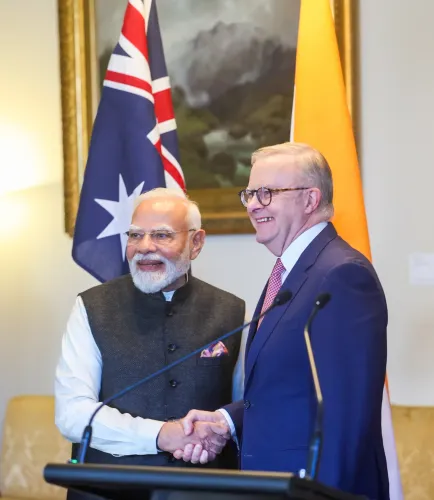
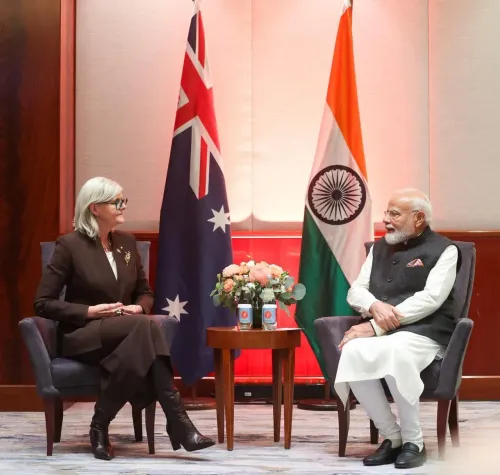
PM Modi, Albanese pledge unwavering resolve against terrorism at Melbourne summit
Synopsis
At the third Australia-India Leaders' Summit in Melbourne, Modi and Albanese signed a joint security declaration, launched the PACTS initiative on cyber and critical technologies, and agreed on a Critical Minerals Corridor — signalling that the India-Australia partnership is rapidly evolving from trade ties into a full-spectrum strategic alliance anchored in the Indo-Pacific.
Key Takeaways
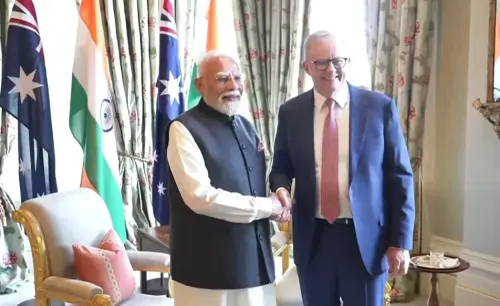
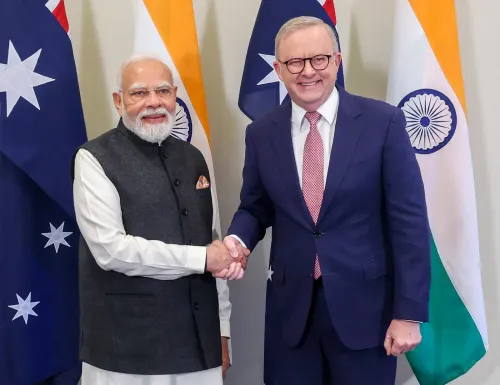
PM Narendra Modi and Australian PM Anthony Albanese held the third Australia-India Leaders' Summit in Melbourne on 9 July .
Both leaders signed a joint declaration to increase cooperation in the security sector, including maritime security.
Modi announced the India-Australia Defence Innovation Corridor to connect defence start-ups and industries.
The Australia-India Partnership on Cyber, Critical Technologies, and Supply Chains (PACTS) was officially launched.
Both nations agreed to collaborate on a Critical Minerals Corridor , citing strategic security and clean energy goals.
Modi highlighted the Indian diaspora and the opening of Australian university campuses in India as pillars of the bilateral relationship.
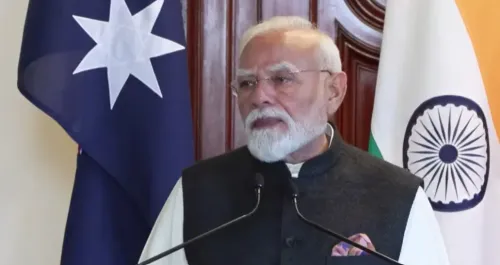
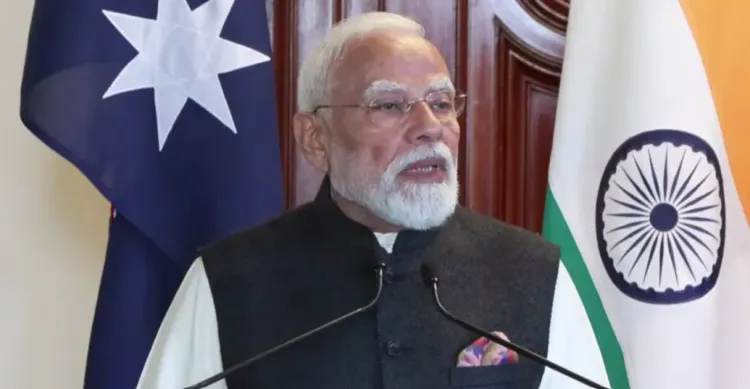
Prime Minister Narendra Modi on Thursday, 9 July reaffirmed that India and Australia share an unwavering resolve to combat terrorism, describing it as a challenge not to any single nation but to all of humanity. The declaration came at a joint press conference with Australian Prime Minister Anthony Albanese following the third Australia-India Leaders' Summit in Melbourne.
Joint Stance on Terrorism and Global Conflicts
Addressing the press meet, Modi said, “India and Australia believe that terrorism poses a serious challenge not just to any one country, but to all of humanity. Therefore, our fight against terrorism is shared, our resolve unwavering, and our cooperation in this area is continuously strengthening.”
Modi also reiterated India’s long-held position that armed conflicts must be resolved through dialogue. “The tensions and wars in many parts of the world can only be resolved through dialogue and diplomacy,” he said, adding that the two nations would jointly work to strengthen peace, stability, freedom of navigation, and a rules-based order across the Indo-Pacific.
Security Pact and Defence Innovation Corridor
A significant outcome of the summit was the signing of a joint declaration to deepen bilateral cooperation in the security sector. Modi announced the launch of the India-Australia Defence Innovation Corridor, designed to connect defence start-ups and industries across both countries.
He further revealed that a maritime security collaboration roadmap had been agreed upon to reinforce shared efforts in the Indo-Pacific. Cooperation on ship-building, repair, and maintenance was also confirmed as a priority area under the expanded defence partnership.
PACTS Initiative and Critical Minerals Corridor
Modi announced the launch of the Australia-India Partnership on Cyber, Critical Technologies, and Supply Chains (PACTS), describing critical minerals as “vital” for the strategic security and clean energy transition of both nations. The two countries also agreed to collaborate on a Critical Minerals Corridor, which analysts say could reduce dependence on single-source supply chains for materials central to electric vehicles and renewable energy infrastructure.
This comes amid growing global competition for critical mineral access, with both the United States and China aggressively securing supply agreements across resource-rich regions.
People-to-People Ties and Education Links
Modi highlighted the depth of the bilateral relationship beyond diplomacy, pointing to the Indian diaspora in Australia as a cornerstone of economic and social ties. “People of Indian origin are making positive contributions to Australia’s economic and social life,” he said.
He welcomed the opening of Australian university campuses in India as a “new chapter” in the knowledge partnership, and committed to expanding exchanges between students, professionals, and tourists. Australia has been a consistently popular destination for Indian students, with hundreds of thousands enrolled in Australian institutions annually.
What Comes Next
The agreements signed at the Melbourne summit are expected to be followed by detailed implementation frameworks across defence, cyber, and critical minerals. The PACTS initiative in particular will be watched closely as both nations seek to align their technology supply chains with trusted partners. The trajectory of the India-Australia Comprehensive Strategic Partnership, launched in 2020, suggests deepening institutional ties that extend well beyond bilateral trade.
Point of View
Not just political signalling. What mainstream coverage underplays is that this is the third such summit in a maturing partnership that began as a trade conversation and has quietly become one of India's most consequential strategic relationships in the Indo-Pacific.
NationPress
8 Oct 2026
Frequently Asked Questions
What was decided at the third Australia-India Leaders' Summit in Melbourne?
India and Australia signed a joint security declaration, launched the PACTS initiative on cyber and critical technologies, agreed on a Critical Minerals Corridor, and announced the India-Australia Defence Innovation Corridor. The summit was held on 9 July in Melbourne, with PM Modi and Australian PM Albanese co-chairing the meeting.
What is the PACTS initiative announced by PM Modi?
PACTS stands for the Australia-India Partnership on Cyber, Critical Technologies, and Supply Chains. It was launched at the Melbourne summit to deepen cooperation in cybersecurity, emerging technologies, and resilient supply chains, with critical minerals identified as a key focus area.
What did PM Modi say about terrorism at the Melbourne summit?
Modi stated that India and Australia view terrorism as a challenge to all of humanity, not just individual nations. He reaffirmed that the two countries share an unwavering resolve to fight terrorism and that bilateral cooperation in this area is continuously strengthening.
What is the India-Australia Critical Minerals Corridor?
The Critical Minerals Corridor is a bilateral agreement to jointly develop and secure supply chains for minerals vital to strategic security and the clean energy transition. Both nations see it as a way to reduce dependence on single-source suppliers for materials used in EVs and renewable energy infrastructure.
How does the India-Australia relationship stand after the Melbourne summit?
The relationship has evolved significantly since the Comprehensive Strategic Partnership launched in 2020. The Melbourne summit added defence innovation, maritime security, cyber cooperation, and critical minerals to an already active trade and people-to-people partnership, marking one of the deepest strategic alignments India has with any Indo-Pacific partner.