Modi, Albanese reaffirm Indo-Pacific commitment at Australia-India Summit
Synopsis
At the third Australia–India Annual Summit in Melbourne, Modi and Albanese went beyond diplomatic pleasantries — jointly condemning the Pahalgam and Bondi Beach terror attacks, reaffirming UNCLOS rights, and signalling coordinated pushback against unilateral moves in the Indo-Pacific. The summit cements a bilateral relationship that now operates across counter-terrorism, maritime security, and multilateral architecture simultaneously.
Key Takeaways
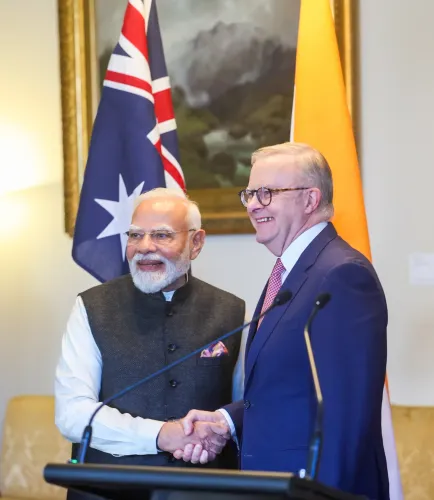
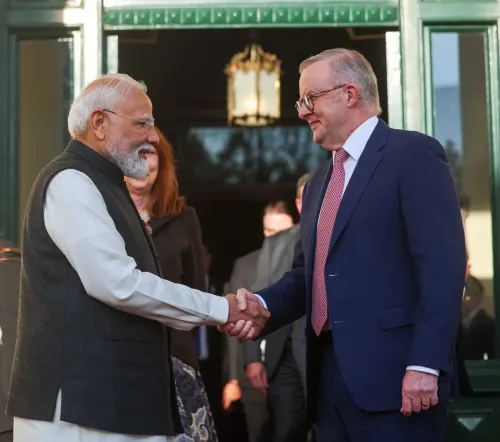
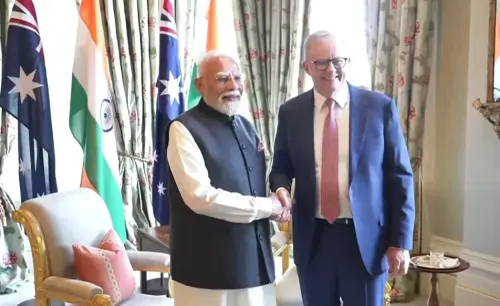
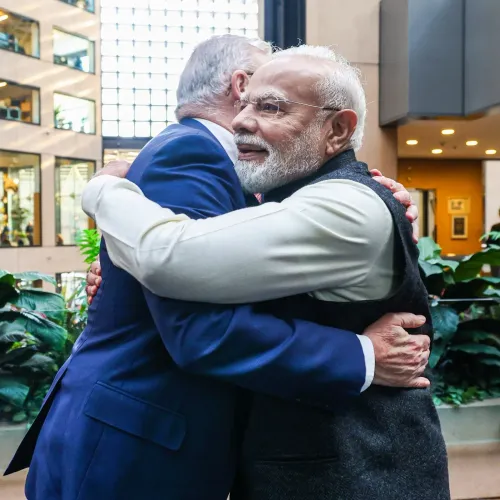
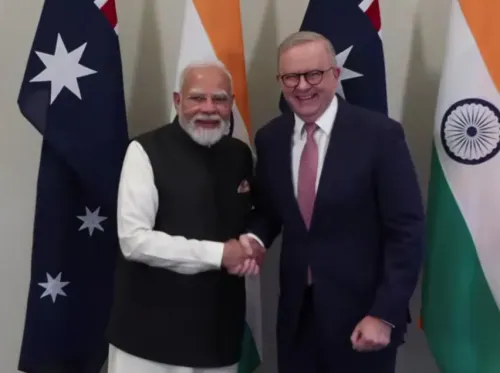
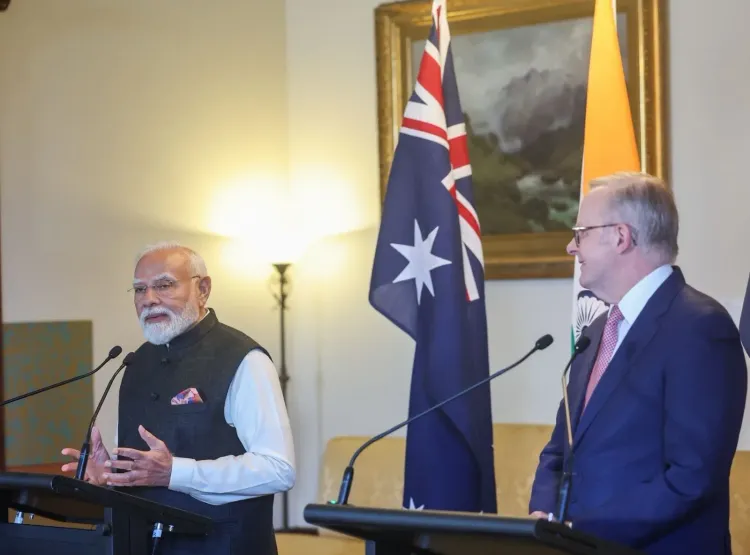
PM Narendra Modi and Australian PM Anthony Albanese met at the third Australia–India Annual Summit in Melbourne on 9 July .
Both leaders reaffirmed commitment to a free, open, rules-based Indo-Pacific and opposed unilateral actions threatening regional stability.
They jointly condemned terrorist attacks at Pahalgam (India) and Bondi Beach (Australia), committing to enhanced counter-terrorism information sharing.
The Quad was reaffirmed as a key partnership; both leaders welcomed outcomes from the Quad Foreign Ministers' meeting in New Delhi in May .
Joint maritime cooperation activities under IORA were highlighted, including search and rescue training at MRCC Chennai in June .
Australia recognised India's role in Pacific Island development partnerships through the FIPIC framework.
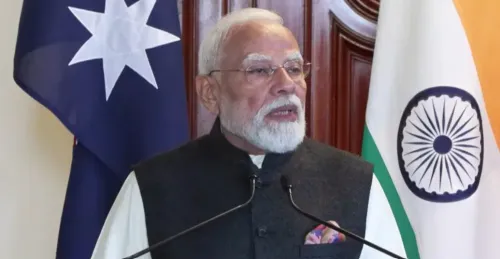
Prime Minister Narendra Modi and his Australian counterpart, Anthony Albanese, on Thursday, 9 July reaffirmed their shared commitment to a free, open, and rules-based Indo-Pacific at the third Australia–India Annual Summit held in Melbourne. The two leaders strongly opposed any destabilising or unilateral action that could alter the regional status quo or undermine peace and stability.
Key Declarations on Maritime Law and Regional Order
Both leaders stressed the right of all nations to exercise freedoms consistent with international law — particularly the United Nations Convention on the Law of the Sea (UNCLOS) — including freedom of navigation and overflight. They emphasised that disputes in the region must be resolved peacefully and in accordance with international law, according to the joint statement released following the summit.
The summit was attended by Australian Foreign Minister Penny Wong, National Security Advisor Ajit Doval, and other senior officials from both sides.
Quad, IORA, and Multilateral Frameworks
Modi and Albanese reaffirmed the importance of the Quad as a partnership delivering practical outcomes for the Indo-Pacific, welcoming the agreements reached by Quad Foreign Ministers at their meeting in New Delhi in May. The two leaders also underscored the need to strengthen cooperation in the Indian Ocean region, including through the Indian Ocean Rim Association (IORA) under India's Chairship.
They welcomed joint search and rescue training for IORA Member States, conducted by Australia and India at the Maritime Rescue Coordination Centre (MRCC) in Chennai in June, and Australia's hosting of the sixth meeting of the IORA Working Group on Maritime Safety and Security in Perth in June.
The leaders also welcomed cooperation under the Indo-Pacific Oceans Initiative (IPOI) and the Australia-India-Indonesia trilateral mechanism. Both reaffirmed their commitment to the Pacific Islands Forum (PIF) and its 2050 Strategy for the Blue Pacific Continent. Albanese recognised India's development partnerships with Pacific Island countries through the Forum for India-Pacific Islands Cooperation (FIPIC) framework.
Counter-Terrorism: Pahalgam and Bondi Beach Attacks Condemned
Modi and Albanese jointly condemned terrorism and violent extremism in all its forms, calling on all nations to combat terrorism in a comprehensive and sustained manner. Both leaders specifically called for action against globally proscribed terrorists and terror entities — including those listed by the United Nations Security Council 1267 Sanctions Committee — along with their proxies, affiliates, sponsors, and financiers.
In a significant joint statement, both prime ministers reiterated their condemnation of the terrorist attacks at Bondi Beach in Australia and Pahalgam in India. The joint statement noted: 'The Prime Ministers recognised the need for enhancing cooperation to effectively counter the challenges of combating terrorism. They committed to increase information sharing on terrorist threats in our region and explore opportunities for enhanced collaboration to counter radicalisation, including online radicalisation, violent extremism conducive to terrorism and countering use of new and emerging technology for terrorist purposes, financing of terrorism, threats to critical infrastructure and the maritime domain.'
What This Summit Signals
This is the third Australia–India Annual Summit, reflecting the deepening cadence of bilateral engagement since the two countries elevated ties to a Comprehensive Strategic Partnership. The explicit reference to UNCLOS and freedom of navigation — without naming any specific actor — is widely read as a signal directed at China's assertiveness in the South China Sea and Indian Ocean. Notably, the joint condemnation of both the Pahalgam and Bondi Beach attacks places counter-terrorism at the centre of the bilateral agenda in a way that earlier summits did not.
With India holding the IORA Chair and the Quad gaining institutional momentum, the Melbourne summit reinforces a pattern: Australia and India are increasingly coordinating not just bilaterally but through overlapping multilateral architectures to shape the regional order.
Point of View
Or remain, as critics of such summits argue, well-crafted joint statements that outpace implementation.
NationPress
8 Oct 2026
Frequently Asked Questions
What was decided at the third Australia–India Annual Summit in Melbourne?
At the summit held on 9 July in Melbourne, PM Modi and PM Albanese reaffirmed commitment to a rules-based Indo-Pacific, condemned terrorism including the Pahalgam and Bondi Beach attacks, and pledged enhanced cooperation through the Quad, IORA, and counter-terrorism frameworks. A joint statement outlined commitments on maritime security, freedom of navigation, and information sharing on terrorist threats.
Why did Modi and Albanese condemn the Pahalgam and Bondi Beach attacks together?
Both leaders condemned the attacks as part of a joint counter-terrorism agenda, signalling that terrorism affecting either country is treated as a shared bilateral concern. The joint statement committed both nations to increased information sharing and collaboration to counter radicalisation and terrorist financing.
What is the significance of the Quad reaffirmation at the Melbourne summit?
The reaffirmation of the Quad underscores that Australia and India view the four-nation grouping — which also includes the US and Japan — as a practical delivery mechanism for Indo-Pacific stability, not just a political signal. Both leaders welcomed outcomes from the Quad Foreign Ministers' meeting held in New Delhi in May.
What role is India playing in the Indian Ocean Rim Association (IORA)?
India currently holds the Chairship of IORA. At the Melbourne summit, Modi and Albanese highlighted joint Australia-India search and rescue training for IORA Member States at the Maritime Rescue Coordination Centre in Chennai in June, and welcomed Australia's hosting of the sixth IORA Working Group on Maritime Safety and Security in Perth.
What does the joint statement say about freedom of navigation?
The joint statement emphasised the right of all nations to exercise freedoms consistent with international law, particularly UNCLOS, including freedom of navigation and overflight. Both leaders stressed that disputes must be resolved peacefully in accordance with international law — language widely interpreted as a response to assertive maritime behaviour in the Indo-Pacific.