Mandaviya: We Have Opened Doors of Public Service, Not Ribbons
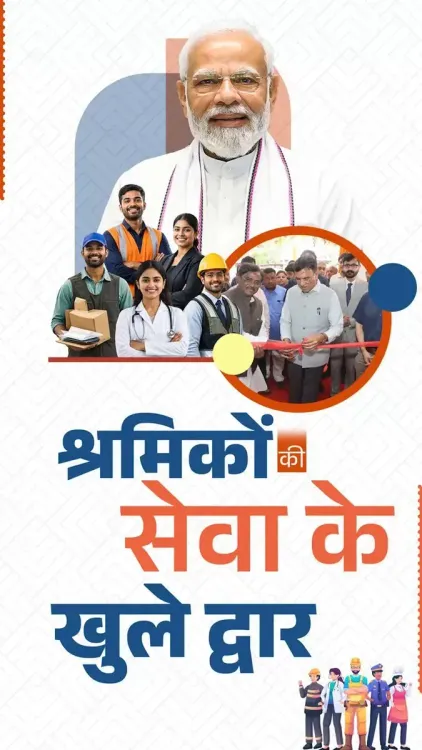
Synopsis
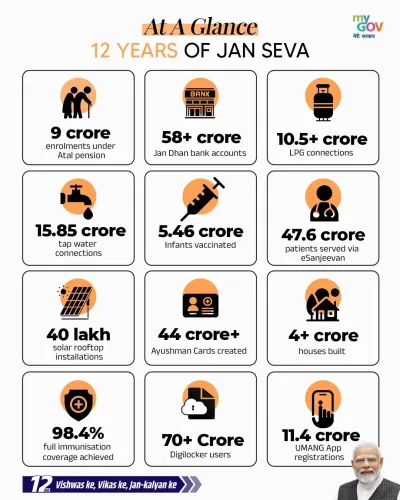
Union Minister Mansukh Mandaviya on 14 July 2026 posted a sharp Hindi message on X declaring that the BJP-led government has opened doors of public service rather than cutting ribbons — invoking a recurring contrast with ceremonial politics and signalling continued focus on functional service delivery for workers and youth.
Key Takeaways
Union Minister Mansukh Mandaviya posted on 14 July 2026 that the government has opened doors of 'jan-seva' (public service), not cut ribbons.
The message continues the BJP government's narrative of functional delivery over ceremonial inaugurations.
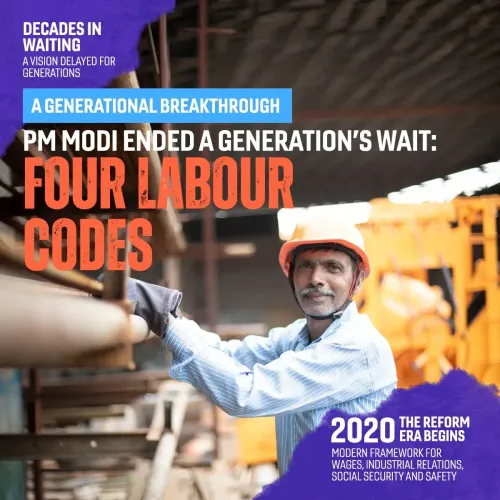
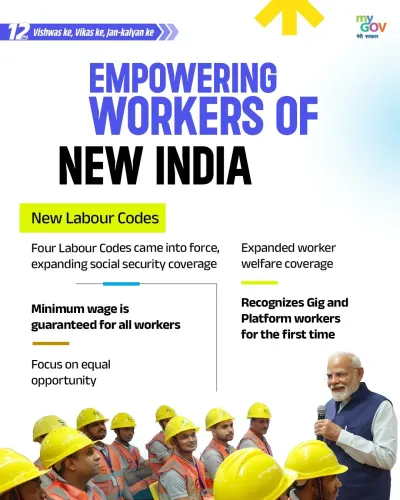
The four Labour Codes (2019–2020) consolidated 29 earlier laws to simplify compliance and expand coverage for unorganised workers.
Digital platforms including e-Shram and the National Career Service portal are central to the ministry's service-delivery claims.
Primary beneficiaries of this framing are job seekers and youth workers , the core constituencies of Mandaviya's two ministries.
Rollout updates on labour ministry portals and new employment or sports guidelines are expected in the next parliamentary session .
Union Labour and Sports Minister Mansukh Mandaviya on Tuesday, 14 July 2026, posted a pointed message on X contrasting the current government's approach to public service delivery with ceremonial ribbon-cutting politics, declaring, 'Ribbon nahin, humne jan-seva ke dwaar khole hain' — 'We have not cut ribbons; we have opened the doors of public service.'
Context
The Hindi-language post, brief but pointed, distils a recurring theme in the BJP-led government's communication strategy: that its initiatives prioritise functional delivery over optics. The phrase directly inverts the imagery of ribbon-cutting inaugurations — long associated with political grandstanding — and repositions governance as the act of making services genuinely accessible to citizens.
The message comes from a minister who oversees two high-visibility portfolios: Labour and Employment, which touches the livelihoods of hundreds of millions of workers, and Youth Affairs and Sports, which shapes the aspirations of India's youngest citizens.
Policy Backdrop
The sentiment maps closely onto a series of structural reforms the ministry has pursued. The four Labour Codes passed between 2019 and 2020 consolidated 29 earlier laws, aiming to simplify compliance and extend social protection to unorganised workers who had historically fallen outside the formal welfare net.
On the digital access front, platforms such as e-Shram and the National Career Service (NCS) portal have been positioned as the government's answer to the question of reach — replacing physical queues and intermediaries with direct, online registration and benefit delivery. These portals have been central to the ministry's claim that service delivery has moved from ceremony to substance since 2020.
Similar messaging has accompanied each significant rollout under Mandaviya's watch, reinforcing a narrative that explicitly contrasts the present administration's record with what it characterises as the performative inaugurations of earlier governments.
Stakeholders and Impact
Job seekers and youth workers — the primary constituencies of both ministries — stand at the centre of this framing. For millions of young Indians navigating a competitive labour market, the promise embedded in the post is one of access: that the doors of government services are open and functional, not merely decorated for a photo opportunity.
Unorganised sector workers, who make up the vast majority of India's labour force, have the most at stake in whether digital portals and reformed labour codes translate into real-world benefits. The government's ability to back this rhetorical posture with measurable outcomes — registrations, disbursements, placements — will determine how the message lands beyond political audiences.
What's Next
Observers will watch for concrete announcements tied to this signal — whether a new phase of portal rollout, an employment scheme update, or a sports infrastructure initiative is imminent. The next parliamentary session is expected to bring further scrutiny of labour ministry digital initiatives and any pending rules under the four Labour Codes, which have yet to be fully notified across all states. Mandaviya's post may be a prelude to a substantive policy announcement, or it may mark a broader communications push ahead of that legislative calendar.
Point of View
Using digital platforms to reframe welfare delivery as anti-elitist and citizen-first. The choice of Hindi amplifies the message's populist register, aimed squarely at the working-class and youth voter blocs that both his ministries serve. Whether the rhetoric is matched by verifiable delivery metrics on the Labour Codes and digital portals will be the real test as the next parliamentary session approaches.
NationPress
13 Oct 2026
Frequently Asked Questions
What did Mansukh Mandaviya post on X on 14 July 2026?
Mandaviya posted a Hindi message stating 'Ribbon nahin, humne jan-seva ke dwaar khole hain' — meaning 'We have not cut ribbons; we have opened the doors of public service' — signalling the government's emphasis on functional delivery over ceremonial politics.
What is Mansukh Mandaviya's current role in the government?
Mansukh Mandaviya is the Union Minister of Labour and Employment and Youth Affairs and Sports, and a senior leader of the BJP.
What are the four Labour Codes that Mandaviya's ministry oversees?
The four Labour Codes, passed between 2019 and 2020, consolidated 29 earlier labour laws to simplify compliance and extend social protection, particularly to unorganised sector workers.
What is the e-Shram portal and how does it relate to Mandaviya's message?
e-Shram is a government digital platform for registering unorganised workers and linking them to welfare schemes; it is a key example of the 'open doors of public service' approach Mandaviya's post references.
What should we watch for following Mandaviya's 14 July 2026 post?
Observers are watching for substantive policy announcements — such as new portal features, employment scheme updates, or sports infrastructure guidelines — ahead of the next parliamentary session, where Labour Code implementation will face scrutiny.