Mandaviya: 4 Labour Codes Empower Every Worker Under Modi
Synopsis
Union Labour Minister Mansukh Mandaviya has declared that the four labour codes enacted under PM Narendra Modi's leadership form the bedrock of worker empowerment in India, spotlighting the government's landmark consolidation of 44 central labour laws into a unified framework.
Key Takeaways
Mansukh Mandaviya , Union Minister of Labour and Employment, posted on 14 July 2026 asserting the four labour codes are the foundation of worker empowerment.
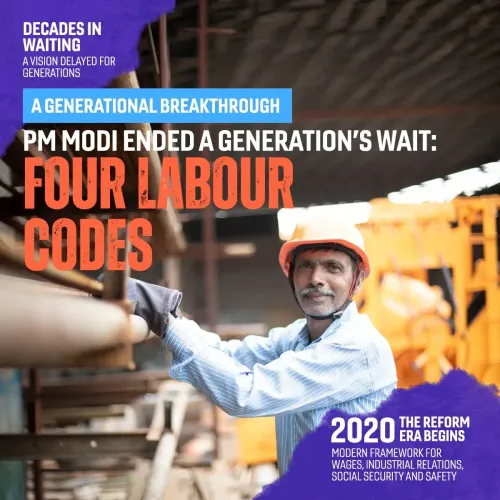
Parliament passed four codes — on Wages (2019) , Industrial Relations, Social Security, and Occupational Safety, Health and Working Conditions (2020) — replacing 44 central labour laws .
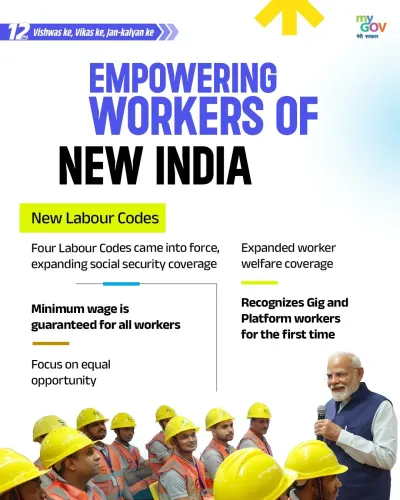
The codes aim to expand social-security coverage to gig and platform workers previously excluded from formal protections.
Implementation requires each state government to frame and notify its own rules, creating variation in rollout timelines across India.
Labour unions have expressed mixed views , welcoming wider coverage but raising concerns over fixed-term employment and retrenchment provisions.
The central government frames the reform as serving dual goals: ease of doing business and stronger worker security.
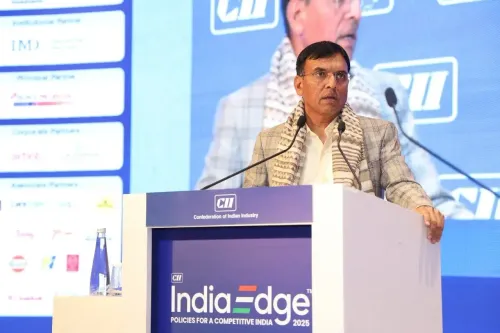
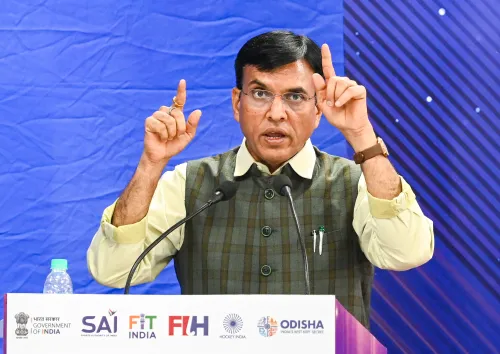
Union Labour and Sports Minister Mansukh Mandaviya on Tuesday, 14 July 2026, asserted that the four new labour codes passed under the leadership of Prime Minister Narendra Modi have become the foundation of empowerment for every worker in India.
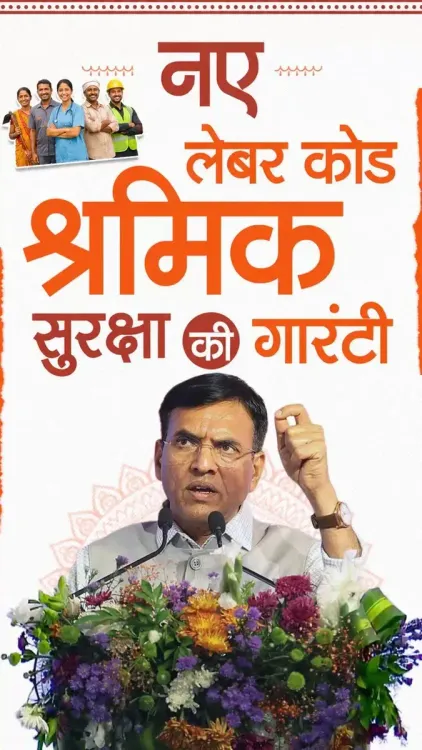
Posting on X in Hindi, the Minister stated: 'मोदी जी के नेतृत्व में पारित किए गए 4 नए लेबर कोड हर श्रमिक के सशक्तिकरण का आधार बन गये हैं' — ('The 4 new labour codes passed under the leadership of Modi Ji have become the foundation of empowerment for every worker.')
Context
The four labour codes — the Code on Wages (2019), the Code on Industrial Relations (2020), the Code on Social Security (2020), and the Code on Occupational Safety, Health and Working Conditions (2020) — were enacted by Parliament to consolidate and replace 44 central labour laws that had governed India's workforce for decades.
The consolidation was designed to simplify compliance for employers while expanding the formal social-security net to cover a wider segment of the workforce, including gig and platform workers who had largely been excluded from earlier protections.
Policy Backdrop
India's labour law framework had long been criticised for its complexity, with dozens of overlapping statutes creating compliance burdens and leaving large sections of the informal workforce without adequate protection. The 2019–2020 legislative exercise was the most sweeping reform of the country's labour architecture in the post-independence era.
The codes preserve core worker protections — including minimum wages, the right to organise, and safety standards — while streamlining dispute-resolution mechanisms and broadening the definition of 'employee' to bring more workers within the ambit of social security. The central government has framed the reforms as serving a dual objective: enhancing ease of doing business and strengthening worker security simultaneously.
Implementation, however, has been phased and uneven. The codes require each state government to frame and notify its own rules before the provisions can take effect within that state — a step that has proceeded at varying speeds across the country.
Stakeholders and Impact
For workers, the codes promise a universal minimum wage floor, portable social-security benefits, and clearer grievance-redressal pathways. For employers, particularly small and medium enterprises, the consolidation of registers, returns, and compliance requirements into unified frameworks is expected to reduce the administrative burden.
Labour unions have held mixed views: while some welcome the expanded coverage, others have raised concerns about provisions related to fixed-term employment and the threshold for mandatory prior-government approval before retrenchment. The codes have been the subject of ongoing debate between industry bodies and trade unions since their passage.
What's Next
The pace at which state governments finalise and notify their rules under the four codes will determine how quickly workers on the ground experience the promised benefits. Parliamentary oversight, including potential review by standing committees, and any further central amendments remain areas to watch as the reform cycle continues.
Minister Mandaviya's statement signals that the BJP-led central government intends to keep labour reform at the centre of its political and policy messaging, framing the codes as a legacy achievement of the Modi administration ahead of future electoral cycles.
Point of View
Positioning the four codes as a visible deliverable for working-class voters. Yet the gap between legislative enactment and ground-level implementation — contingent on state rule notifications — remains the reform's most significant vulnerability, and the minister's framing sidesteps that complexity. The statement fits a broader pattern of the ruling party seeking to reframe its economic record around worker welfare ahead of electoral cycles.
NationPress
15 Jul 2026
Frequently Asked Questions
What are the 4 new labour codes passed under Modi government?
The four labour codes are the Code on Wages (2019), the Code on Industrial Relations (2020), the Code on Social Security (2020), and the Code on Occupational Safety, Health and Working Conditions (2020). Together they replaced 44 central labour laws to simplify compliance and expand worker protections.
Have the four labour codes been implemented in India?
The codes have been enacted by Parliament but full implementation depends on individual state governments framing and notifying their own rules. This process has progressed at different speeds across states, meaning on-the-ground impact varies by region.
What did Mansukh Mandaviya say about labour codes?
On 14 July 2026, Minister Mansukh Mandaviya posted on X stating that the four new labour codes passed under PM Modi's leadership have become the foundation of empowerment for every worker in India.
How do the new labour codes benefit workers in India?
The codes promise a universal minimum wage floor, portable social-security benefits covering gig and platform workers, and streamlined dispute-resolution mechanisms, bringing a larger share of India's workforce under formal protections.
What is the Code on Social Security 2020?
The Code on Social Security 2020 is one of the four consolidated labour codes that expands social-security coverage beyond organised-sector employees to include gig workers, platform workers, and unorganised workers, consolidating multiple earlier laws into a single statute.