Modi's Melbourne visit cements India-Australia as long-term strategic partners
Synopsis
Modi's Melbourne trip wasn't a single-announcement visit — it was a structural reset. From a landmark uranium export clearance to a new defence ministers' dialogue, the breadth of agreements signed signals that the Australia-India relationship has crossed from partnership into something closer to an alliance architecture, built on overlapping interests in security, energy, and people-to-people ties.
Key Takeaways
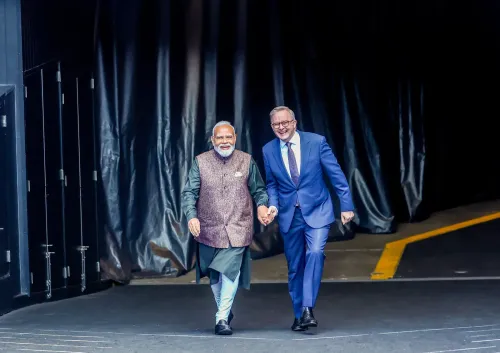
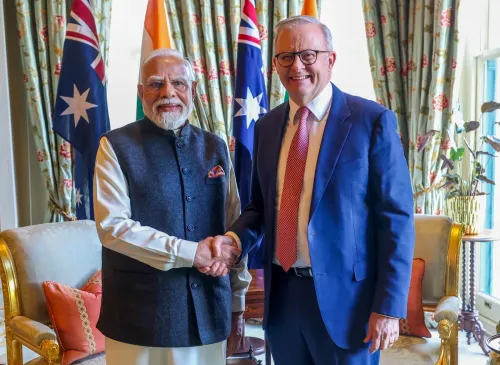
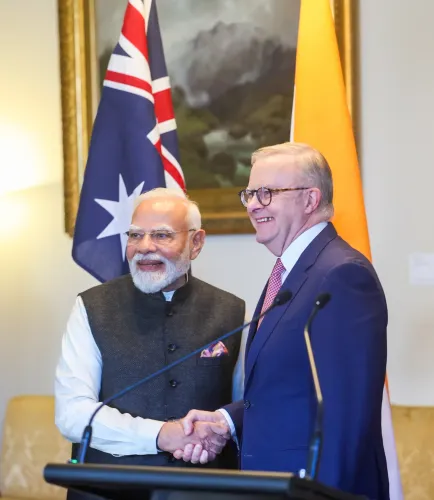
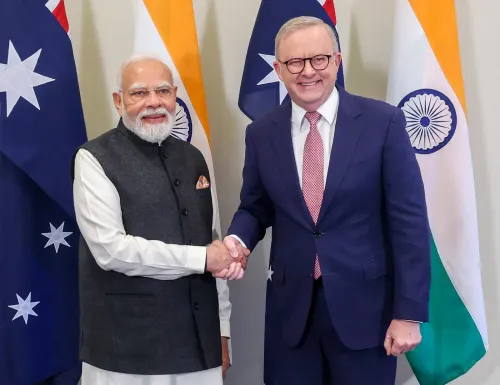
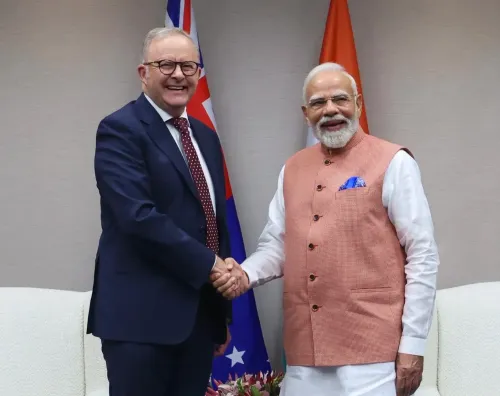
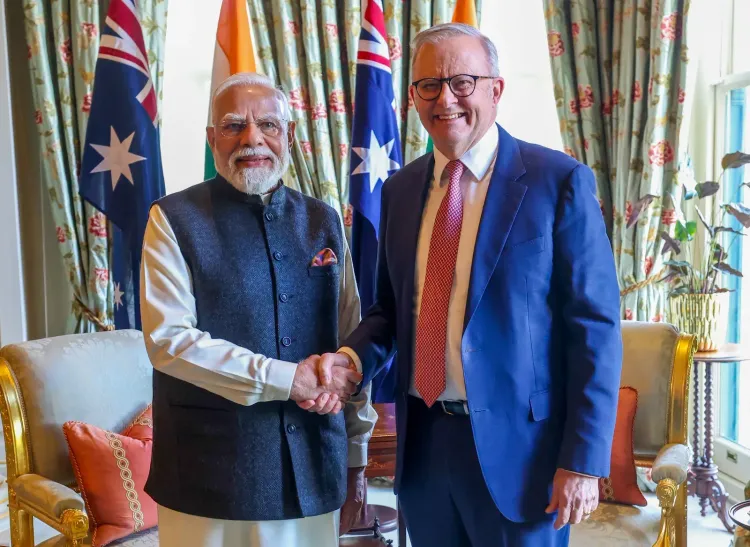
PM Modi visited Melbourne from 8–10 July , holding talks with Australian PM Anthony Albanese and addressing 35,000 members of the Indian diaspora at Docklands Stadium .
A Joint Declaration on Defence and Security Cooperation established an Annual Defence Ministers' Dialogue and expanded military exercises under the Mutual Logistics Support Arrangement .
Both nations launched the India-Australia Maritime Security Collaboration Roadmap and signed an MoU between Australia's Maritime Border Command and the Indian Coast Guard .
Australia finalised arrangements to export uranium to India for peaceful purposes — a significant move given India's status outside the Nuclear Non-Proliferation Treaty (NPT) .
Agreements also covered education , science , technology , and cultural links , reflecting what analysts describe as a 'holistic conception of national security.'
Prime Minister Narendra Modi's visit to Melbourne from 8–10 July produced a sweeping package of bilateral agreements spanning defence, economic security, energy, education, science, technology, and culture — signalling that India and Australia now regard each other not merely as bilateral partners but as long-term strategic allies whose cooperation extends across nearly every major domain of national policy, according to an analysis published in The Diplomat.
Key Agreements Signed
The centrepiece of the visit was the Joint Declaration on Defence and Security Cooperation, described as a 'step-change' in bilateral ties. Under it, both nations agreed to establish an Annual Defence Ministers' Dialogue, deepen interoperability between their armed forces, and expand military exercises under the Mutual Logistics Support Arrangement.
On maritime security, Modi and Australian Prime Minister Anthony Albanese jointly announced the India-Australia Maritime Security Collaboration Roadmap, aimed at strengthening information sharing, capability development, and operational coordination. A separate Memorandum of Understanding was signed between Australia's Maritime Border Command and the Indian Coast Guard.
Landmark Uranium Export Deal
One of the most consequential outcomes was the finalisation of administrative arrangements enabling the export of Australian uranium to India for exclusively peaceful purposes. Modi described the agreement as a landmark step that would strengthen India's clean energy ambitions and deepen bilateral cooperation in the energy sector.
The development is notable because Australia had historically restricted uranium exports to nations with strong non-proliferation commitments. India's status outside the Nuclear Non-Proliferation Treaty (NPT) had long been a significant obstacle. Canberra's decision to move forward despite that status is widely seen as a measure of the strategic trust that has developed between the two governments — built not only through geopolitical alignment but also through growing people-to-people ties.
Social and Institutional Foundations
Beyond security and energy, the agreements covered education, science, technology, and cultural exchanges. The Diplomat's analysis noted that 'defence and economic ties require social foundations,' pointing to Australia's expanding Indian diaspora and the growing capacity of universities and research institutions in both countries to collaborate.
Modi addressed the Indian diaspora at an event at Melbourne's Docklands Stadium, attended by approximately 35,000 people. The gathering also featured addresses by Albanese and Victoria's Premier Jacinta Allan.
What the Visit Signals
According to The Diplomat, the visit was distinctive precisely because it did not hinge on a single headline announcement — the norm for high-profile state visits. Instead, the coordinated suite of agreements reflected what the publication called 'a holistic conception of national security where each component is both interconnected and critical to the advancement of the others.'
The report concluded that the package was designed to demonstrate that the Australia-India relationship has reached a level of institutionalisation that had previously eluded both nations. With guidelines and operational frameworks now in place across multiple sectors, the partnership's next phase will test whether this institutional depth translates into sustained delivery.
Point of View
And one that Beijing will read carefully. The broader package of agreements is impressive in its breadth, but breadth without enforcement mechanisms is just paperwork. The Annual Defence Ministers' Dialogue and the Maritime Security Roadmap are frameworks; what matters is whether they generate operational outcomes — joint patrols, shared intelligence, interoperable systems — within a defined timeline. The institutionalisation The Diplomat praises is real, but India-Australia relations have been pronounced 'transformed' before, only to stall on implementation. The test is not the signing ceremony; it is the follow-through.
NationPress
11 Oct 2026
Frequently Asked Questions
What agreements did India and Australia sign during PM Modi's Melbourne visit?
India and Australia signed a Joint Declaration on Defence and Security Cooperation, an India-Australia Maritime Security Collaboration Roadmap, an MoU between Australia's Maritime Border Command and the Indian Coast Guard, and administrative arrangements enabling Australian uranium exports to India. Agreements on education, science, technology, and cultural exchanges were also concluded during the 8–10 July visit.
Why is the Australian uranium export deal significant?
Australia had historically restricted uranium exports to countries with strong non-proliferation commitments, and India's status outside the Nuclear Non-Proliferation Treaty (NPT) was a longstanding barrier. Canberra's decision to proceed despite that status reflects a significant degree of strategic trust in India and marks a milestone in bilateral energy cooperation.
What is the India-Australia Maritime Security Collaboration Roadmap?
It is a framework announced jointly by PM Modi and PM Albanese to strengthen information sharing, capability development, and operational coordination between the two nations' maritime forces. It is complemented by a separate MoU between Australia's Maritime Border Command and the Indian Coast Guard.
How significant was the Indian diaspora event in Melbourne?
PM Modi addressed approximately 35,000 members of the Indian diaspora at Melbourne's Docklands Stadium, with Australian PM Albanese and Victoria's Premier Jacinta Allan also speaking at the event. Analysts note that people-to-people ties have been a key enabler of deepening defence and economic cooperation between the two countries.
What does 'institutionalisation' of the India-Australia relationship mean?
According to The Diplomat's analysis, institutionalisation refers to the establishment of regular, structured mechanisms — such as an Annual Defence Ministers' Dialogue and standing logistics arrangements — that keep bilateral cooperation active regardless of political cycles. The report argues Modi's Melbourne visit moved the relationship to a level of institutional depth it had not previously achieved.