Giriraj Singh Meets Kalmykia VP, Eyes Textile Ties With Russia
Synopsis
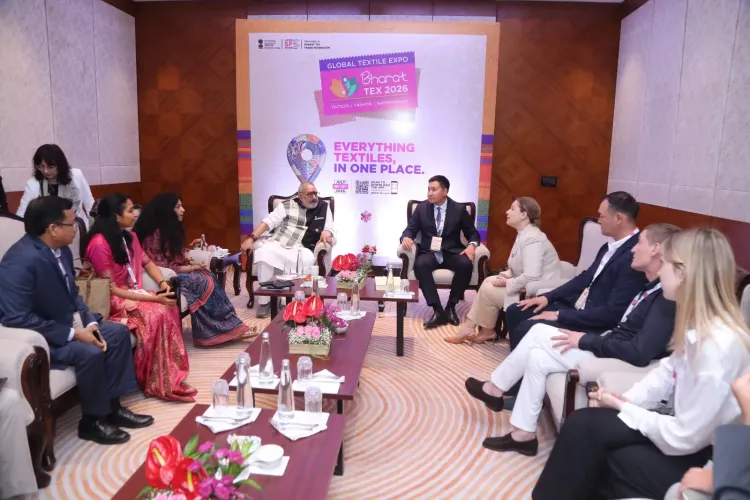
Union Textiles Minister Giriraj Singh held a bilateral meeting with the Vice President of Russia's Republic of Kalmykia on 14 July 2026, discussing textiles cooperation and mutual investment possibilities ahead of BharatTex2026. The engagement reflects India's push to diversify its Russia partnership beyond defence and energy.
Key Takeaways
Giriraj Singh , Union Textiles Minister, met the Vice President of the Government of the Republic of Kalmykia , Russia, on 14 July 2026 .
Discussions covered 'various topics related to the textiles industry' and 'possibilities of mutual cooperation,' per the minister's post.
The meeting was flagged under #BharatTex2026 , signalling intent to use the upcoming textiles event as a platform for India-Russia industry engagement.
India's PLI scheme for textiles (launched 2021 ) forms the domestic policy backbone underpinning the outreach to new international partners.
The engagement reflects a broader pattern of India-Russia sectoral diversification beyond traditional defence and hydrocarbons cooperation.
No specific agreements or timelines were announced; the dialogue is at an exploratory stage.
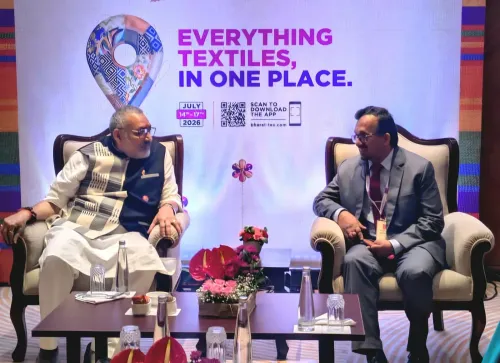
Union Textiles Minister Giriraj Singh met with the Vice President of the Government of the Republic of Kalmykia, a federal republic within the Russian Federation, on Tuesday, 14 July 2026, for discussions centred on expanding bilateral cooperation in the textiles sector. The minister described the meeting as a warm and productive exchange aimed at giving new direction to mutual understanding between the two sides.
Posting on X, Singh wrote: 'रूस के रिपब्लिक ऑफ कलमीकिया की सरकार के उपाध्यक्ष के साथ आत्मीय मुलाकात हुई।' ('Had a warm meeting with the Vice President of the Government of the Republic of Kalmykia, Russia.') He added that 'various topics related to the textiles industry were discussed and views were shared on the possibilities of mutual cooperation,' calling the dialogue 'significant from the perspective of giving new direction to mutual understanding and cooperation between both sides.' The post was tagged #BharatTex2026, #IndiaRussia, and #Textiles.
Context
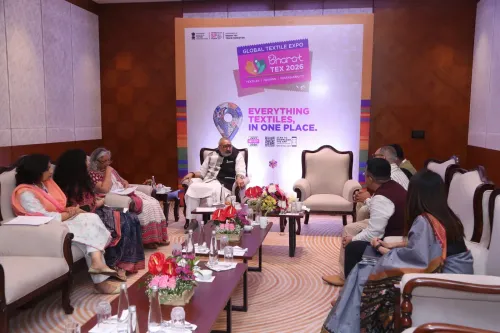
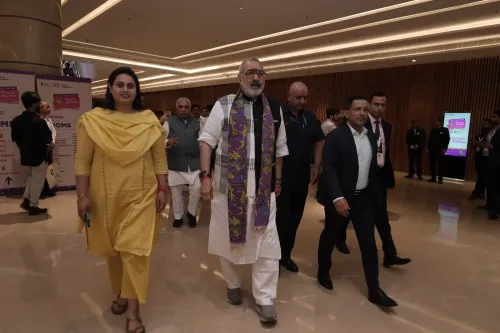
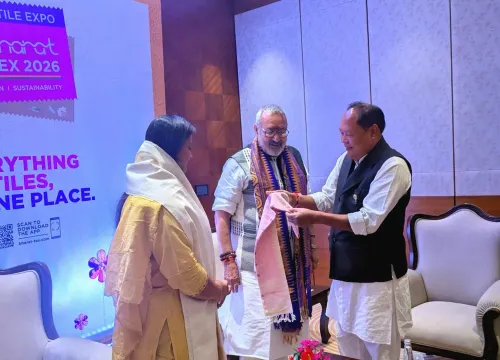
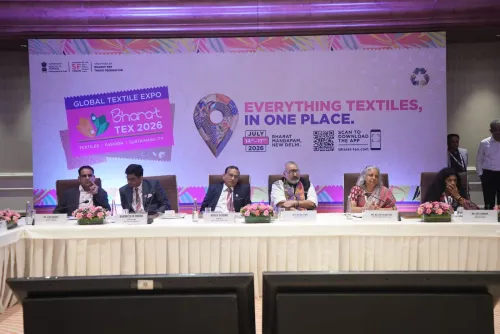
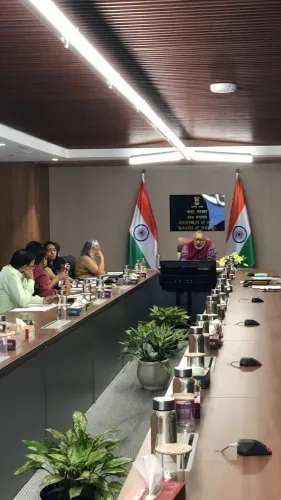
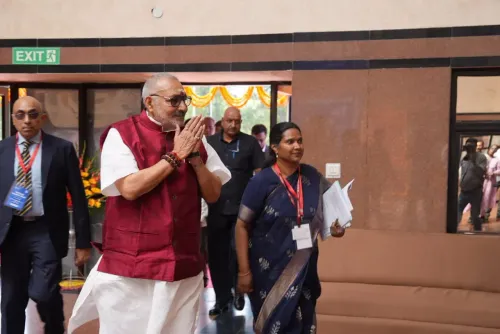
The Republic of Kalmykia is a constituent federal republic of Russia located in the North Caucasus region, notable for its ethnic Kalmyk Buddhist population. While not traditionally a textile powerhouse, the engagement signals India's intent to explore sectoral cooperation with Russian regions beyond the usual bilateral anchors of defence and energy. The meeting was accompanied by four photographs shared by the minister, underscoring its official character.
Policy Backdrop
India and Russia have maintained a Special and Privileged Strategic Partnership since 2010, built on a framework first declared in 2000. In recent years, New Delhi has pursued deliberate sectoral diversification in its Russia engagement — moving into agriculture, pharmaceuticals, and now textiles — as Moscow seeks alternative markets amid Western sanctions and India looks to widen its non-traditional export base. Domestically, the Production Linked Incentive (PLI) scheme for textiles, launched in 2021, has positioned India as an aggressive promoter of man-made fibre and technical textiles investment, creating a natural pitch for new international partnerships.
Stakeholders and Impact
Indian textile exporters and apparel manufacturers stand to benefit most directly if the dialogue translates into concrete trade or investment arrangements. The Russian side, operating under constrained access to Western markets, has strong incentives to deepen sourcing and manufacturing linkages with Indian industry. The hashtag #BharatTex2026 — referencing an upcoming major Indian textiles event — suggests the government intends to use that platform as a vehicle for formalising any emerging interest from Kalmykia or broader Russian counterparts.
What's Next
Preparatory activity ahead of BharatTex2026 is likely to include follow-up working-level meetings, possible Memoranda of Understanding, and exploration of collaboration on textile machinery, raw materials, and joint ventures. Singh's outreach to a Russian regional government — rather than only federal-level interlocutors — reflects a granular, region-by-region diplomatic approach to building India's textile export network. Whether the Kalmykia engagement produces a formal institutional mechanism will be a key indicator of how seriously both sides intend to pursue the opportunity.
Point of View
Multi-level India-Russia engagement strategy. Anchoring the meeting to #BharatTex2026 serves a dual purpose: it internationalises the event's profile while creating a deadline that can convert exploratory talks into deliverables. For the BJP government, visible diplomatic activity in the textiles space reinforces the ministry's export-push narrative ahead of what could be a challenging global trade environment. The absence of any named Kalmykian counterpart or announced outcome, however, means the meeting's real weight will only be judged by what follows.
NationPress
15 Jul 2026
Frequently Asked Questions
Why did Giriraj Singh meet the Kalmykia Vice President?
Union Textiles Minister Giriraj Singh met the Vice President of Russia's Republic of Kalmykia on 14 July 2026 to discuss cooperation in the textiles industry and explore possibilities for mutual investment and trade between India and the Russian region.
What is BharatTex2026?
BharatTex2026 is an upcoming major Indian textiles sector event positioned as a platform for international cooperation, investment promotion, and showcasing India's textile manufacturing capabilities to global partners.
What is India's textile trade relationship with Russia?
India and Russia have a Special and Privileged Strategic Partnership since 2010. In recent years, both countries have been diversifying cooperation beyond defence and energy into sectors such as agriculture, pharmaceuticals, and now textiles, with India seeking to grow non-traditional exports to Russia.
What is the PLI scheme for textiles?
The Production Linked Incentive (PLI) scheme for textiles was launched by the Indian government in 2021 to attract investment and boost exports, particularly in man-made fibre and technical textiles segments, forming a key pillar of India's textile diplomacy.
Where is the Republic of Kalmykia?
The Republic of Kalmykia is a federal republic within the Russian Federation, located in the North Caucasus region. It has a notable ethnic Kalmyk Buddhist population and is one of Russia's constituent republics.