CM Sai Hails Chhattisgarh's Decisive Break from Naxal Violence
Synopsis
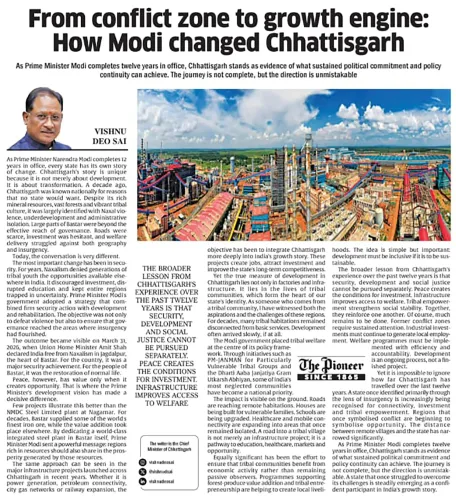
Chhattisgarh Chief Minister Vishnu Deo Sai told the state assembly on 15 July 2026 that decades of Naxal violence have been decisively overcome through coordinated central-state action, security force operations, and the support of Bastar's people, marking what the government calls a new era of peace and development.
Key Takeaways
CM Vishnu Deo Sai declared on 15 July 2026 from the Chhattisgarh Legislative Assembly that the state has entered a new era of peace after decades of Naxal violence.
He credited coordinated efforts of the central and state governments , the courage of security forces , and the trust of Bastar 's people for the outcome.
The CRPF and Chhattisgarh Police conducted sustained anti-Naxal operations as part of the SAMADHAN doctrine introduced by the Ministry of Home Affairs in 2017 .
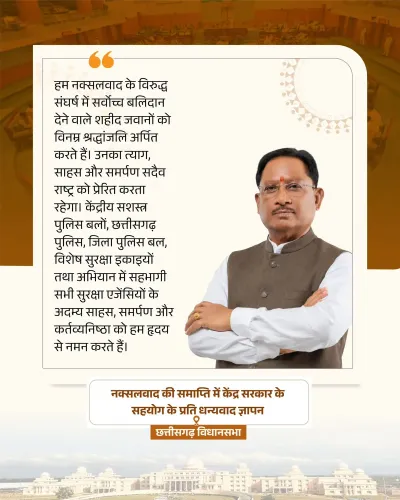
Sai formally expressed gratitude to the central government for its support in eliminating Left-Wing Extremism in the state.
The next focus will be infrastructure and livelihood projects in formerly affected Bastar blocks, with the MHA 's annual district review serving as a key benchmark.
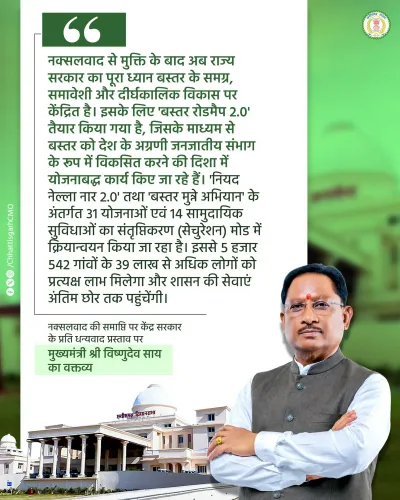
Chhattisgarh Chief Minister Vishnu Deo Sai declared on 15 July 2026 that the state has entered a new era of peace, security, and development, crediting coordinated efforts by the central and state governments, the courage of security forces, and the trust of the people of Bastar for what he described as a decisive end to decades of Naxal violence. The statement was made from the floor of the Chhattisgarh Legislative Assembly, where he also formally expressed gratitude to the central government for its support in eliminating Left-Wing Extremism.
Context
Chhattisgarh has borne the brunt of Maoist insurgency within India's so-called Red Corridor for more than two decades. The Bastar division — a tribal-dominated belt in southern Chhattisgarh — recorded some of the country's highest levels of Naxal-related violence, with attacks on security personnel, civilians, and infrastructure forming a grim annual pattern. Chief Minister Sai's address to the assembly marks the state government's most formal and unambiguous declaration that this chapter has been closed.
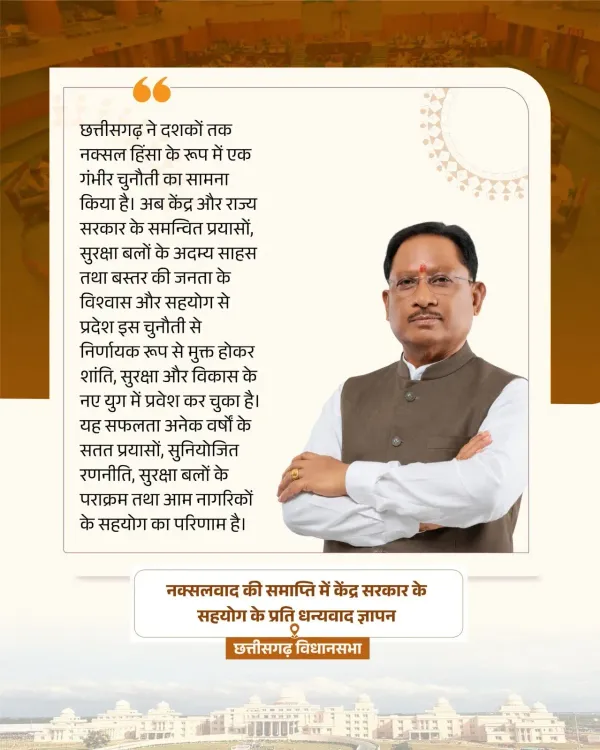
In his statement, translated from Hindi, Sai said: 'Chhattisgarh ne dashkon tak Naxal hinsa ke roop mein ek gambhir chunauti ka samna kiya hai' ['Chhattisgarh has faced a grave challenge in the form of Naxal violence for decades'] — and that the state has now 'decisively freed itself' from this challenge through 'continuous efforts of many years, a well-planned strategy, the valour of security forces, and the cooperation of ordinary citizens.'
Policy Backdrop
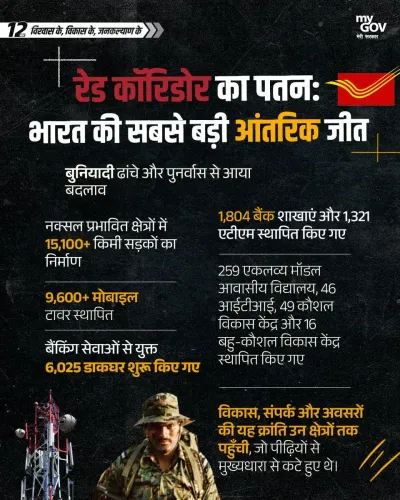
The central government's SAMADHAN doctrine, introduced by the Ministry of Home Affairs in 2017, provided the strategic framework combining intensified security operations, development outreach, and protection of rights. Chhattisgarh's own surrender-cum-rehabilitation schemes for Maoist cadres, in place since the mid-2000s, complemented this approach by offering a pathway back to the mainstream for those willing to renounce violence.
Improved centre-state coordination, particularly after 2014, has been linked in official assessments to a measurable reduction in the number of Naxal-affected districts. Road connectivity drives, welfare scheme delivery, and local governance initiatives in Bastar blocks have run alongside security operations as part of this integrated approach.
The Central Armed Police Forces — led by the CRPF — and the Chhattisgarh Police have conducted sustained anti-Naxal operations over this period. Sai's assembly statement specifically acknowledged the 'indomitable courage' (adamya sahas) of these forces as central to the outcome.
Stakeholders and Impact
The communities most directly affected are the tribal populations of Bastar, who lived for years under the dual pressure of Maoist coercion and the displacement caused by conflict. A reduction in violence opens the possibility of normalised administration, schooling, healthcare delivery, and economic activity in areas that remained cut off or under-served.
Security personnel — both central and state — who sustained casualties over decades of operations represent another key stakeholder group. Chief Minister Sai's assembly tribute to their sacrifice carries symbolic weight as the state government frames this moment as a turning point. Surrendered cadres enrolled in rehabilitation programmes will also be closely watched as indicators of long-term stabilisation.
What's Next
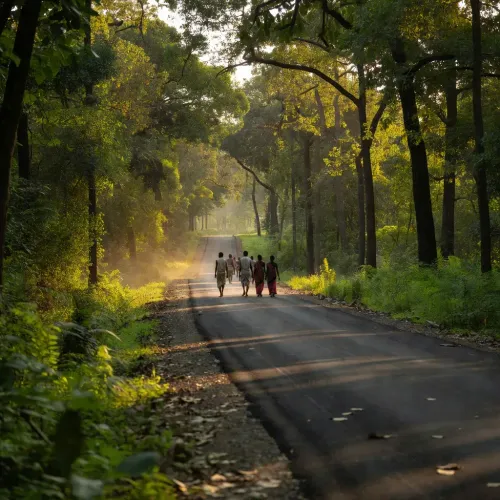
Attention will now turn to the rollout of infrastructure and livelihood projects in formerly Naxal-affected Bastar blocks, where the security vacuum must be filled with visible development to prevent any resurgence. The Ministry of Home Affairs' next annual review of Left-Wing Extremism-affected districts will serve as an independent benchmark against which the state government's claims can be assessed.
If the gains hold, Chhattisgarh could become a template for the remaining pockets of Maoist activity elsewhere in the Red Corridor. The political and administrative challenge now shifts from counter-insurgency to consolidation — ensuring that peace translates into lasting prosperity for Bastar's long-marginalised communities.
Point of View
Lending the state government a 'mission accomplished' narrative ahead of future electoral cycles. The choice of the legislative assembly as the venue — rather than a press conference or rally — signals an attempt to give the claim institutional weight and bipartisan acknowledgement. However, the durability of this framing depends heavily on whether development investments in Bastar follow through, since past counter-insurgency successes in the Red Corridor have periodically reversed when the post-conflict governance dividend failed to materialise. The statement also reinforces the BJP's broader national positioning on internal security as a core competency, tying state-level outcomes to central policy architecture.
NationPress
15 Jul 2026
Frequently Asked Questions
Has Chhattisgarh really become free of Naxal violence?
Chief Minister Vishnu Deo Sai declared in the Chhattisgarh assembly on 15 July 2026 that the state has decisively freed itself from Naxal violence. Official data has shown a substantial decline in Left-Wing Extremism incidents in recent years, though independent verification of a complete end to all Naxal activity is pending the Ministry of Home Affairs' next annual review.
What is the SAMADHAN doctrine used against Naxals?
SAMADHAN is a comprehensive counter-Left Wing Extremism strategy introduced by the Ministry of Home Affairs in 2017. It combines intensified security operations, infrastructure development, rehabilitation of surrendered cadres, and protection of rights to address the root causes of Maoist insurgency.
Why is Bastar important in the Naxal conflict?
Bastar is a tribal-dominated division in southern Chhattisgarh and has historically recorded some of the highest levels of Naxal-related violence in India. Its dense forests, marginalised tribal communities, and weak connectivity made it a stronghold for Maoist groups for decades.
What did CM Vishnu Deo Sai say in the assembly about Naxalism?
CM Sai said that Chhattisgarh had faced a grave challenge in the form of Naxal violence for decades, and that through coordinated central-state efforts, the valour of security forces, and the cooperation of Bastar's people, the state has now entered a new era of peace, security, and development.
What happens in Bastar now that Naxal violence has reduced?
With reduced Naxal activity, the focus shifts to rolling out infrastructure, road connectivity, welfare schemes, and livelihood projects in formerly affected Bastar blocks. Rehabilitation of surrendered Maoist cadres and normalisation of local governance and public services are also key priorities.