CM Sai Hails Decisive Strike Against Naxalism Under Modi Govt
Synopsis
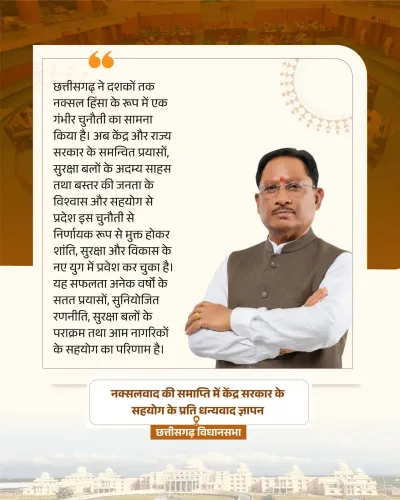
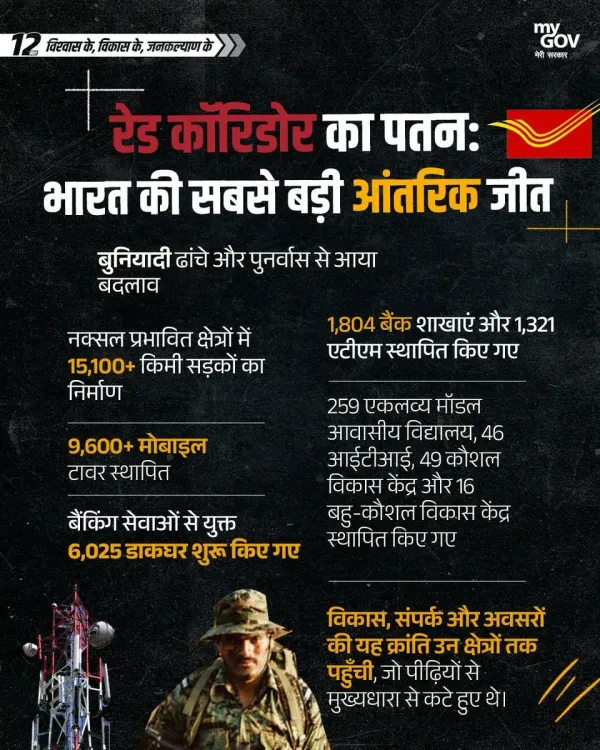
Chhattisgarh Chief Minister Vishnu Deo Sai on 17 June 2026 declared a decisive victory against Naxalism under the BJP's double engine government, saying coordinated security and development efforts have turned former Red Corridor districts into centres of growth and good governance.
Key Takeaways
Chhattisgarh CM Vishnu Deo Sai posted on 17 June 2026 crediting the BJP's 'double engine' government with a decisive strike against Naxalism.
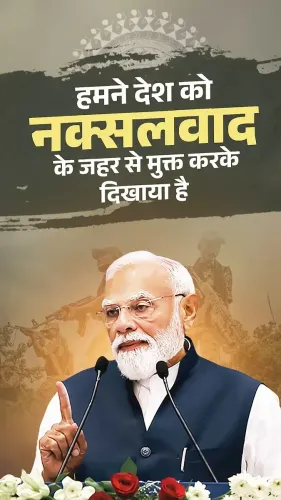
The post tags Prime Minister Narendra Modi and uses the hashtag #12YearsOfSurakshitBharat .
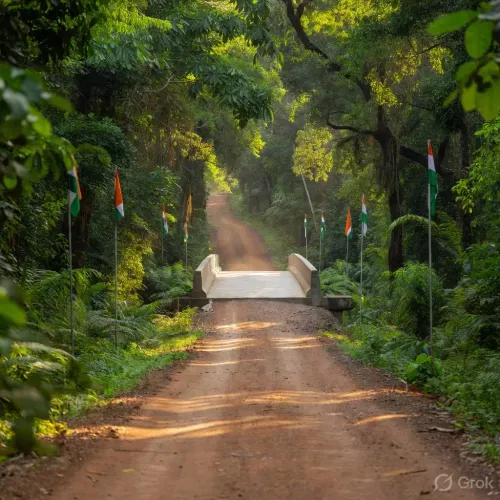
CM Sai says areas once known for violence and fear are now becoming centres of development and good governance .
The Union government's SAMADHAN doctrine (2017) underpins the integrated security-plus-development approach in LWE-affected districts.
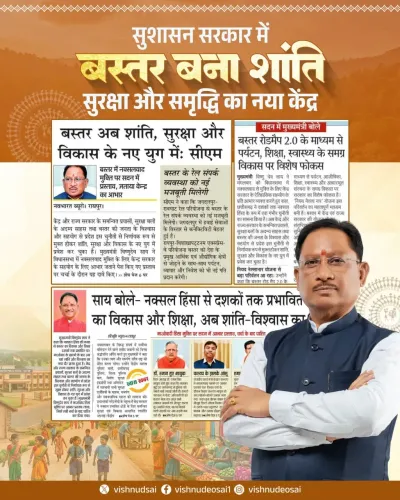
Bastar division in southern Chhattisgarh has been the primary focus of both security operations and infrastructure projects.
Millions of tribal residents in the state's forest belt are identified as the primary beneficiaries of the claimed transformation.
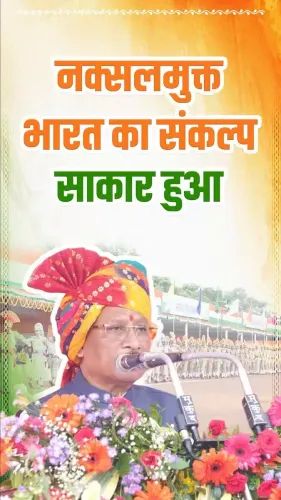
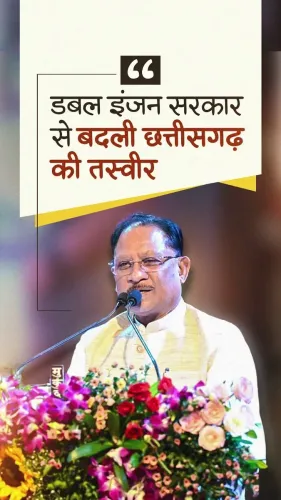
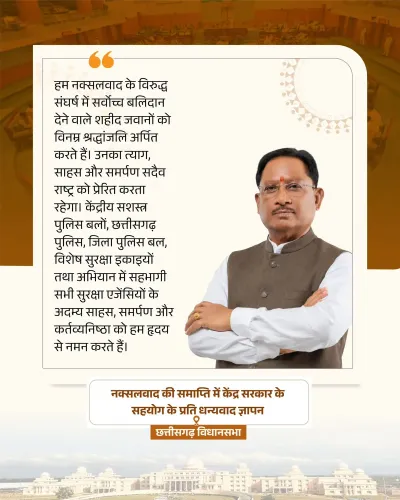
Chhattisgarh Chief Minister Vishnu Deo Sai on Wednesday, 17 June 2026 credited the 'double engine' BJP government at the state and Centre with delivering a decisive blow against Naxalism, saying coordinated security operations and development efforts have created a new environment of peace, security and trust in remote areas of the state.
Context
Posting on X under the hashtag #12YearsOfSurakshitBharat, Chief Minister Sai wrote that under the leadership of Prime Minister Narendra Modi, effective action against Naxalism combined with development initiatives has transformed regions once synonymous with violence and fear. In his words: 'Areas that were once known for violence and fear are today becoming centres of development, good governance and new possibilities.'
The post directly tags @narendramodi and frames the progress as a joint achievement of the Union and state governments — the 'double engine' formulation the Bharatiya Janata Party has consistently used to describe aligned BJP rule at both levels.
Policy Backdrop
The Union government formally adopted the SAMADHAN doctrine in 2017, integrating security operations, infrastructure development and rebel rehabilitation to address Left Wing Extremism across affected states. Since 2014, the Centre has coupled road construction, school-building and mobile-connectivity projects with expanded security-grid operations in LWE-affected districts.
Chhattisgarh — which contains significant portions of the former 'Red Corridor' — has been the primary theatre of this approach. Bastar division, the heavily forested southern region of the state historically regarded as a Naxal stronghold, has been the focus of both intensified operations by state police and central paramilitary forces and accelerated infrastructure rollouts under schemes such as the Road Connectivity Project for LWE Affected Areas.
Chief Minister Sai, who took office in December 2023, made coordinated anti-Naxal action and tribal-district development central planks of his administration from the outset.
Stakeholders and Impact
The communities most directly affected are the lakhs of tribal residents living in the forested vananchal (forest belt) of Chhattisgarh. CM Sai's post specifically notes that the transformation is 'paving the way for new opportunities and a brighter future in the lives of millions of people living in the forest areas.'
State police and central paramilitary forces deployed in LWE districts stand at the operational centre of the claimed progress, alongside government departments responsible for infrastructure and welfare delivery in previously insurgency-hit blocks. Surrendered Naxals and their rehabilitation into mainstream society are also a key stakeholder group under the SAMADHAN framework.
What's Next
The Ministry of Home Affairs periodically releases district-level data on LWE-related violence, surrenders and area domination — figures that will serve as independent benchmarks for the claims made in the post. Any new phase of the Road Connectivity Project for LWE Affected Areas or fresh rehabilitation packages announced by the Chhattisgarh government would be the next concrete policy milestones to watch. The 'double engine' framing also signals that the BJP intends to keep the Naxal-free narrative prominent in the run-up to future electoral cycles in the state.
Point of View
A recurring electoral strategy in BJP-ruled states facing tribal constituencies. The Chhattisgarh government's emphasis on development alongside security reflects the SAMADHAN doctrine's logic, but independent verification of operational outcomes remains essential before the claims can be treated as established fact. The timing and tone suggest the party is building a long-cycle record on Naxalism that it intends to present to voters in future state and national elections.
NationPress
19 Sept 2026
Frequently Asked Questions
What is the 'double engine government' in Chhattisgarh?
The 'double engine government' refers to the BJP being in power simultaneously at both the state level in Chhattisgarh and at the Centre under Prime Minister Narendra Modi, which the party argues enables faster and better-coordinated policy implementation.
What is the SAMADHAN doctrine for Naxal-affected areas?
SAMADHAN is the Ministry of Home Affairs' integrated strategy adopted in 2017 to address Left Wing Extremism by combining security operations, development infrastructure and rebel rehabilitation programmes in affected districts.
Which areas of Chhattisgarh are most affected by Naxalism?
Bastar division in southern Chhattisgarh, a heavily forested region, has historically been regarded as the core Naxal stronghold and is the primary focus of both security operations and government development projects.
When did Vishnu Deo Sai become Chief Minister of Chhattisgarh?
Vishnu Deo Sai took office as Chief Minister of Chhattisgarh in December 2023 following the BJP's victory in the state assembly elections.
What does #12YearsOfSurakshitBharat mean?
The hashtag translates to '12 Years of a Secure India' and appears to mark 12 years of what the BJP describes as improved internal security outcomes since 2014 under Prime Minister Narendra Modi's government.