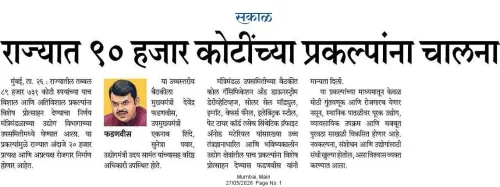
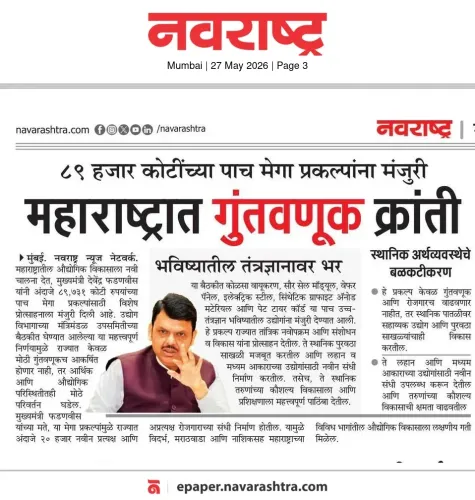
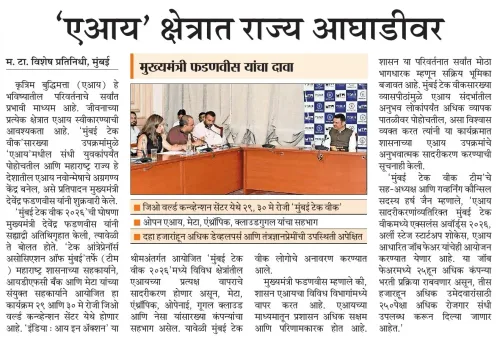
CM Fadnavis Targets ₹20.3 Lakh Crore Investment for Maharashtra
Synopsis
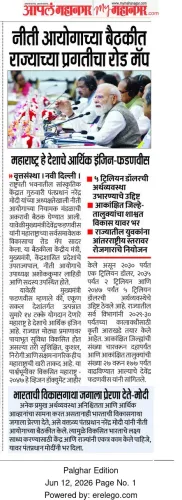
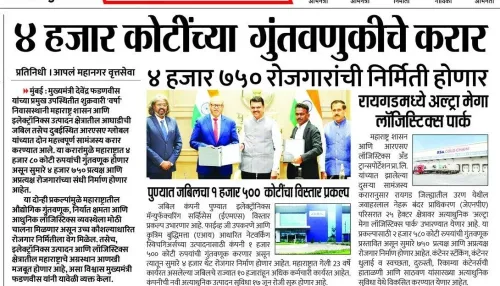
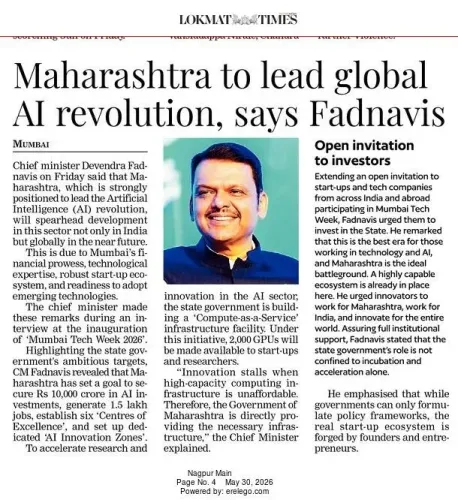
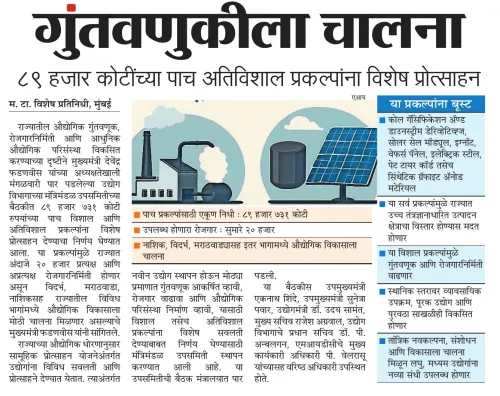
Chief Minister Devendra Fadnavis has announced a ₹20.3 lakh crore investment target for Maharashtra, shared via the official CMO handle in coordination with NITI Aayog on June 12, 2026, continuing the state's aggressive investment-promotion strategy.
Key Takeaways
₹20.3 lakh crore is the investment target announced by CM Devendra Fadnavis for Maharashtra .
The announcement was made on June 12, 2026 and shared by the official Chief Minister's Office of Maharashtra on X.
The commitment is linked to NITI Aayog , India's central policy think tank, indicating a cooperative federalism platform.
Maharashtra is India's most industrialised state and a top destination for domestic and foreign direct investment.
The announcement continues a pattern set by Magnetic Maharashtra summits held during Fadnavis' first term ( 2014–2019 ).
Realisation rates and sector-specific policy follow-through will be key metrics to watch in upcoming quarterly reviews.
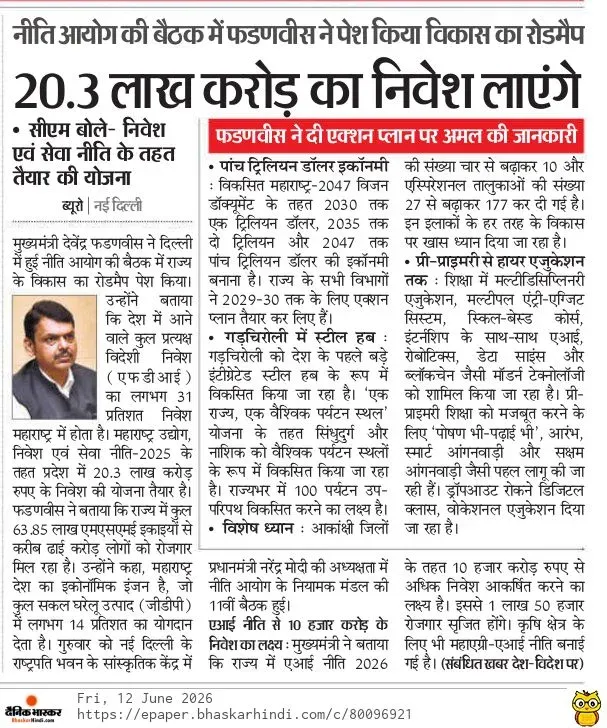
The Chief Minister's Office of Maharashtra announced on Friday, June 12, 2026 that Chief Minister Devendra Fadnavis has set a target of attracting ₹20.3 lakh crore in investment into the state, a commitment shared in coordination with NITI Aayog.
Context
The post, shared from the official CMO Maharashtra handle, quotes Chief Minister Devendra Fadnavis directly: '₹20.3 lakh crore ka nivesh laenge' ('We will bring investment worth ₹20.3 lakh crore'). The announcement is tagged to NITI Aayog, indicating it was made in the context of a policy or investment platform coordinated by the central government's think tank.
Fadnavis, a senior BJP leader, returned to the Chief Minister's post in 2023 after previously serving from 2014 to 2019. Investment promotion and industrial policy have been central planks of his administration across both tenures.
Policy Backdrop
During his first term, Fadnavis launched the flagship Magnetic Maharashtra initiative and hosted global investment summits that secured multi-trillion-rupee commitments, establishing the state's template for competitive investment attraction. The current announcement appears to continue that lineage at an even larger scale.
NITI Aayog, established in 2015, has been instrumental in publishing state-level ease-of-doing-business rankings and investment climate reports, providing a cooperative federalism framework within which states like Maharashtra pitch for domestic and foreign capital. The ₹20.3 lakh crore figure, if realised, would represent one of the largest state-level investment commitments in India's recent history.
Maharashtra is India's most industrialised state and contributes a disproportionately large share of national GDP and FDI inflows, with key manufacturing and services hubs in Mumbai, Pune, and the broader Mumbai Metropolitan Region.
Stakeholders and Impact
The announcement is directly relevant to large-scale domestic and foreign investors, as well as manufacturing, infrastructure, and IT sector players who view Maharashtra as a preferred destination. A successful realisation of even a significant portion of this target would have material implications for employment generation and state GDP growth.
Indian states routinely announce ambitious investment targets at summits and NITI Aayog-coordinated platforms as part of competitive federalism. Historically, the gap between pledged and realised investment has been a key metric that industry bodies and policy analysts track closely in the quarters following such announcements.
What's Next
Attention will now turn to the Maharashtra state industries department's quarterly reviews, where the actual pipeline of investment proposals will be assessed against the stated target. Any new sector-specific policies or incentive structures announced in the next Maharashtra state budget will be read as signals of how seriously the government intends to pursue this commitment.
Analysts will also watch for follow-up statements from NITI Aayog and whether the ₹20.3 lakh crore target is backed by a formal memorandum of understanding framework or sector-wise allocation plan.
Point of View
Especially with NITI Aayog as the implied platform, lending central-government credibility to the state's pitch. For Fadnavis, whose political identity is closely tied to Maharashtra's economic positioning, such announcements serve a dual purpose: attracting capital and reinforcing the BJP's governance narrative ahead of any future electoral cycle. However, the gap between pledged and realised investment has historically been wide across Indian states, and the credibility of this target will ultimately rest on the sector-wise pipeline and policy follow-through. This announcement fits squarely into the broader pattern of competitive federalism, where states increasingly use investment summits and NITI Aayog platforms as arenas for economic statecraft.
NationPress
16 Sept 2026
Frequently Asked Questions
What is the investment target announced by CM Devendra Fadnavis for Maharashtra?
CM Devendra Fadnavis announced a target of ₹20.3 lakh crore in investment for Maharashtra, as stated by the Chief Minister's Office on June 12, 2026.
What is NITI Aayog's role in Maharashtra's investment push?
NITI Aayog is India's central policy think tank that publishes state investment climate rankings and facilitates cooperative federalism frameworks, providing a platform through which states like Maharashtra announce and coordinate investment targets.
What is Magnetic Maharashtra?
Magnetic Maharashtra was a flagship investment summit initiative launched by CM Devendra Fadnavis during his first term (2014–2019) to attract large-scale domestic and foreign investment into the state.
How does Maharashtra compare to other Indian states in attracting investment?
Maharashtra is India's most industrialised state, contributing a large share of national GDP and FDI inflows, with major hubs in Mumbai, Pune, and the Mumbai Metropolitan Region.
How will Maharashtra's ₹20.3 lakh crore investment target be tracked?
The state industries department's quarterly reviews and any sector-specific policies in the next Maharashtra budget will be key indicators of how the investment pipeline progresses against the stated target.