CM Fadnavis Drives Maharashtra Investment Revolution
Synopsis
The Chief Minister's Office of Maharashtra on 27 May 2026 declared an 'investment revolution' under CM Devendra Fadnavis, reinforcing the state's long-standing bid to lead India as a premier industrial and FDI destination across auto, IT, pharma and financial services sectors.
Key Takeaways
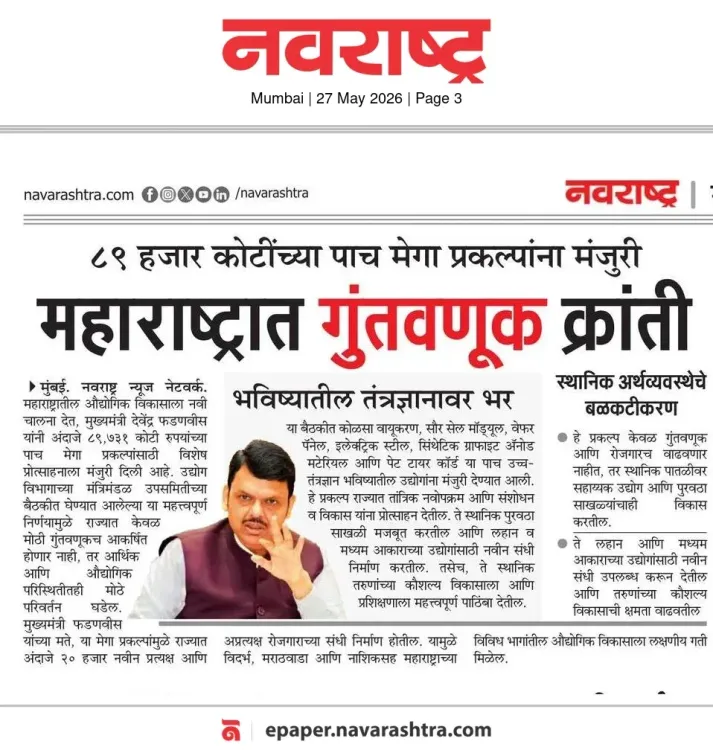
The CMO Maharashtra on 27 May 2026 proclaimed an गुंतवणूक क्रांती ('investment revolution') in the state.
Chief Minister Devendra Fadnavis was directly credited with driving the new wave of industrial investment.
Maharashtra's Industrial Policy 2019 had set a target of attracting Rs 10 lakh crore in investments over five years.
Maharashtra competes with Gujarat , Tamil Nadu , and Karnataka as a top investment destination in India .
Key sectors include automobiles, IT, pharmaceuticals, and financial services, supported by single-window clearance and Make in India alignment.
Upcoming investor summits and budget announcements are expected to quantify fresh commitments under the Fadnavis administration.
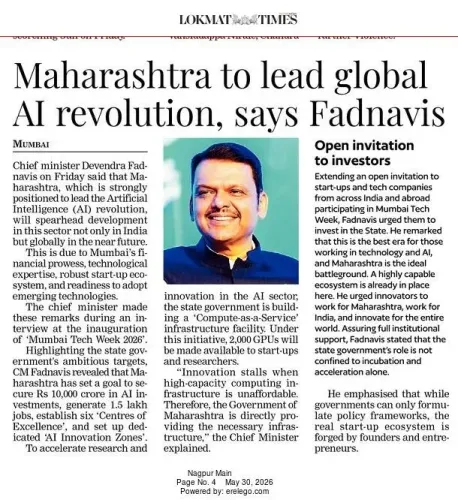
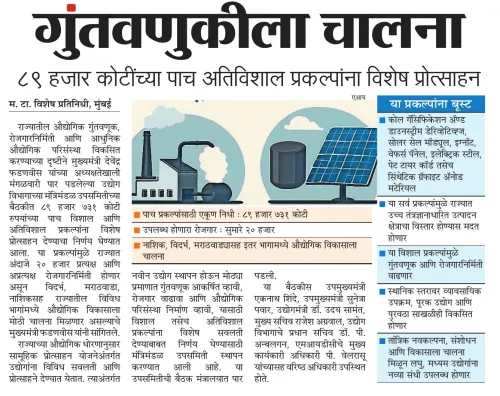
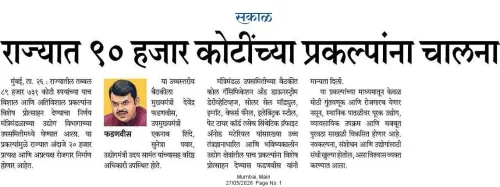
The Chief Minister's Office of Maharashtra on Wednesday, 27 May 2026 highlighted what it called an गुंतवणूक क्रांती ('investment revolution') in the state, crediting Chief Minister Devendra Fadnavis with driving a new wave of industrial inflows into Maharashtra.
Context
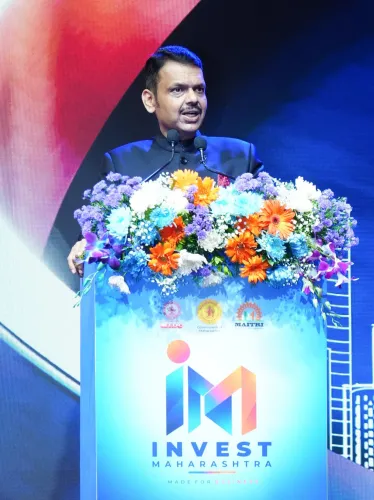
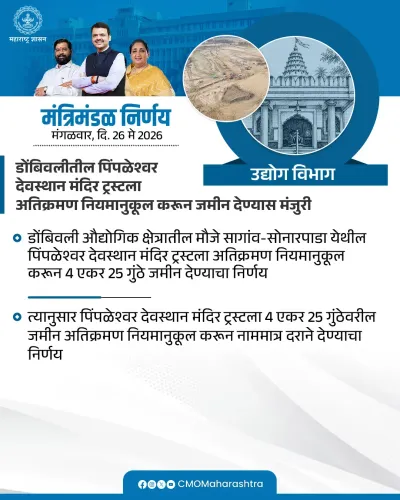
The post, shared from the official CMO Maharashtra account, uses the Marathi phrase गुंतवणूक क्रांती — meaning 'investment revolution' — to frame the current investment climate under Fadnavis. The message was accompanied by an image and tagged with #Maharashtra, #DevendraFadnavis, and #Industry, signalling a deliberate push to amplify the state's industrial positioning on social media.
Devendra Fadnavis, who first served as Chief Minister from 2014 to 2019, returned to the post and has consistently championed industrial policy and foreign direct investment as central pillars of his governance agenda.
Policy Backdrop
Maharashtra released its Industrial Policy 2019 with an ambitious target of attracting Rs 10 lakh crore in investments over five years, backed by incentive frameworks and a single-window clearance mechanism to ease business entry.
The state has repeatedly positioned itself as India's premier investment destination, competing closely with Gujarat, Tamil Nadu, and Karnataka. Successive governments have aligned these drives with national programmes such as Make in India and production-linked incentive schemes to channel capital into manufacturing and infrastructure sectors.
Maharashtra hosts major clusters in automobiles, information technology, pharmaceuticals, and financial services, giving it a structural advantage in attracting both domestic and foreign capital.
Stakeholders and Impact
The investment push has broad implications for investors, MSMEs, and established industrial clusters spread across the state. Large-scale inflows typically translate into job creation, infrastructure upgrades, and supply-chain deepening that benefit smaller enterprises alongside anchor investors.
For the state government, framing industrial attraction as a 'revolution' serves both a policy and a political purpose — projecting administrative efficiency and economic momentum ahead of future budget cycles and investor summits.
What's Next
Attention will now turn to the next state-level investor summit or budget announcements that could put concrete numbers to the commitments implied by the CMO's messaging. Sector-specific policy tweaks — particularly for priority areas such as semiconductors, green energy, and logistics — are likely to follow as the government seeks to sustain momentum.
Whether the 'investment revolution' framing translates into verifiable, quantified commitments will determine how credibly Maharashtra can defend its top-destination status against fast-closing rivals in southern and western India.
Point of View
And this post fits that pattern precisely. Maharashtra's structural advantages are real, but the 'revolution' label will face scrutiny unless backed by fresh, verifiable commitment figures that outpace rival states. The broader arc here is a competitive federalism story: states are increasingly using social media to brand themselves to global capital as much as to domestic voters.
NationPress
11 Oct 2026
Frequently Asked Questions
What is the 'investment revolution' announced by Maharashtra's CMO?
The Chief Minister's Office of Maharashtra used the Marathi phrase 'गुंतवणूक क्रांती' ('investment revolution') on 27 May 2026 to highlight a significant push for industrial investment in the state under Chief Minister Devendra Fadnavis.
What is Maharashtra's investment target under its industrial policy?
Maharashtra's Industrial Policy 2019 set a target of attracting Rs 10 lakh crore in investments over five years, supported by incentive schemes and a single-window clearance system.
Which states does Maharashtra compete with for investment?
Maharashtra competes primarily with Gujarat, Tamil Nadu, and Karnataka as India's top investment destinations, particularly in sectors like automobiles, IT, pharmaceuticals, and financial services.
Who is Devendra Fadnavis and what is his role in Maharashtra's investment drive?
Devendra Fadnavis is the Chief Minister of Maharashtra who previously held the post from 2014 to 2019. He has been a consistent advocate for industrial policy reform and FDI attraction, and the CMO's post directly credits him with driving the current investment push.
What sectors are at the centre of Maharashtra's investment push?
Maharashtra's investment drive focuses on automobiles, information technology, pharmaceuticals, financial services, and increasingly on emerging sectors such as semiconductors, green energy, and logistics.