Maharashtra signs MoUs for 25,400 MW nuclear power projects worth ₹6.5 lakh crore
Synopsis
Maharashtra has committed ₹6,50,000 crore to nuclear and power projects in a single signing — the state's biggest clean energy bet yet. With NTPC and the Bajaj Group on board, and the new SHANTI Act unlocking private participation for the first time, this is less an MoU and more a structural pivot in how India plans to hit its 2047 nuclear target.
Key Takeaways
Maharashtra signed MoUs on 19 May with NTPC Limited and Lalitpur Power Generation Company (Bajaj Group) for 25,400 MW of power capacity.
Total investment committed: ₹6,50,000 crore ; expected jobs: 1,23,500 .
NTPC will invest ₹1,00,000 crore for 7,200 MW ; Bajaj Group will invest ₹2,00,000 crore for 5,000 MW .
Project sites are being evaluated in Ratnagiri and Sindhudurg districts; reactor type to be determined by detailed project reports.
The SHANTI Act replaces the Atomic Energy Act of 1962 , enabling private and foreign participation in India's nuclear sector.
Maharashtra is aligning with India's target of 1,00,000 MW nuclear capacity by 2047 and net-zero emissions by 2070 .
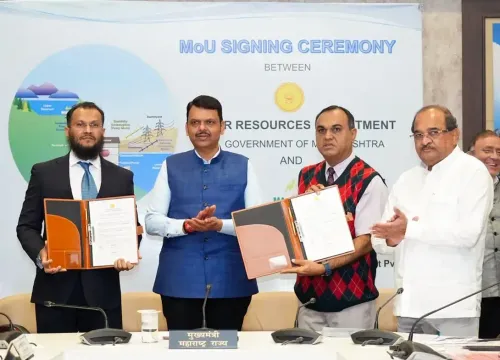
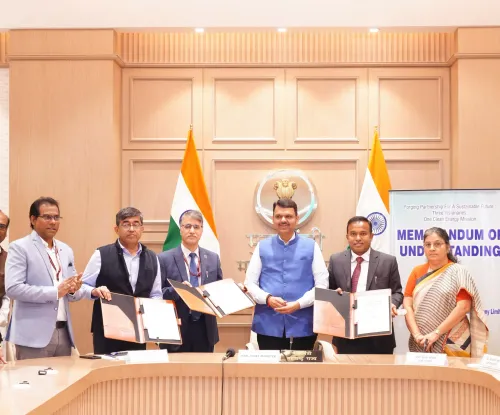
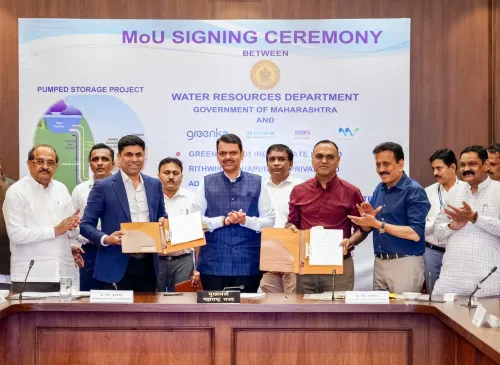
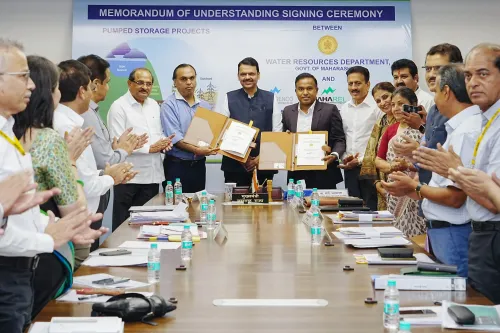
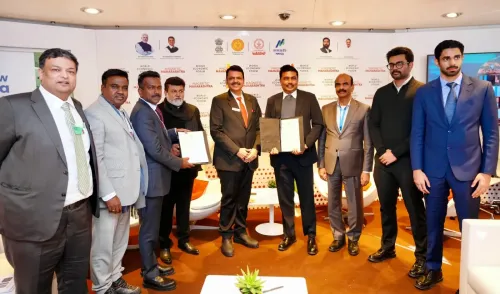
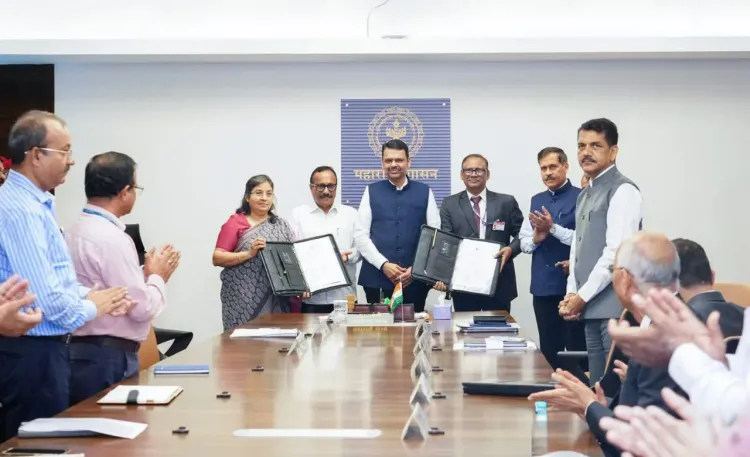
The Maharashtra government on Tuesday, 19 May signed Memorandums of Understanding with NTPC Limited and Lalitpur Power Generation Company Limited (Bajaj Group) to develop nuclear and thermal power projects with a combined generation capacity of 25,400 MW. The agreements, inked in the presence of Chief Minister Devendra Fadnavis, entail a total investment of ₹6,50,000 crore and are expected to generate 1,23,500 jobs across the state.
Key Developments
Minister of Renewable Energy Atul Save said the developers will conduct due diligence and ground-level surveys to finalise project sites in Ratnagiri and Sindhudurg districts. Depending on the detailed project reports, developers may opt for Small Modular Reactors, Pressurised Heavy Water Reactors, Light Water Reactors, or Fast Breeder Reactors.
Save said Maharashtra was aligning itself with the Centre's target of adding 1,00,000 MW of nuclear capacity by 2047 — coinciding with India's Viksit Bharat centenary goal — and positioning the state as a cornerstone of India's 2070 net-zero emissions commitment.
What Each Partner Will Invest
According to the Chief Minister's Office, state-run NTPC Limited will invest ₹1,00,000 crore, generating 7,200 MW of power and creating 5,000 jobs. Lalitpur Power Generation Company Limited (Bajaj Group) will invest ₹2,00,000 crore, contributing 5,000 MW and 3,000 jobs. The remaining investment and capacity is attributed to other projects under the broader MoU framework, bringing the cumulative figures to ₹6,50,000 crore, 25,400 MW, and 1,23,500 jobs.
What the Government Said
'With today's Memorandums of Understanding, projects with a generation capacity of 25,400 MW will be developed. The government will provide the necessary help to the developers, including all clearances and approvals,' Save said.
Chief Minister Fadnavis underscored the national dimension: 'PM Modi has set a goal to make India an energy-abundant nation and achieve net-zero carbon emissions. Maharashtra is making every possible effort to fulfil this objective.' He urged the companies to move swiftly on site surveys and assured full cooperation from state departments.
The SHANTI Act: A Structural Shift
A government official noted that the recently enacted SHANTI Act — which replaces the legacy Atomic Energy Act of 1962 — opens the domestic nuclear sector to private Indian entities and global partnerships. The Act establishes clear rules for Foreign Direct Investment (FDI) and seeks to revise the supplier liability framework to attract international technology providers. This regulatory shift is widely seen as the enabling condition that makes large-scale private participation in nuclear power commercially viable for the first time.
What Happens Next
Developers are expected to begin site surveys in Ratnagiri and Sindhudurg shortly, with state departments directed to assist. Detailed project reports will determine reactor technology choices. The projects, if executed on schedule, would make Maharashtra a significant contributor to India's nuclear energy expansion ahead of the 2047 centenary target.
Point of View
50,000 crore figure is eye-catching, but MoUs in India's infrastructure sector have a long history of not translating into commissioned capacity. The more consequential development here is the SHANTI Act — without it, these signings would have been legally impossible. The real test is whether the revised liability framework actually draws credible international reactor vendors, or whether domestic developers end up relying on proven but slower indigenous designs. Maharashtra's choice of Ratnagiri and Sindhudurg also carries political risk: both districts have historically resisted large industrial projects on coastal land. Site surveys will be the first real indicator of whether this ambition survives contact with ground realities.
NationPress
7 Oct 2026
Frequently Asked Questions
What did Maharashtra sign MoUs for on 19 May 2025?
Maharashtra signed Memorandums of Understanding with NTPC Limited and Lalitpur Power Generation Company Limited (Bajaj Group) to develop power projects with a combined capacity of 25,400 MW. The agreements involve a total investment of ₹6,50,000 crore and are expected to create 1,23,500 jobs.
Where will the nuclear power projects be located in Maharashtra?
Project sites are being evaluated in Ratnagiri and Sindhudurg districts on Maharashtra's Konkan coast. Developers will conduct ground-level surveys and due diligence before finalising locations.
What reactor technologies may be used in these projects?
Depending on detailed project reports, developers may choose from Small Modular Reactors, Pressurised Heavy Water Reactors, Light Water Reactors, or Fast Breeder Reactors. The final technology selection will follow site surveys.
What is the SHANTI Act and why does it matter for these projects?
The SHANTI Act replaces the Atomic Energy Act of 1962 and opens India's nuclear sector to private Indian companies and global partnerships for the first time. It establishes FDI rules and revises the supplier liability framework, making large-scale private investment in nuclear power legally and commercially viable.
How do these MoUs fit into India's broader energy goals?
The projects are part of India's target to add 1,00,000 MW of nuclear capacity by 2047, aligned with the Viksit Bharat centenary vision and the country's 2070 net-zero emissions commitment. Maharashtra's 25,400 MW contribution would represent a significant share of that national target.