China solar expansion linked to bird diversity decline, study finds
Synopsis
A study spanning 2,344 Chinese counties reveals that China's solar energy boom — now covering nearly 4,520 sq km — is quietly decimating bird diversity. The culprit isn't the panels themselves, but where they're placed: on ecologically rich cropland and grassland chosen for economic, not environmental, reasons. Researchers say the fix isn't to slow the clean energy rollout, but to make it smarter.
Key Takeaways
A study of 2,344 Chinese counties from 2014 to 2023 links stricter pro-solar policies to measurable declines in bird biodiversity.
Both resident and migratory bird species were affected, with stronger impacts in wealthier, non-desert regions .
China's solar footprint reached nearly 4,520 square kilometres by 2024 , roughly the size of the US state of Rhode Island .
Solar sites are selected based on Five-Year Plan economic priorities rather than land availability or sunlight intensity.
Lead researcher Huiming Zhang of Nanjing University of Information Science & Technology calls for ecologically informed siting and biodiversity safeguards.
China targets carbon neutrality before 2060 , making the tension between solar scale-up and conservation increasingly urgent.
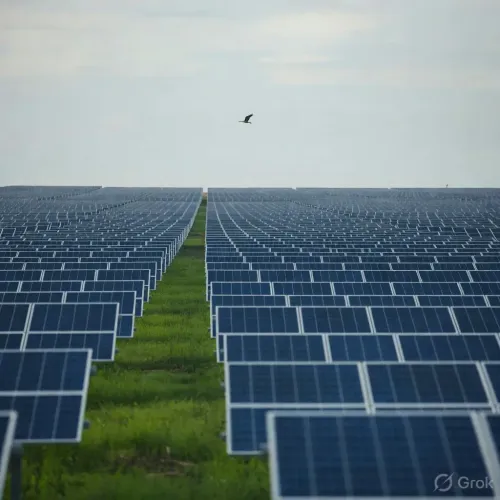
Rapid expansion of solar farms across China is contributing to a measurable decline in bird diversity, as cropland and grassland are cleared to make way for renewable energy infrastructure, according to a new study. Researchers describe the trend as a 'green dilemma' — one that sets carbon reduction goals against ecological conservation.
Key Findings of the Study
The research, led by Huiming Zhang of Nanjing University of Information Science & Technology, analysed policy-driven solar growth across 2,344 Chinese counties between 2014 and 2023. By pairing that data with citizen-science bird observation records, the team found that stricter pro-solar policies were consistently associated with declines in bird biodiversity.
Both resident and migratory bird species showed significant reductions in areas of rapid solar development. The effects were notably stronger in wealthier and non-desert regions, where habitat-rich land is more likely to be converted. Species native to mountain environments — terrain poorly suited to solar installations — were largely unaffected.
The Siting Problem
A critical issue identified by researchers is how solar locations are selected in China. Sites are chosen primarily based on the government's Five-Year Plans to promote economic development in designated regions, rather than on land availability or sunlight intensity. This approach has led to installations on ecologically productive land.
While authorities mandated greening efforts to meet environmental requirements, the resulting vegetation growth was described as 'too homogeneous,' causing ecological quality to deteriorate rather than improve.
China's Solar Footprint and Climate Targets
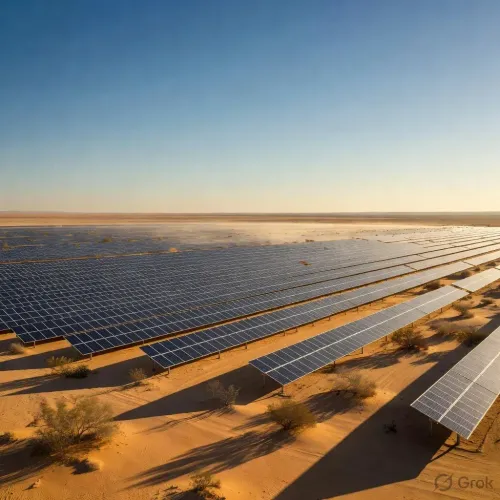
China aims to achieve carbon neutrality before 2060, and its solar footprint had already reached nearly 4,520 square kilometres by 2024 — an area roughly equivalent to the US state of Rhode Island. The scale of this expansion underscores both the ambition of China's clean energy drive and the urgency of addressing its ecological side effects.
What Researchers Are Recommending
'The main message is not to slow the renewable energy transition, but to make solar development more ecologically informed,' Zhang said. The research team has called for large solar projects to be sited in areas with lower ecological conflict, following thorough site assessments, and for limits on land conversion in productive, habitat-rich regions.
'Clean energy development and biodiversity conservation do not have to come at each other's expense, but careful siting and biodiversity safeguards are essential,' Zhang added. The findings point toward a path where renewable energy scale-up and wildlife protection can coexist — but only with deliberate policy reform.
Point of View
Including India, would do well to read this as a cautionary blueprint before productive agricultural and grassland belts are similarly sacrificed to panel arrays.
NationPress
5 Oct 2026
Frequently Asked Questions
How is China's solar expansion affecting bird diversity?
A study of 2,344 Chinese counties found that rapid solar farm development, which clears cropland and grassland, is linked to significant declines in both resident and migratory bird species. The effects are strongest in wealthier, non-desert regions where ecologically rich land is most likely to be converted.
What did researchers find about how China chooses solar farm locations?
Researchers found that solar sites in China are selected based on Five-Year Plan economic development priorities rather than land availability or sunlight intensity. This approach has directed installations onto productive, habitat-rich land, worsening the ecological impact.
How large is China's solar footprint?
China's solar footprint reached nearly 4,520 square kilometres by 2024, an area roughly equivalent to the US state of Rhode Island. China is targeting carbon neutrality before 2060, making further expansion likely.
What do researchers recommend to reduce the ecological harm?
The research team, led by Huiming Zhang of Nanjing University of Information Science & Technology, recommends siting large solar projects in areas with lower ecological conflict after thorough site assessments, and limiting land conversion in productive, habitat-rich regions. They stress that clean energy and biodiversity conservation need not conflict if siting is handled carefully.
Which bird species are most affected by solar farm expansion in China?
Resident and migratory bird species in wealthier and non-desert regions showed the strongest declines. Mountain-habitat species poorly suited to solar farm terrain were largely unaffected, suggesting that the type and quality of land converted is the critical variable.