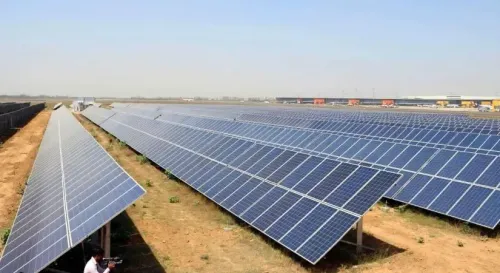
China's Great Solar Wall targets 455 GW in Gobi Desert by 2030
Synopsis
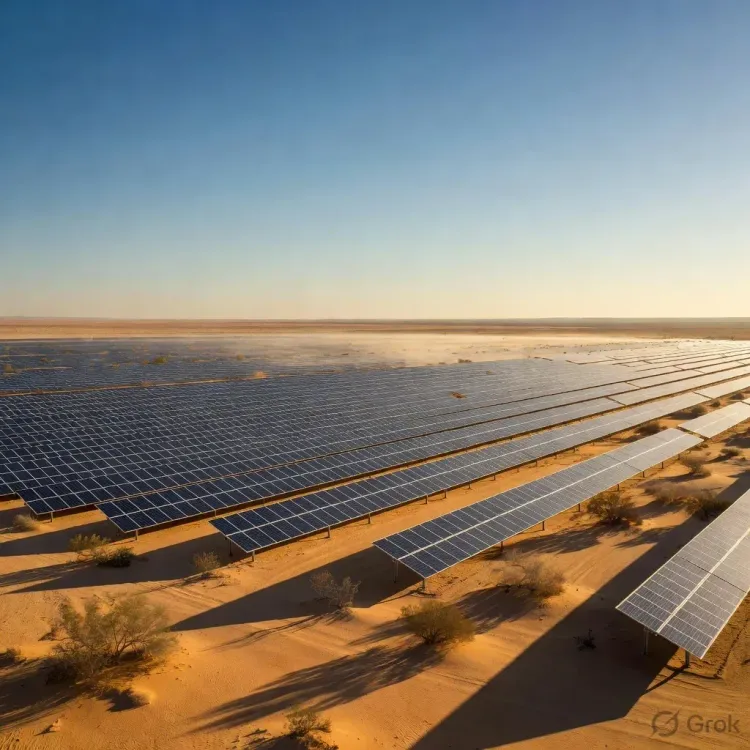
China's Great Solar Wall initiative is targeting 455 GW of installed wind and solar capacity in its northern deserts by 2030 — equivalent to 20 Three Gorges dams — in a dual bid to generate clean power and halt desertification simultaneously.
Key Takeaways
China 's Great Solar Wall is centred in the Inner Mongolia autonomous region and the Xinjiang Uygur autonomous region , leveraging their abundant land and sunshine.
The National Development and Reform Commission set a target of 455 gigawatts of installed wind and solar capacity in arid regions by 2030 , according to Xinhua .
The 455 GW target equals the output of approximately 20 Three Gorges dams and is more than seven times the capacity of the planned Yarlung Tsangpo mega-dam.
Solar power is on track to surpass coal as China 's largest source of installed power capacity by the end of 2026 .
The initiative builds on the Three-North Shelterbelt Programme (the Great Green Wall ), extending China 's desert-management strategy into the energy sector.
Huawei Technologies is among the technology suppliers active in China 's desert solar megabase ecosystem.
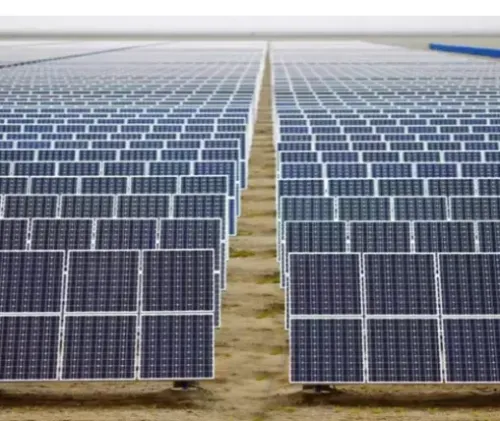
China is scaling up its Great Solar Wall initiative, a sweeping effort to blanket the arid Gobi Desert and surrounding regions in solar infrastructure, simultaneously fighting desertification and accelerating the country's shift away from fossil fuels. Centred in the Inner Mongolia autonomous region, the programme represents a dual-purpose bet: generate clean electricity for China's economic hubs while restoring degraded land for plants and wildlife.
A target that dwarfs the Three Gorges Dam
In 2022, China's National Development and Reform Commission released a plan to construct large-scale wind and solar installations across arid zones — including the Gobi Desert, Inner Mongolia, and the Xinjiang Uygur autonomous region — targeting an installed capacity of 455 gigawatts by 2030, according to Xinhua. That figure is equivalent to roughly 20 of China's Three Gorges hydroelectric facility, the largest of its kind in the world, and more than seven times the planned Yarlung Tsangpo mega-dam project.
Why it matters: solar set to surpass coal this year
Solar power is on course to overtake coal as China's largest source of installed power capacity before the end of 2026, with the bulk of new capacity under construction in the country's western and northern regions. The Inner Mongolia and Xinjiang Uygur regions offer two critical advantages: abundant sunshine and vast tracts of otherwise unproductive land. Converting desert terrain into solar farms, according to proponents, can suppress sand migration, stabilise soil, and create micro-habitats that support vegetation and wildlife recovery.
The competitive backdrop: building on the Great Green Wall
The Great Solar Wall follows the logic of China's longer-running Three-North Shelterbelt Programme — widely known as the Great Green Wall — a decades-old afforestation drive along the country's northern fringe. Where the green wall planted trees and shrubs to anchor shifting sands, the solar wall deploys photovoltaic panels to achieve a similar stabilising effect while generating exportable electricity. Research published in the Journal of Environmental Management, as well as work from institutions including Nanjing University, has examined how solar arrays in arid zones can alter local microclimates and reduce wind erosion.
What's next: industry players and grid integration
Technology suppliers, including Huawei Technologies, are among the firms involved in the broader push to equip China's desert solar megabases with smart inverters and grid-management systems. NASA satellite data has previously been used by researchers to track vegetation changes in areas like the Kubuqi Desert in Inner Mongolia, providing independent verification of land-restoration claims. The central question now is whether China's transmission infrastructure — particularly ultra-high-voltage lines running from the northwest to coastal demand centres — can keep pace with the rapid build-out of generation capacity.
As the 2030 deadline approaches, the success of the Great Solar Wall will hinge on grid integration, water-use management around panel-cleaning operations, and whether the ecological co-benefits hold up at industrial scale — factors that international energy analysts and climate researchers will be watching closely.
Point of View
A capital and regulatory challenge in its own right. The ecological co-benefits — reduced sand migration, restored microclimates — are real but contested at scale, and independent satellite monitoring from agencies like NASA will be critical to separating verified outcomes from state-promoted narratives. For global solar supply chains already dominated by Chinese manufacturers, this programme reinforces China's position as both the world's largest producer and consumer of solar technology.
NationPress
20 Sept 2026
Frequently Asked Questions
What is China's Great Solar Wall?
The Great Solar Wall is a large-scale initiative to install wind and solar power infrastructure across China 's northern deserts, particularly in Inner Mongolia and the Xinjiang Uygur autonomous region . It aims to generate clean electricity for China 's economic centres while simultaneously combating desertification by stabilising desert soils beneath solar panels.
What is China's solar capacity target by 2030?
China 's National Development and Reform Commission set a target of 455 gigawatts of installed wind and solar capacity in arid regions by 2030 , according to Xinhua . That is equivalent to the output of approximately 20 Three Gorges dams.
How does the Great Solar Wall help fight desertification?
Solar panels installed over desert terrain can reduce wind erosion, limit sand migration, and create sheltered micro-environments where vegetation can re-establish. Research published in the Journal of Environmental Management and studies from Nanjing University have examined these ecological co-benefits in arid-zone solar deployments.
When will solar overtake coal in China?
Solar is on course to surpass coal as China 's largest source of installed power capacity before the end of 2026 , driven by rapid construction of utility-scale projects in Inner Mongolia , Xinjiang , and other western and northern regions.
What companies are involved in China's desert solar projects?
Huawei Technologies is among the technology suppliers equipping China 's desert solar megabases with smart inverters and grid-management systems. The broader ecosystem involves state-owned utilities, construction firms, and international researchers using tools such as NASA satellite imagery to independently monitor land-restoration progress.