How is India's 129 GW Solar Capacity Transforming Its Energy Landscape?

Synopsis
India's solar capacity has surged to 129 GW, contributing over 50% to the nation's energy mix. This is part of a broader commitment to achieving net-zero emissions and promoting renewable energy. Discover how India's strategies and initiatives are paving the way for a sustainable energy future.
Key Takeaways
India's solar capacity has reached 129 GW .
Non-fossil electricity capacity accounts for over 50% of total installed power.
The PM Surya Ghar scheme aims to provide rooftop solar systems to one crore households .
India's commitment to net-zero emissions by 2070 .
The National Solar Mission supports large-scale solar deployment.
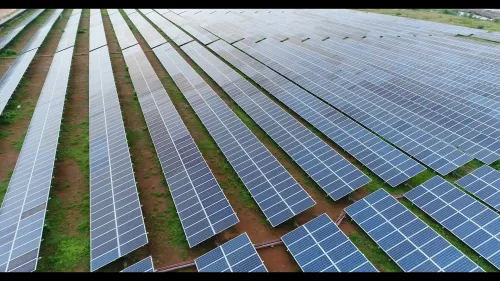
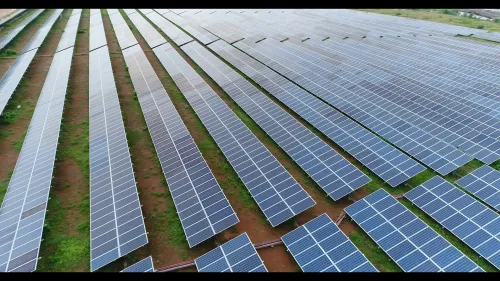
New Delhi, December 2 (NationPress) India's current solar capacity has reached 129 gigawatts (GW), while the non-fossil fuel electricity capacity has surpassed 259 GW, representing more than 50 percent of the country's total installed power capacity as of October 2025. This signifies a remarkable transition towards low-carbon energy, as revealed by official data on Tuesday.
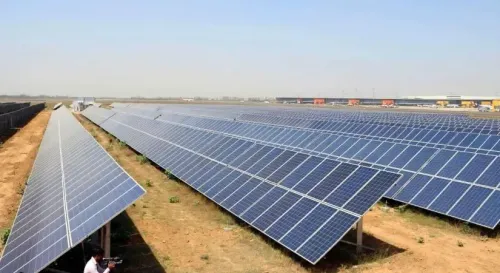
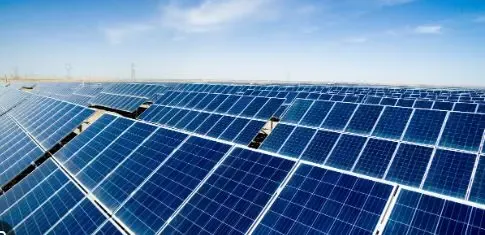
The solar industry has witnessed extraordinary growth over the last decade, skyrocketing from a mere 3 GW in 2014 to 129.92 GW by October 2025—an impressive increase of over 40-fold.
This rapid expansion has positioned solar as the leading contributor to the renewable energy landscape, outpacing wind, hydro, and biomass capacities.
The increase in solar power is consistently enhancing the proportion of renewable energy in the overall power composition.
Official statistics indicate that the swift advancement in renewable energy is fueled not only by market dynamics but also by a stringent policy and strategic framework.
National objectives and international climate commitments, articulated in the Panchamrit Declaration during COP26 in Glasgow (November 2021), outline a definitive path for a sustainable energy future.
The Panchamrit framework consists of five essential elements: achieving 500 GW of non-fossil fuel-based installed electricity capacity by 2030, ensuring a 50 percent share of installed electricity capacity from non-fossil sources by 2030, cutting projected carbon emissions by 1 billion tonnes by 2030, decreasing carbon intensity of the economy by 45 percent by 2030, and reaching net-zero emissions by 2070.
India’s dedication to attaining net-zero emissions is being actively pursued through a variety of expansive government initiatives. These programs aim to accelerate the adoption of renewable energy, encourage sustainable living, and bolster India’s clean technology ecosystem.
The PM Surya Ghar scheme is a cornerstone of India’s transition towards renewable energy and net-zero emissions. Launched on February 13, 2024, with Cabinet approval, the scheme has an allocation of Rs 75,021 crore. It seeks to provide rooftop solar systems to one crore households, offering up to 300 units of free electricity each month.
Initiated in January 2010, the National Solar Mission (NSM) is a flagship government initiative aimed at promoting large-scale solar energy deployment throughout the nation. This mission is integral to achieving India’s renewable energy goals and its commitment to a low-carbon future.
Moreover, the production-linked incentive (PLI) scheme for Solar PV, with a budget of Rs 24,000 crore, is encouraging domestic manufacturing of high-efficiency solar PV modules, thereby decreasing import reliance.
Point of View
This significant energy milestone reflects India's commitment to sustainability and innovation. The emphasis on renewable energy, bolstered by supportive policies and ambitious targets, positions India as a leader in the global shift towards a cleaner future. The time for action is now, and these developments are crucial for the nation's long-term viability and environmental responsibility.
NationPress
19 Sept 2026
Frequently Asked Questions
What is India's current solar capacity?
As of October 2025, India's solar capacity stands at 129 GW.
What percentage of India's total installed power capacity is from non-fossil sources?
Non-fossil electricity capacity has crossed 259 GW, accounting for over 50% of India's total installed power capacity.
What is the PM Surya Ghar scheme?
Launched on February 13, 2024, this scheme aims to provide rooftop solar systems to one crore households, offering up to 300 units of free electricity every month.
What are the goals of the Panchamrit framework?
The Panchamrit framework aims for 500 GW of non-fossil fuel-based installed capacity by 2030, a 50% share of non-fossil sources, and net-zero emissions by 2070.
What is the National Solar Mission?
The National Solar Mission, launched in January 2010, aims to promote the large-scale deployment of solar energy across India.