China targets 100% renewable energy at Antarctic bases by 2035
Synopsis
China has set a formal 2035 deadline to run all five of its Antarctic research stations on 100% renewable energy. Its newest base, Qinling Station, already sources over 60% of power from solar, wind and hydrogen — a milestone that reframes polar science infrastructure as a clean-energy frontier.
Key Takeaways
China aims to achieve 100 per cent renewable energy at all of its Antarctic research stations by 2035 , according to Sun Hongbin , chief scientist of the country's polar clean energy programme.
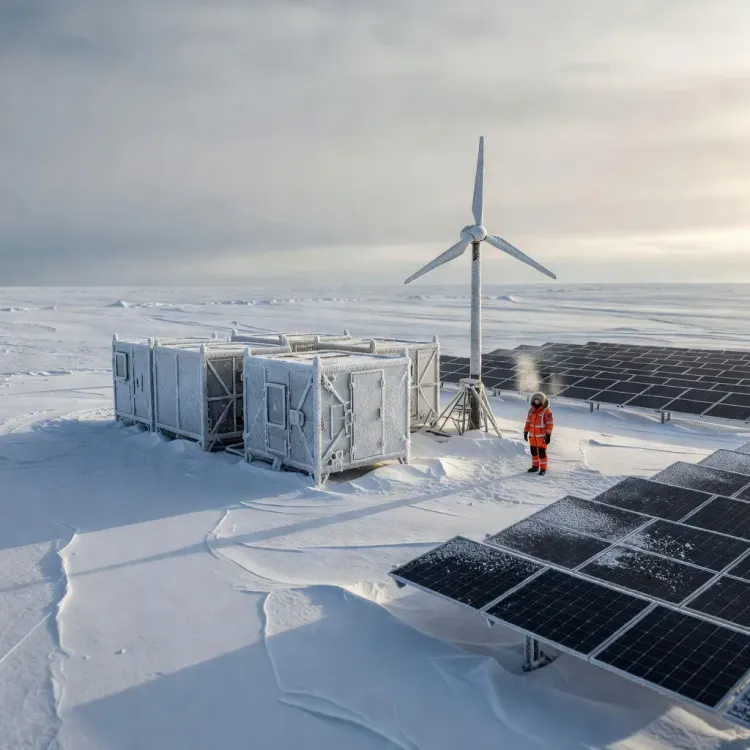
Qinling Station , opened in 2024 as China 's fifth Antarctic base, already meets more than 60 per cent of its energy needs through solar , wind , hydrogen power and energy storage batteries .
Antarctic inland temperatures can drop below minus 80°C and wind speeds can exceed 200 km/h , making energy reliability a critical operational and scientific concern.
Diesel has historically been the dominant energy source at Antarctic research stations but is being phased out under China 's polar clean energy programme.
Researchers at Taiyuan University of Technology in Taiyuan , Shanxi province , are among those contributing to the technical solutions underpinning the transition.
China has set a target to power all of its Antarctic research stations entirely on renewable energy by 2035, with its newest base, Qinling Station, already sourcing more than 60 per cent of its energy from clean sources. The plan marks a significant shift away from diesel, which has long been the primary fuel for heating and power in one of the planet's most hostile environments. Sun Hongbin, chief scientist on China's polar clean energy programme, confirmed the 2035 goal in June, according to state-run China Natural Resources News.
Qinling Station leads the clean energy push
Qinling Station, China's fifth and newest Antarctic research base, opened in 2024 and is already primarily powered by clean energy. The station draws on a combination of solar, wind, and hydrogen power, supplemented by energy storage batteries, to meet more than 60 per cent of its energy requirements. It serves as the flagship model for the broader renewable transition planned across all of China's polar facilities.
Why it matters: the Antarctic energy challenge
Operating research stations in Antarctica presents extreme engineering challenges. Inland temperatures can fall below minus 80 degrees Celsius (minus 112 degrees Fahrenheit) during winter, while wind speeds regularly exceed 100 km/h and can surpass 200 km/h for days at a stretch. Months of total darkness during polar night further complicate reliance on solar generation, making energy storage and hydrogen technologies critical components of any viable clean energy system.
The competitive backdrop
Multiple nations operate research stations in Antarctica, and the push toward renewables is not unique to China — several programmes have been piloting wind and solar installations for years. However, China's explicit 100 per cent renewable target with a firm 2035 deadline, backed by a named national clean energy programme, represents one of the most formalised commitments in polar energy policy to date. The initiative also reflects China's broader domestic push to deploy clean energy technologies in extreme and remote environments.
What's next
Achieving full renewable coverage across all five of China's Antarctic bases by 2035 will require scaling the hybrid solar-wind-hydrogen model proven at Qinling to older and more logistically complex stations. Advances in cold-weather battery performance and green hydrogen storage will be critical milestones to watch. Researchers and polar programme administrators at institutions including Taiyuan University of Technology in Taiyuan, Shanxi province, are among those contributing to the technical groundwork for this transition.
Point of View
Giving domestic manufacturers a credible reference site. Mainstream coverage tends to frame this as a green gesture; the more significant story is that polar stations are becoming live test beds for cold-climate energy infrastructure with direct commercial and geopolitical applications. Nations that solve Antarctic energy logistics first will hold a meaningful edge as competition for polar access and research influence intensifies through the 2030s.
NationPress
17 Sept 2026
Frequently Asked Questions
What is China's renewable energy target for its Antarctic research stations?
China aims to power all of its Antarctic research stations with 100 per cent renewable energy by 2035 . Sun Hongbin , chief scientist of China 's polar clean energy programme, confirmed the target in June , according to state-run China Natural Resources News .
What is Qinling Station and how much of its energy comes from renewables?
Qinling Station is China 's fifth and newest Antarctic research base, which opened in 2024 . It already meets more than 60 per cent of its energy needs through a combination of solar , wind , hydrogen power and energy storage batteries .
Why is renewable energy difficult to implement in Antarctica?
Antarctic conditions are among the most hostile on Earth — inland temperatures can fall below minus 80 degrees Celsius and wind speeds can exceed 200 km/h for days. Months of total polar darkness also limit solar generation, making energy storage and hydrogen systems essential for year-round power supply.
Why has diesel been used at Antarctic stations and why is it being replaced?
Diesel has long been the primary energy source at Antarctic research stations because of its reliability in extreme cold and its high energy density. It is now being phased out in favour of renewables to reduce logistical costs, carbon emissions, and the environmental risks associated with fuel transport to a protected continent.
Which Chinese institutions are involved in the polar clean energy programme?
Researchers at Taiyuan University of Technology in Taiyuan , Shanxi province , are among the contributors to China 's polar clean energy research. The programme is overseen by Sun Hongbin as chief scientist and is backed by state resources and reporting through China Natural Resources News .