Xidian University team tests hardware for space solar power beamed to Earth
Synopsis
Chinese researchers at Xidian University in Xi'an are testing hardware to beam solar energy from geostationary orbit — 36,000 km above Earth — using microwaves, in a bid to deliver uninterrupted, weather-proof clean power on a planetary scale.
Key Takeaways
Fan Guanheng and his team at Xidian University, Xi'an , are testing space solar power hardware capable of transmitting energy over 100 metres (330 feet) using mirrors, solar panels, and a microwave transmitter.
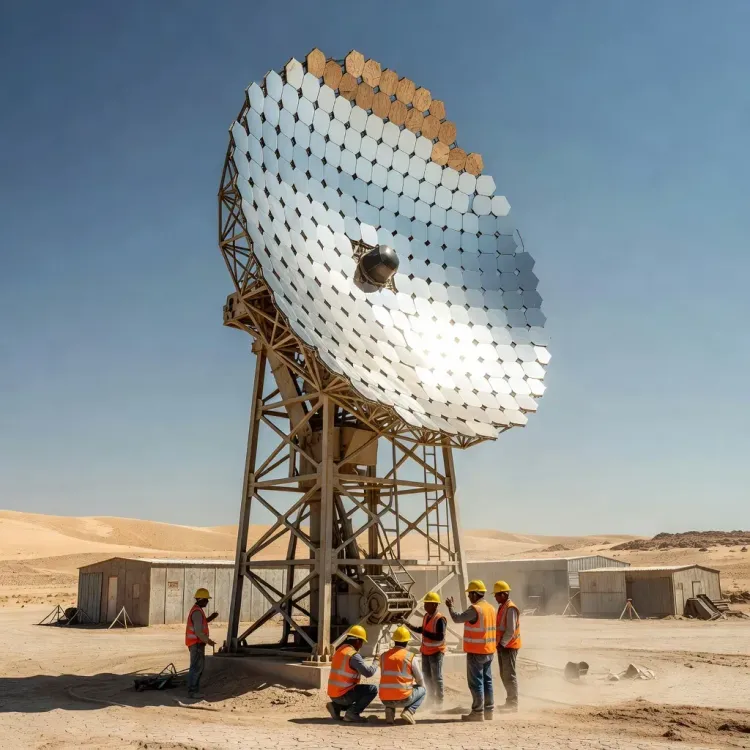
The ground prototype uses a 4.8-metre dome-shaped mirror mounted on a 75-metre-tall tower to concentrate sunlight onto solar panels.
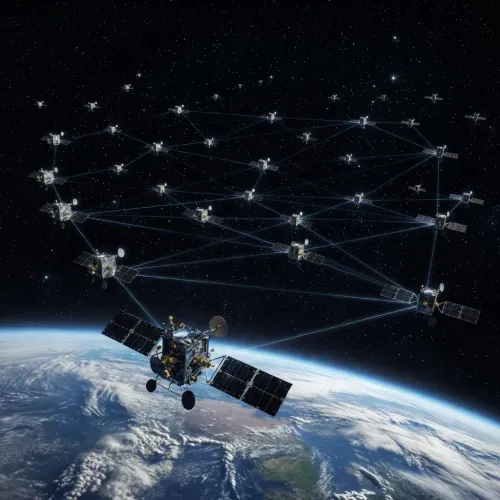
The long-term target is a power satellite operating at geostationary orbit — 36,000 km (23,460 miles) above Earth — to deliver continuous solar energy unaffected by weather or night cycles.
China, Japan, the United States, and NASA are all actively researching space-based solar power, with competing national programmes including China's Zhuri project and the American SPS-ALPHA concept.
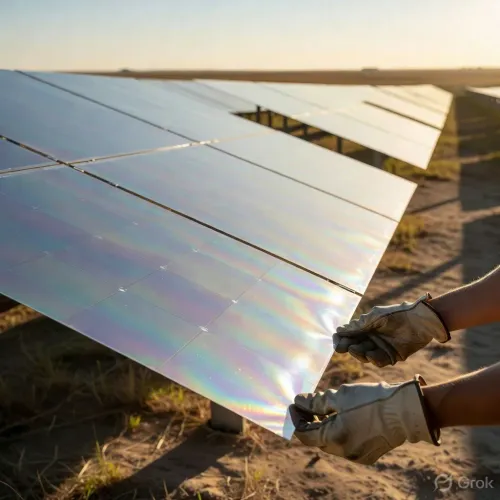
Key optical technologies under evaluation include Fresnel lenses and concentrator mirror arrays designed to maximise energy collection efficiency before any orbital deployment.
Academic advocate Duan Baoyan has been a prominent voice pushing China's space solar power agenda at the national policy level.
Fan Guanheng and his team at Xidian University in Xi'an, capital of Shaanxi province in northwest China, are developing hardware designed to harvest solar energy in space and transmit it wirelessly back to Earth — a concept that could one day reshape global energy supply. The researchers are currently testing components at a ground-based facility, transmitting power over 100 metres (330 feet) using mirrors, solar panels, and a microwave transmitter.
How the system works
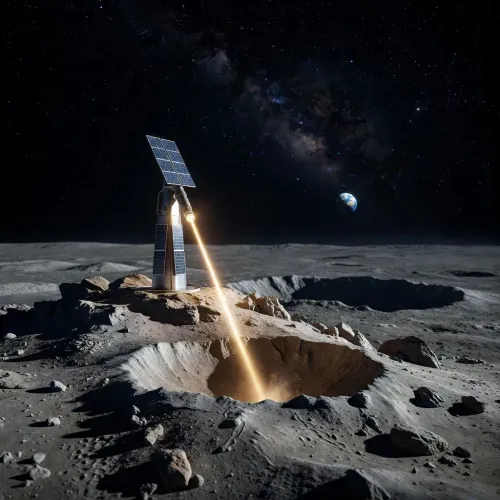
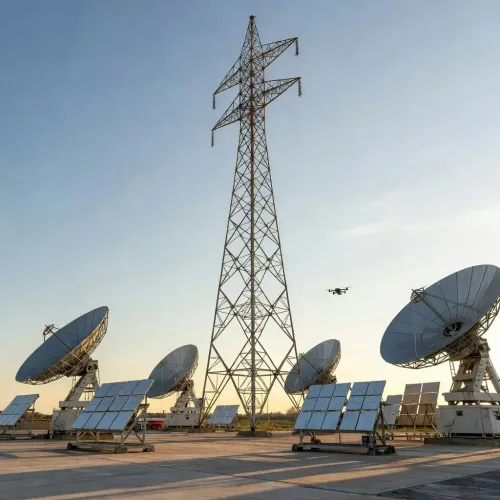
The technology operates in three stages, according to Fan, an associate professor at the university's school of mechano-electronic engineering. Mirrors first concentrate sunlight onto solar panels to generate electricity. That electricity is then converted into microwaves and beamed to a rectenna — a specialised receiving antenna — where it is converted back into usable power.
On a sweltering June morning, the team was measuring how efficiently light was concentrated by a 4.8-metre, dome-shaped mirror suspended from a 75-metre-tall tower — a scaled prototype of the kind of reflector array that would eventually operate in orbit.
The 36,000 km ambition
The ultimate goal is far more audacious than the current ground tests suggest. The team is working toward a system that would operate at geostationary orbit — 36,000 km (approximately 23,460 miles) above the planet's surface — where a solar power satellite could collect sunlight continuously, uninterrupted by Earth's day-night cycle or weather. The concept, sometimes referred to as space-based solar power (SBSP), has been studied for decades but has only recently attracted serious government and academic investment.
China is not alone in pursuing the technology. Japan, the United States, and NASA have all conducted research into SBSP architectures, including the SPS-ALPHA (Solar Power Satellite via Arbitrarily Large Phased Array) concept developed by American researchers. China's own roadmap, which includes a project reportedly named Zhuri, has been backed by prominent academics including Duan Baoyan, who has championed the technology at a national policy level.
Why it matters
Space-based solar power promises an almost inexhaustible clean energy source — satellites in geostationary orbit receive solar energy roughly 8 to 10 times more intensely than panels on Earth's surface, with no atmospheric losses. For energy-hungry economies, the appeal is strategic as much as environmental: a nation that masters SBSP could export power wirelessly across borders, fundamentally altering energy geopolitics.
The engineering challenges, however, remain immense. Launching and assembling gigawatt-scale structures in orbit, managing microwave beam safety, and achieving cost-competitive energy delivery are hurdles that no country has yet cleared. Fresnel lenses and advanced concentrator designs — among the optical tools being evaluated by the Xidian team — are part of the effort to improve collection efficiency before the technology can scale.
What's next
The Xidian University experiments represent an early but concrete step in China's phased approach to SBSP, with ground demonstrations intended to validate key subsystems before any orbital deployment is attempted. Researchers and policymakers globally will be watching whether these prototype results translate into a credible timeline for in-orbit testing — and which nation crosses that threshold first.
Point of View
But China's systematic, university-led hardware testing signals a deliberate shift from concept to engineering roadmap — a pattern consistent with how Beijing approached electric vehicles and high-speed rail. What mainstream coverage often underplays is the dual-use dimension: a nation that can beam gigawatts of microwave energy from geostationary orbit has also demonstrated a capability with obvious defence implications, a factor likely shaping how the US and its allies assess China's SBSP timeline. The race is less about altruistic clean energy than about who sets the technical standards — and collects the licensing fees — for a technology that could dominate 22nd-century energy infrastructure. Investors and policymakers tracking the chip war and satellite broadband competition should add space solar to their watchlist.
NationPress
17 Sept 2026
Frequently Asked Questions
What is space-based solar power and how does it work?
Space-based solar power (SBSP) involves placing large solar arrays in geostationary orbit to collect sunlight continuously, converting it to microwaves, and beaming it to receiving antennas on Earth called rectennas. Unlike ground-based solar, orbital systems face no night cycles, clouds, or atmospheric absorption, making them potentially far more efficient.
What is Xidian University testing for space solar power?
Researchers led by associate professor Fan Guanheng at Xidian University in Xi'an are testing a ground-based prototype that uses a 4.8-metre dome-shaped mirror on a 75-metre tower to concentrate sunlight, generate electricity, convert it to microwaves, and transmit it over 100 metres to a rectenna.
How far away is China from launching a space solar power satellite?
No official launch date has been announced; the current work is ground-based prototype testing aimed at validating key subsystems. China's broader programme, reportedly including a project named Zhuri , envisions eventual geostationary deployment at 36,000 km , but significant engineering and cost hurdles remain before any orbital demonstration.
Which countries are competing in space-based solar power research?
China, Japan, and the United States — including NASA — all have active research programmes in space-based solar power. The American SPS-ALPHA concept and China's Zhuri project represent competing national approaches to what could become a defining clean-energy technology.
What are Fresnel lenses used for in space solar power?
Fresnel lenses are flat, lightweight optical elements that can concentrate sunlight onto solar cells more efficiently than conventional curved mirrors, making them attractive for space applications where mass and volume are critical constraints. The Xidian University team is evaluating Fresnel lenses alongside concentrator mirror designs as part of its hardware testing programme.