Xinjiang's Zhundong coal zone powers up with autonomous trucks and future tech
Synopsis
China's Zhundong zone in Xinjiang — sitting on 390 billion tonnes of coal — is deploying electric autonomous mining trucks and massive pipeline infrastructure, turning a geopolitical crisis in Iran into a strategic energy opportunity that could reshape global supply chains.
Key Takeaways
Zhundong National Economic and Technological Development Zone spans a planned 15,500 sq km across three counties in Xinjiang's Changji Hui autonomous prefecture .
The zone contains China's largest contiguous coalfield , with estimated reserves of 390 billion tonnes , or 7 per cent of the national total.
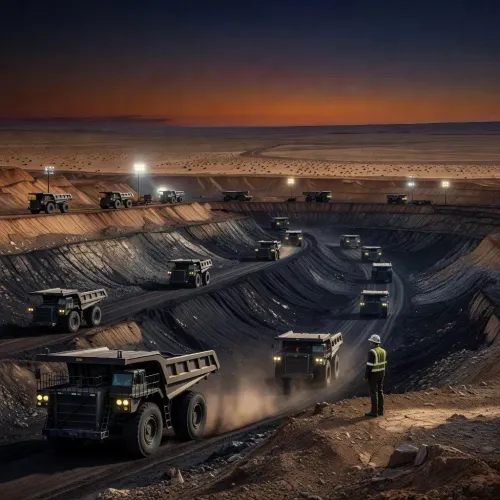
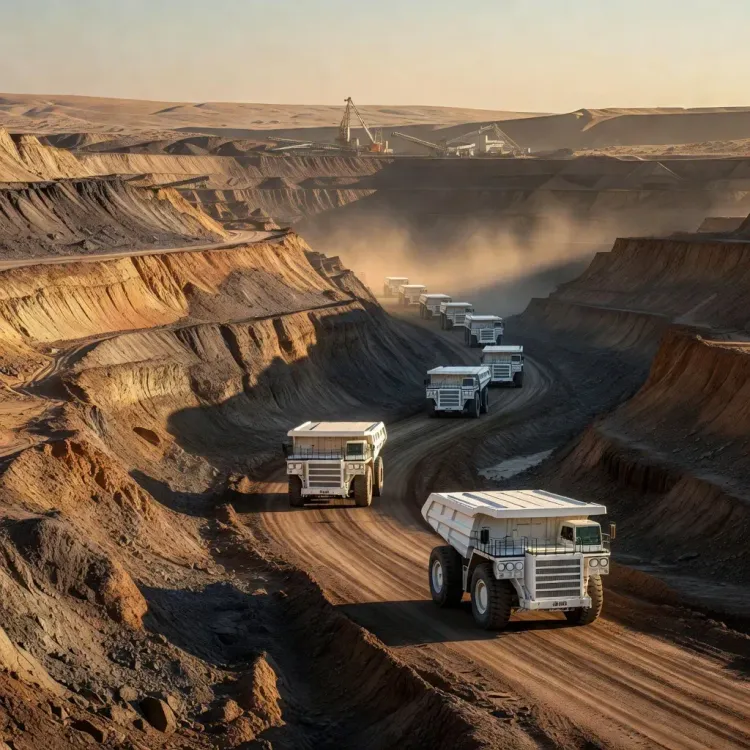
Electric, autonomous mining trucks are already operating at open-pit mines four hours northeast of Urumqi , navigating terrain without human drivers.
The world's highest-voltage power transmission line already carries electricity from Xinjiang to eastern China ; the country's largest coal-gas pipeline is under construction.
The war in Iran has disrupted global oil and chemical supplies, accelerating Beijing's push to develop domestic coal-chemical production capacity.
The zone stretches 220 km (137 miles) east to west and comprises five mining areas , with State Energy Group and Boonray Intelligent Technology among key players.
China's Zhundong National Economic and Technological Development Zone in Xinjiang's Changji Hui autonomous prefecture is rapidly emerging as a global benchmark for high-tech coal extraction and chemical processing, as disruptions to global oil and chemical supplies from the war in Iran accelerate the region's strategic importance. A vast industrial ecosystem — spanning 15,500 sq km across three counties — is taking shape in the Gobi Desert, blending autonomous machinery, green technology, and large-scale energy infrastructure.
Autonomous machines redefine coal mining
A four-hour drive northeast of Urumqi, Xinjiang's regional capital, reveals a colossal open-pit mine where fleets of electric, autonomous mining trucks navigate terrain without human drivers, hauling overburden to distant stockpiles with clockwork precision. The scene is emblematic of a broader modernisation push: futuristic and green technologies are being deployed not just to extract coal more efficiently, but to maximise its downstream value through chemical processing.
The integration of autonomous vehicle technology into heavy mining operations represents one of the most visible signals that China is treating its coal-rich western frontier as a proving ground for industrial-scale automation.
Infrastructure at an unprecedented scale
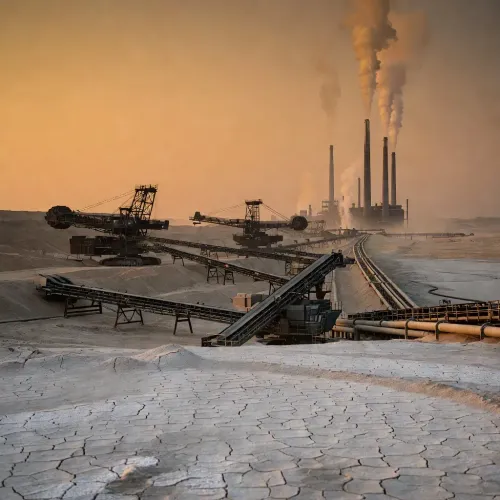
The zone sits on the southeastern edge of the Junggar Basin and stretches 220 km (137 miles) from east to west, comprising five mining areas that together constitute China's biggest contiguous coalfield. Estimated reserves stand at 390 billion tonnes — equivalent to 7 per cent of China's national coal total — a figure frequently cited as sufficient to sustain the country's energy demand for a century.
Already, the world's highest-voltage power transmission line carries electricity generated in the region to eastern China. Work is also under way on the country's largest pipeline, which will transport coal-derived natural gas from northern Xinjiang to more developed eastern cities, tightening the energy corridor between the resource-rich west and the industrial east.
Why it matters: Iran war reshapes energy supply chains
The conflict in Iran has disrupted global oil and chemical supply chains, creating an opening that China's coal-heavy energy sector is moving decisively to fill. The Zhundong zone — by weight, sitting atop coal reserves that reportedly surpass the oil riches of the Persian Gulf — is positioned as a cornerstone of Beijing's long-term energy security strategy.
The coal-chemical processing capacity being built here is designed to convert raw coal into higher-value products, reducing dependence on imported hydrocarbons at a time when geopolitical volatility makes such imports increasingly unreliable.
The competitive backdrop
The Zhundong development zone is one of China's four major bases for large-scale, modern coal-chemical production. Its expansion comes as global energy markets reconfigure around supply-chain resilience, with state-backed enterprises and technology firms converging on the region. Companies including Boonray Intelligent Technology, State Energy Group, and research bodies such as the Institute of Engineering Thermophysics are among the entities contributing to the zone's technological buildout, according to reports.
What's next
Completion of the major gas pipeline and continued scaling of autonomous mining fleets will be the key milestones to watch. As Xinjiang's coal-chemical infrastructure matures, its influence on global energy pricing and supply-chain dynamics — particularly for petrochemical substitutes — is set to grow significantly in the coming years.
Point of View
Beijing is simultaneously advancing its AI-hardware testing grounds and insulating itself from hydrocarbon import dependency at a moment of peak geopolitical volatility. Mainstream coverage focuses on the coal tonnage; what it misses is that the autonomous truck deployments here feed real-world training data into Chinese industrial-AI stacks that compete directly with Western robotics firms. The Iran conflict has handed China a rare window to position Xinjiang-derived coal chemicals as a credible substitute for Persian Gulf petrochemicals — a shift that, if sustained, would redraw the map of global chemical trade.
NationPress
5 Oct 2026
Frequently Asked Questions
What is the Zhundong National Economic and Technological Development Zone?
The Zhundong National Economic and Technological Development Zone is a large-scale industrial and energy hub located in Xinjiang's Changji Hui autonomous prefecture in western China . It spans a planned 15,500 sq km across three counties, stretches 220 km east to west, and sits atop China's largest contiguous coalfield with estimated reserves of 390 billion tonnes .
How is autonomous technology being used in Xinjiang coal mining?
Fleets of electric, autonomous mining trucks are operating at open-pit mines in the region, self-navigating terrain and hauling overburden without human drivers. The deployment represents one of the largest real-world applications of autonomous heavy-vehicle technology in the global mining industry.
Why is Xinjiang's coal sector gaining global attention in 2026?
The war in Iran has disrupted global oil and chemical supply chains, elevating the strategic value of China's domestic coal-chemical production capacity. The Zhundong zone , with reserves reportedly surpassing the oil wealth of the Persian Gulf by weight, is being developed as a cornerstone of Beijing's long-term energy security.
What infrastructure projects are under way in the Zhundong zone?
The world's highest-voltage power transmission line already exports electricity from the zone to eastern China . Additionally, the country's largest pipeline — designed to carry coal-derived natural gas from northern Xinjiang to eastern cities — is currently under construction.
Who are the key players involved in developing Xinjiang's coal-tech hub?
State Energy Group and Boonray Intelligent Technology are among the entities contributing to the zone's development, alongside research institutions such as the Institute of Engineering Thermophysics , according to reports. The zone is one of China's four designated major bases for modern, large-scale coal-chemical production.