China's green tech reshapes Kazakhstan's Belt and Road frontier
Synopsis
A 500-megawatt AI-powered wind farm breaking ground in Kazakhstan's Karaganda region marks a decisive pivot in China's Belt and Road Initiative — from steel-and-concrete infrastructure to green technology and ecological restoration, with Kazakhstan as the primary frontier of this transformation.
Key Takeaways
A 500-megawatt AI-powered wind farm, a joint Kazakh-Chinese venture, began construction in Kazakhstan's Karaganda region in May 2026 .
Kazakhstan is identified as the birthplace of the Belt and Road Initiative and now its leading green-tech frontier.
Yerlan Nyssanbayev , Kazakhstan's Minister of Ecology and Natural Resources , confirmed the country has 'very close contacts' with China and is cooperating 'on many fronts.' Cooperation involves the Xinjiang Institute of Geography and Ecology and targets desertification, ecosystem restoration, and industrial decarbonisation.
China's Belt and Road strategy has shifted from ports, pipelines, and rail toward mining, energy, and green technology in Central Asia .
Geopolitical uncertainty and reduced reliance on Russia are accelerating Central Asia's strategic tilt toward Beijing .
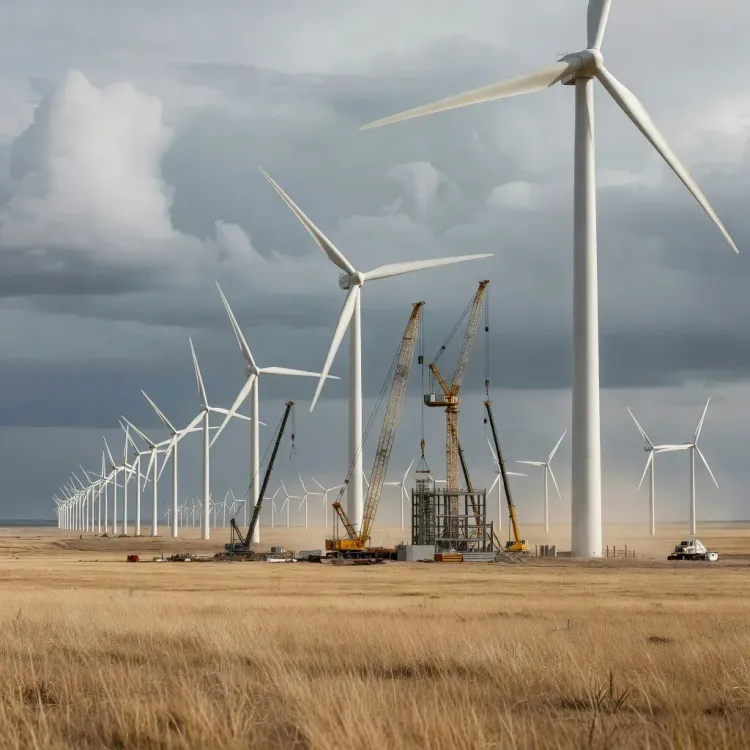
Kazakhstan is deepening its strategic alignment with China through a wave of green technology partnerships, joint ventures, and ecological cooperation that is redefining the Belt and Road Initiative's newest chapter in Central Asia. A 500-megawatt AI-powered wind farm — born from a joint Kazakh-Chinese venture — broke ground last month in the Karaganda region, signalling the scale and sophistication of Beijing's evolving regional ambitions.
A wind farm as a symbol of shifting strategy
Construction on the massive wind energy project in Karaganda began in May 2026, with a capacity designed to power hundreds of thousands of households. The facility integrates AI-driven management systems, reflecting a pronounced shift in how Chinese capital and expertise are being deployed across the former Soviet states. Once dominated by ports, pipelines, roads, and rail, the Belt and Road Initiative has pivoted decisively toward mining, energy, and now green technology.
Kazakhstan, widely recognised as the birthplace of the Belt and Road Initiative, now serves as the primary frontier of this transition, according to analysts tracking the region.
Why it matters
The relationship between Astana and Beijing extends well beyond direct investment. Scientific exchanges, ecological research collaborations — including work involving the Xinjiang Institute of Geography and Ecology — and a growing portfolio of joint ventures are reshaping how Kazakhstan addresses pressing environmental challenges, from desertification to ecosystem restoration and industrial decarbonisation.
The Aral Sea basin, the threatened habitat of Saiga antelopes, and degraded zones around Pavlodar, Osakarov, and Turkistan are among the areas where Chinese green expertise is reportedly being applied. The cooperation spans combating land degradation to restoring biodiversity corridors across the steppe.
Official voices and diplomatic signals
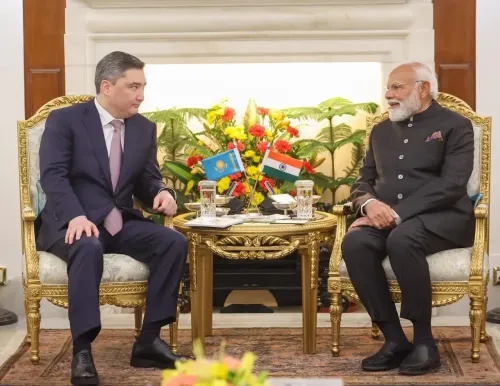
Yerlan Nyssanbayev, Kazakhstan's Minister of Ecology and Natural Resources, said on the sidelines of the Regional Ecological Summit last month that the country had very close contacts
with China and was working with Beijing on many fronts.
His remarks underscored the breadth of the bilateral agenda, which now encompasses regulatory alignment, technology transfer, and co-financed ecological projects.
Separately, officials including Manas Gizhduaniyev and environmental figures such as Zulfiya Suleimenova have been associated with advancing this cooperation at the institutional level, according to reports.
The competitive backdrop
Central Asia's tilt toward China is accelerating as geopolitical uncertainty — driven by the fallout from the Russia-Ukraine conflict and Western sanctions pressure on Moscow — erodes the region's traditional dependency on Russian economic networks. Beijing's offer of green technology, financing, and scientific capacity arrives at a moment when the five Central Asian republics are actively diversifying partnerships.
For Kazakhstan specifically, Chinese investment in renewables and ecological restoration provides both economic utility and diplomatic leverage, enabling Astana to pursue decarbonisation goals without relying solely on Western multilateral institutions.
What's next
The Karaganda wind farm is expected to be among the first of several large-scale clean energy projects under the renewed Belt and Road framework. Observers will be watching whether the ecological cooperation model pioneered in Kazakhstan is replicated across Kyrgyzstan, Uzbekistan, and Tajikistan — and whether Beijing's green pivot translates into durable influence or faces pushback from local communities and Western-aligned institutions.
Point of View
One that trades the reputational baggage of debt-heavy infrastructure for the softer optics of ecological partnership and clean energy. What mainstream coverage often misses is that Beijing is simultaneously securing long-term resource access and technology lock-in through joint ventures that embed Chinese standards, equipment, and expertise deep into Kazakhstan's regulatory and industrial fabric. The timing is deliberate: as Western sanctions fracture Russia's economic grip on the region, China is filling the vacuum with a model that is harder to politically oppose. The real test will be whether these green partnerships deliver genuine environmental outcomes or function primarily as vehicles for geopolitical consolidation.
NationPress
11 Oct 2026
Frequently Asked Questions
What is China building in Kazakhstan in 2026?
A 500-megawatt AI-powered wind farm is under construction in Kazakhstan's Karaganda region as of May 2026, developed through a joint Kazakh-Chinese venture. The project is capable of powering hundreds of thousands of households and represents one of the largest clean energy investments under the Belt and Road Initiative in Central Asia.
How is China's Belt and Road Initiative changing in Central Asia?
The Belt and Road Initiative has shifted from building ports, pipelines, roads, and railways to focusing on mining, energy, and green technology projects. Central Asia has emerged as the initiative's primary regional partner in this new phase, with Kazakhstan serving as the leading frontier.
Why is Kazakhstan deepening ties with China on green technology?
Kazakhstan faces serious environmental challenges including desertification, ecosystem degradation, and the need to decarbonise its industries. China offers financing, scientific expertise — including through institutions like the Xinjiang Institute of Geography and Ecology — and technology transfer that enables Kazakhstan to pursue these goals outside of Western multilateral frameworks.
What did Kazakhstan's ecology minister say about China cooperation?
Yerlan Nyssanbayev, Kazakhstan's Minister of Ecology and Natural Resources, said at the Regional Ecological Summit in May 2026 that Kazakhstan had 'very close contacts' with China and was working with Beijing 'on many fronts.' His remarks confirmed the breadth of the bilateral ecological and technological agenda.
How does geopolitics affect China's influence in Central Asia?
Deepening geopolitical uncertainty, partly driven by reduced Russian economic influence in the region, is accelerating Central Asia's strategic alignment with Beijing. China's green technology investments and ecological partnerships offer the five Central Asian republics an alternative to both Russian dependency and Western conditionality.