India's nuclear energy push anchors $4 billion uranium deal with Central Asia
Synopsis
A $4 billion uranium deal between Kazatomprom and India's Department of Atomic Energy is doing more than securing fuel — it is quietly redrawing India's strategic map in Central Asia. With a 100 GW nuclear target by 2047 and China already embedded in Kazakhstani extraction, India's nuclear ambitions may be its most credible lever for a durable continental foothold.
Key Takeaways
India and Kazatomprom signed a $4 billion uranium supply contract in 2026 , shifting the relationship from commodity trade to strategic partnership.
India targets 100 GW of civilian nuclear capacity by 2047 , with an interim goal of 22,480 MW by 2031-32 .
The 2025-26 Budget allocated over $2 billion for small modular reactors; a ₹20,000 crore Nuclear Energy Mission targets five indigenous SMRs by 2033 .
Kazakhstan holds 14 per cent of global uranium reserves and produced 25,800 tonnes in 2025 , supplying roughly 20 per cent of global primary output.
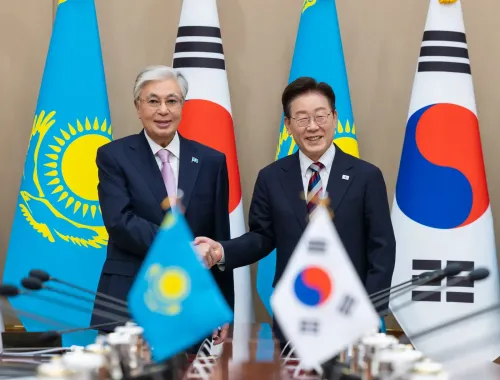
Chinese firms are expanding stakes in Kazakhstani uranium assets, making India's entry strategically significant for Astana 's multi-vector foreign policy.
Geography remains the key constraint — reliable transit via the Caspian, Iran, or Afghanistan is unresolved and will determine whether the partnership reaches its full potential.
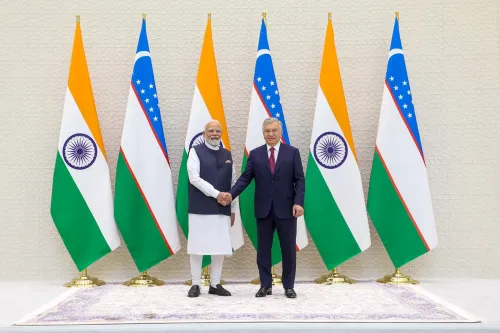
India's expanding civilian nuclear energy programme is reshaping its strategic relationship with Central Asia, with a landmark $4 billion uranium supply contract signed in 2026 between Kazatomprom and India's Department of Atomic Energy marking a decisive shift from routine commodity trade to long-term strategic partnership, according to an analysis published in Geopolitical Monitor. The agreement signals that India-Central Asia cooperation in the nuclear domain is now operating on a geopolitical axis, not merely a commercial one.
India's Nuclear Ambitions Drive the Demand
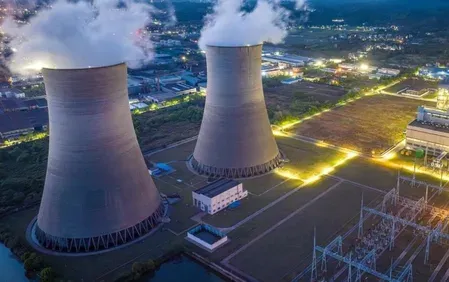
India has set an ambitious target of 100 GW of civilian nuclear capacity by 2047, with an interim milestone of 22,480 MW by 2031-32. Small modular reactors (SMRs) are receiving dedicated policy attention, with the 2025-26 Union Budget allocating more than $2 billion for this direction. A dedicated Nuclear Energy Mission worth ₹20,000 crore targets the development of at least five indigenously designed SMRs by 2033. To meet this scale-up, securing diversified and reliable uranium supplies has become a foreign policy priority for New Delhi.
Why Kazakhstan Is a Near-Ideal Partner
Kazakhstan holds approximately 14 per cent of global uranium reserves and is the world's largest uranium producer. In 2025, the republic's total uranium output reached 25,800 tonnes, with 13,500 tonnes attributable to Kazatomprom alone — accounting for roughly 20 per cent of global primary uranium supply. For India, which had previously counted Kazakhstan among its uranium suppliers alongside Canada, the 2026 agreement elevates the relationship into a longer-term strategic tier. It reduces New Delhi's dependence on any single supplier at a moment of rapid capacity expansion.
For Astana, the Indian market offers meaningful strategic diversification. Chinese companies are already deepening their positions in major Kazakhstani uranium projects, reportedly acquiring assets previously held by Russia's Rosatom. In this context, India represents a stable counterweight — a long-term buyer that fits within Kazakhstan's established foreign policy doctrine of engaging multiple centres of power while protecting national interests.
Uzbekistan's Role and the Broader Eurasian Architecture
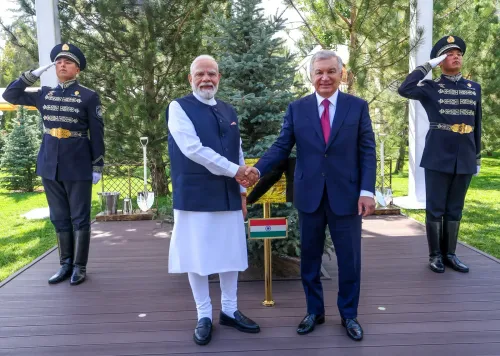
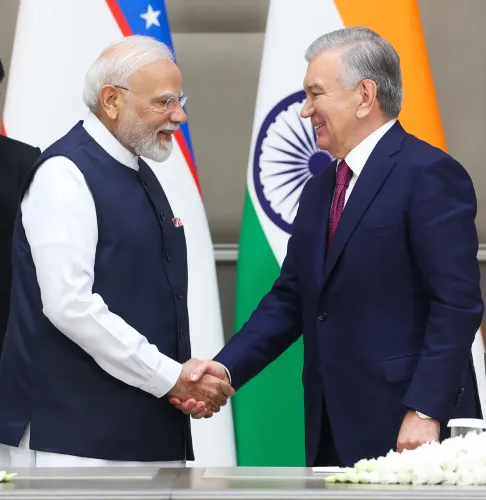
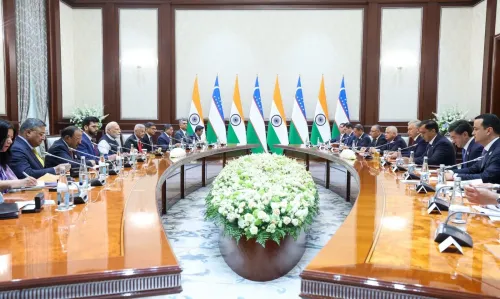
The analysis also highlights Uzbekistan as an emerging partner within a broader Eurasian resource framework. For both Astana and Tashkent, India is described not as a transactional buyer but as a long-term partner anchored in multi-year contracts and a shared interest in continental connectivity. This framing gives the uranium relationship a dimension that extends well beyond raw material supply.
The Connectivity Challenge
The principal constraint on this partnership, the analysis notes, remains geography. Without reliable transit corridors through the Caspian Sea, Iran, or Afghanistan, uranium diplomacy risks running into the same connectivity barriers that have limited India's footprint in Central Asia for decades. Critically, these constraints are not merely logistical — they are political. Resolving them requires the creation of reliable routes, supply insurance mechanisms, and durable long-term arrangements.
This alignment of interests, the report argues, may itself become a driver of deeper engagement. New Delhi needs dependable access to resources and continental corridors; Central Asian states need additional outlets to southern markets and ocean ports. Whether nuclear fuel can serve as the domain through which India establishes a lasting presence in Central Asia remains, according to the analysis, the core question going forward.
Point of View
And uranium will not move on goodwill alone. The deeper significance here is that China's growing grip on Kazakhstani extraction gives India a rare opening where its interests and Astana's diversification instinct genuinely align. The question is whether New Delhi treats this as a one-off procurement win or invests the diplomatic capital needed to build the corridors that would make the partnership irreversible.
NationPress
22 Sept 2026
Frequently Asked Questions
What is the India-Kazatomprom uranium deal signed in 2026?
It is a uranium supply agreement between Kazakhstan's state-owned Kazatomprom and India's Department of Atomic Energy , valued at over $4 billion , signed in 2026. The deal shifts the bilateral relationship from routine commodity trade to a long-term strategic partnership, according to an analysis in Geopolitical Monitor.
What are India's nuclear energy targets?
India aims to achieve 100 GW of civilian nuclear capacity by 2047 , with an interim target of 22,480 MW by 2031-32 . A separate Nuclear Energy Mission worth ₹20,000 crore targets at least five indigenously designed small modular reactors by 2033.
Why is Kazakhstan strategically important to India for uranium supply?
Kazakhstan holds approximately 14 per cent of global uranium reserves and is the world's largest uranium producer, supplying around 20 per cent of global primary output. For India, partnering with Kazakhstan reduces dependence on any single supplier as it rapidly scales up its nuclear capacity.
How does China factor into India-Kazakhstan nuclear cooperation?
Chinese companies are reportedly expanding their stakes in major Kazakhstani uranium projects, including assets previously associated with Russia's Rosatom. This makes India's entry into the Kazakhstani uranium market strategically valuable for Astana, which seeks to balance its partnerships across multiple power centres.
What is the main obstacle to deeper India-Central Asia nuclear cooperation?
Geography is the primary constraint. Without reliable transit routes through the Caspian Sea, Iran, or Afghanistan, moving uranium from Central Asia to India remains a significant logistical and political challenge — the same connectivity gap that has limited India's regional presence for decades.