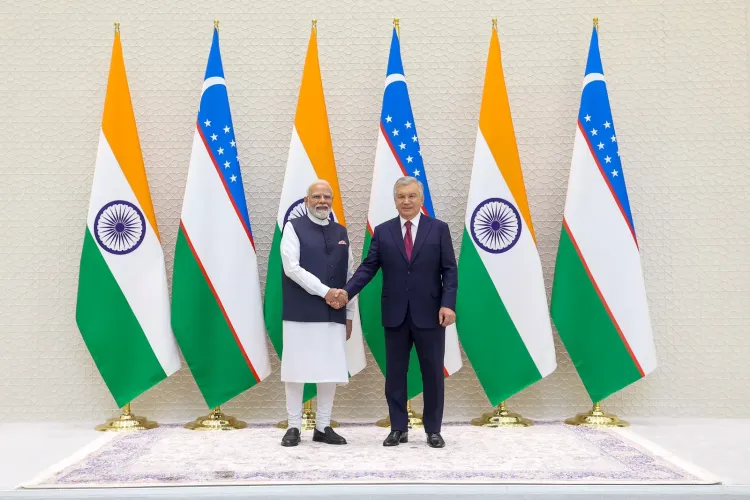
India-Uzbekistan uranium supply deal: Modi, Mirziyoyev seal long-term pact
Synopsis
India has locked in a long-term uranium supply deal with Uzbekistan — one of the world's top producers — as PM Modi and President Mirziyoyev upgraded their bilateral framework in Tashkent. With a new Foreign Ministers-level Coordination Council, elevated Joint Commission, and sister-city ties formalised, this is among the most substantive India-Central Asia engagements in recent years.
Key Takeaways
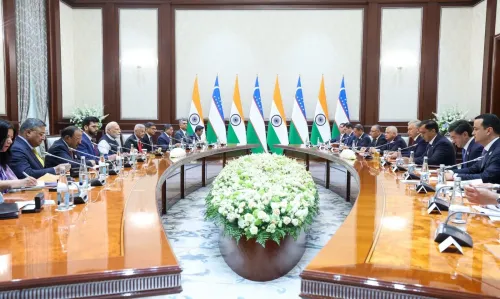
PM Narendra Modi and President Shavkat Mirziyoyev met in Tashkent on 30 August for delegation-level talks.
India and Uzbekistan agreed to establish a long-term uranium supply arrangement .
A Coordination Council at the Foreign Ministers' level will be set up to guide all aspects of bilateral cooperation.
The Joint Commission is being elevated from Secretary level to Ministerial level .
Three sister-city and sister-state arrangements were formalised during the visit.
A joint Business Summit will be organised with participation from leaders on both sides.
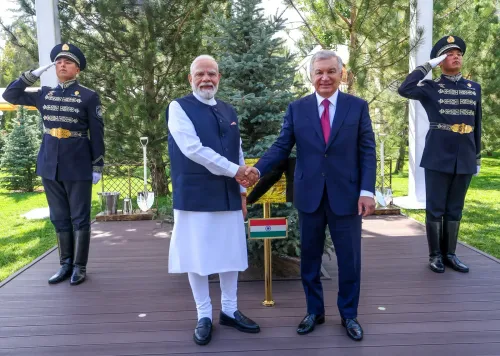
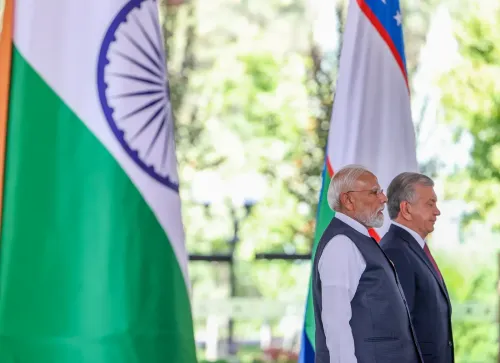
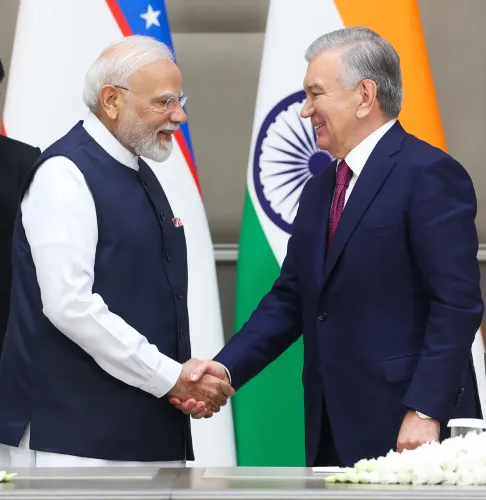
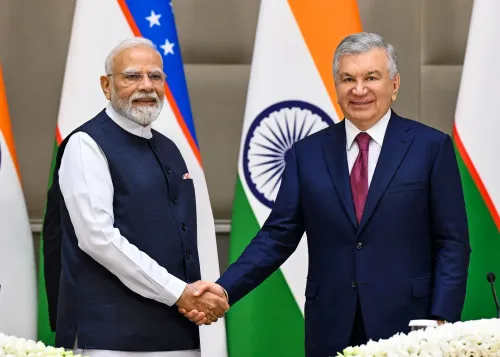
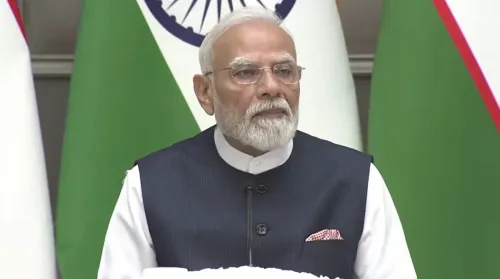
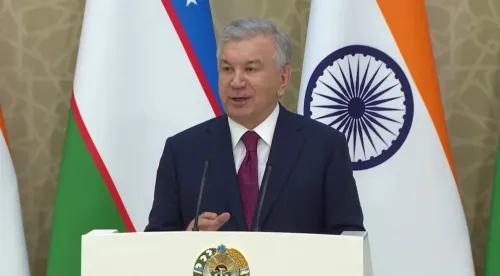
Prime Minister Narendra Modi on Sunday, 30 August announced that India and Uzbekistan will establish a long-term arrangement for the supply of uranium, marking a significant step in bilateral energy cooperation. The announcement came during delegation-level talks with Uzbekistan President Shavkat Mirziyoyev in Tashkent, as the two nations formalised a broad upgrade of their strategic partnership.
Key Developments from Tashkent Talks
At the heart of the meeting was the uranium supply framework, which will give India a stable, long-term source of nuclear fuel — critical for its expanding civilian nuclear energy programme. Beyond energy, the two leaders agreed to establish a Coordination Council at the Foreign Ministers' level to oversee all aspects of bilateral cooperation. The Joint Commission, previously operating at the Secretary level, will be elevated to the Ministerial level, signalling a structural deepening of ties.
Both nations also agreed to jointly organise a Business Summit with participation from business leaders on both sides, aimed at translating diplomatic momentum into commercial outcomes.
Sister-City Ties and Smart City Exchanges
The two sides formalised three sister-city and sister-state arrangements during the talks. Modi called for a concrete roadmap to realise the full potential of these linkages. He drew a parallel between Uzbekistan's 'New Tashkent' mega-project and India's GIFT City in Gujarat, and extended an invitation to an Uzbek delegation to study best practices and technology applications at GIFT City.
What Modi Said
Modi acknowledged President Mirziyoyev's book outlining sector-specific projects and timelines for advancing the bilateral economic partnership. 'I appreciate this initiative. I am confident that, by working together, we will make rapid progress on this,' Modi said.
He also expressed warm appreciation for the hospitality extended by the Uzbek side. 'You adorned the entire city in the colours of the Indian tricolour; that, too, was truly touching. All of this demonstrates just how close India is to your heart,' Modi said, referring to the cultural performances and personalised welcome arranged by Mirziyoyev.
Why This Matters for India
India is in the midst of a major nuclear energy expansion, with several new reactors planned under its long-term power strategy. Securing a diversified, long-term uranium supply — beyond existing agreements — reduces dependence on any single supplier and strengthens energy security. Uzbekistan is among the world's top uranium producers, making this arrangement strategically significant. This visit also fits a broader pattern of India deepening ties with Central Asian nations as part of its Connect Central Asia policy.
With institutional mechanisms now upgraded and energy, trade, and city-level cooperation all on the table, the next phase will test whether these frameworks translate into measurable outcomes.
Point of View
But the institutional upgrades are the real story. Elevating the Joint Commission to Ministerial level and creating a Foreign Ministers' Coordination Council signals India is building durable architecture with Central Asia — not just signing one-off agreements. Uzbekistan is among the world's top five uranium producers, and locking in a long-term supply arrangement directly serves India's nuclear expansion ambitions. What remains to be seen is whether the Business Summit and sister-city frameworks generate commercial traction, or remain diplomatic set-dressing — a pattern that has plagued some earlier India-Central Asia engagement.
NationPress
14 Oct 2026
Frequently Asked Questions
What uranium deal did India and Uzbekistan sign in Tashkent?
India and Uzbekistan agreed to establish a long-term arrangement for the supply of uranium during PM Modi's visit to Tashkent on 30 August. The deal is aimed at securing a stable, diversified source of nuclear fuel for India's expanding civilian nuclear energy programme.
Why is Uzbekistan important for India's uranium needs?
Uzbekistan is among the world's top uranium producers, making it a strategically significant supplier for India. Securing a long-term deal reduces India's dependence on any single country for nuclear fuel as it expands its reactor capacity.
What other agreements were reached during the Modi-Mirziyoyev talks?
Beyond the uranium deal, the two sides agreed to establish a Coordination Council at the Foreign Ministers' level, elevate the Joint Commission to Ministerial level, formalise three sister-city and sister-state arrangements, and jointly organise a Business Summit.
What is the significance of upgrading the India-Uzbekistan Joint Commission?
Elevating the Joint Commission from the Secretary level to the Ministerial level signals a structural deepening of bilateral ties, giving senior political leadership direct oversight of cooperation across trade, energy, and diplomacy.
How does this visit fit into India's broader Central Asia policy?
The Tashkent visit is part of India's Connect Central Asia policy, which seeks to build stronger political, economic, and energy linkages with the region. The institutional frameworks agreed upon during this visit represent some of the most substantive India-Central Asia engagement in recent years.