Kishan Reddy Hails Cabinet Nod to ₹53,428 Cr Social Pension Overhaul
Synopsis
The Union Cabinet approved restructuring the National Social Assistance Programme into the 'Pradhan Mantri Samajik Sahayata Yojana' with ₹53,428 crore over five years, expanding disability pension eligibility to 40% threshold and from birth, potentially tripling disability pension beneficiaries.
Key Takeaways
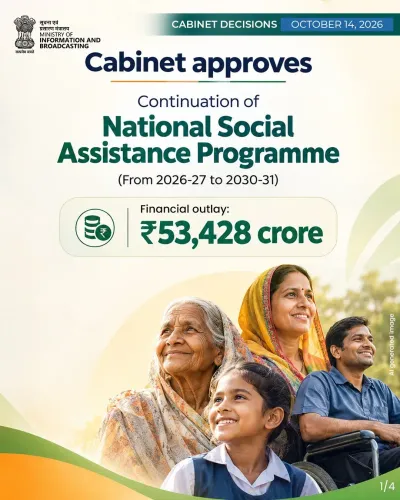
The Cabinet approved ₹53,428 crore for the restructured social assistance programme over five years from 2026-27 to 2030-31 , at ₹10,685.60 crore per year .
Disability pension eligibility is expanded from 80% disability to 40% or more , in line with the Rights of Persons with Disabilities Act, 2016.
The minimum age requirement of 18 years for disability pension is scrapped — children born with disabilities will receive support from birth via their parents.
Disability pension beneficiaries are projected to grow to 27.48 lakh , about 3.3 times current levels, raising annual spending from ₹290 crore to ₹1,268 crore .
Total beneficiaries across all components are expected to rise from 3 crore to 3.2 crore nationally; Telangana currently has 7.28 lakh beneficiaries under central social security schemes.
All five scheme components have been renamed under 'Pradhan Mantri' branding; revised disability norms are to be implemented within the next three months .
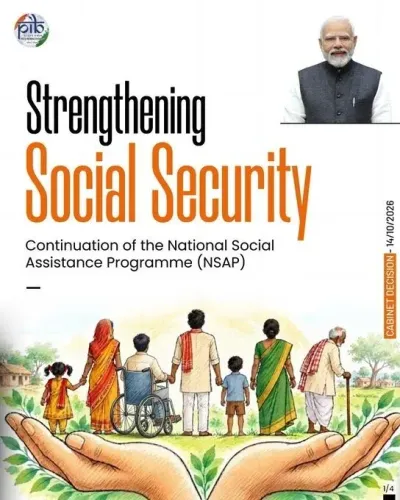
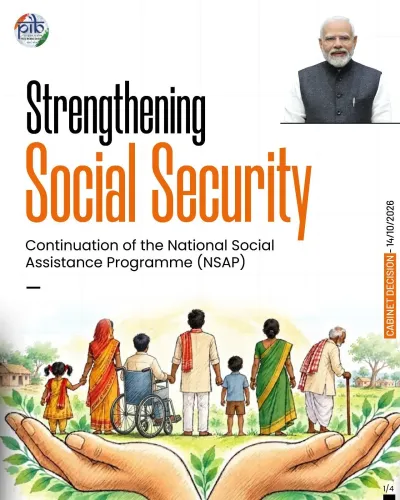
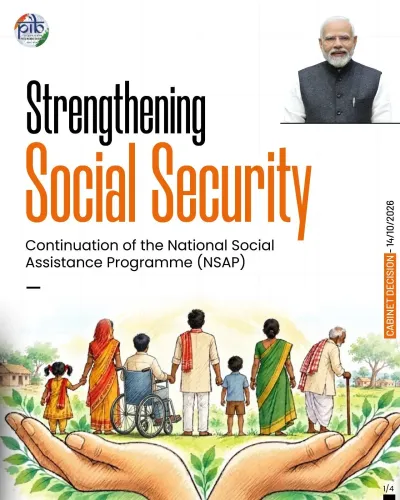
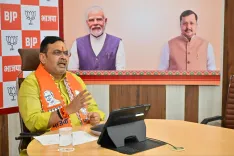
India's social safety net just got its most significant structural overhaul in decades — and the Cabinet decision that triggered it will extend monthly pension support to millions of households that have never received it before. Union Coal and Mines Minister G. Kishan Reddy, also BJP Telangana state president, on Wednesday, October 14, 2026, welcomed the Cabinet's approval to restructure the National Social Assistance Programme (NSAP) into the 'Pradhan Mantri Samajik Sahayata Yojana', committing ₹53,428 crore over five years from 2026-27 to 2030-31.
A 31-Year-Old Programme Gets a New Name — and New Muscle
The NSAP, first launched in 1995, was India's foundational non-contributory pension architecture for the poor — elderly, widows, and persons with disabilities living below the poverty line. For three decades it ran largely unchanged in structure. What the Cabinet has now approved is a full renaming and recalibration of every component under it. The old National Old Age Pension Scheme becomes the 'Pradhan Mantri Vridhastha Pension Yojana'; the National Widow Pension Scheme becomes the 'Pradhan Mantri Vidhwa Pension Yojana'; the National Disability Pension Scheme becomes the 'Pradhan Mantri Divyangjan Pension Yojana'; and the National Family Benefit Scheme (NFBS) becomes the 'Pradhan Mantri Parivar Labh Yojana'.
Kishan Reddy noted that while names and the disability pension have changed meaningfully, eligibility criteria, central assistance amounts, and beneficiary caps for the old-age, widow, and family benefit components remain as they were — with states and Union Territories free to top up from their own funds. The annual outlay is fixed at ₹10,685.60 crore per financial year.
The Disability Pension Reforms: From 80% to 40% — and From Birth
The sharpest change — and the one Kishan Reddy spent the most words on — is the transformation of the disability pension. Until now, only persons with at least 80% disability qualified. In alignment with the Rights of Persons with Disabilities Act, 2016, which broadened recognised disability categories and set a 40% threshold as the baseline for government support, the Cabinet has now extended pension eligibility to anyone with 40% or more disability.
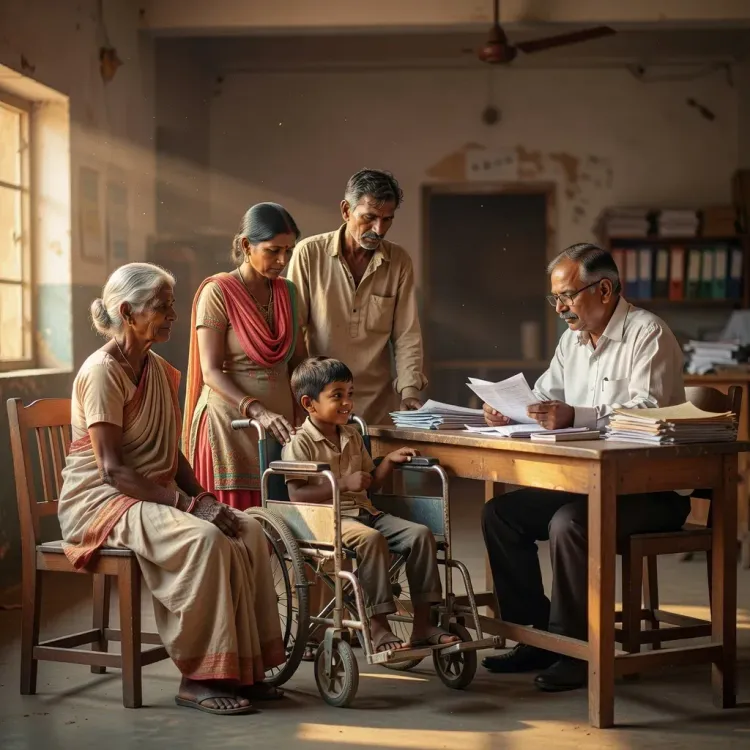
More striking still: the mandatory minimum age of 18 years has been scrapped entirely. A child born with a disability will now be eligible for support from birth, with the assistance channelled through parents until the child turns 18. 'The responsibility of caring for a child born with a disability falls on the family from day one,' the minister wrote. 'That is why we have removed the rule requiring families to wait until the child turns 18.' The pension amount itself has been raised by 25%.
Together, these three changes — lower disability threshold, birth-to-death coverage, and a pension hike — are projected to push the disability pension beneficiary count from its current level to 27.48 lakh, roughly 3.3 times the present figure. The annual expenditure under this component alone is set to rise from ₹290 crore to ₹1,268 crore. Implementation of the revised eligibility norms is targeted within the next three months.
What It Means for Telangana's 7.28 Lakh Beneficiaries
Kishan Reddy, writing in his capacity as BJP Telangana state president, flagged the direct state-level impact: Telangana currently has 7.28 lakh beneficiaries under central social security schemes. With the expanded disability eligibility alone — not counting adjustments to other components — that number is set to grow further. Over the past 12 years, the minister stated, the central government has transferred ₹2,132 crore directly into beneficiaries' accounts in the state under these schemes.
The broader national figure is expected to move from 3 crore to 3.2 crore total beneficiaries across all components of the restructured programme.
The Safety Net Closing a Gap Decades in the Making
What makes this decision consequential is not just the numbers. It is the logic embedded in it. Poverty compounds when age, disability, or the sudden death of a breadwinner arrives on top of it. The birth-to-18 disability support channel — which the minister called 'historic' — acknowledges that the financial shock for a family with a disabled child does not wait for a bureaucratic age threshold. It starts at birth.
The restructured programme now recognises that gap. Whether the rollout meets the three-month implementation clock will be the true test of how quickly the expanded safety net actually reaches those who need it.
Point of View
2016 closes a nine-year gap between legislation and welfare implementation. The birth-to-18 coverage channel is the most structurally novel element, acknowledging that caregiving costs for disabled children do not begin at legal adulthood. The real policy test will be whether states — many of which are already topping up central pensions — can operationalise the new beneficiary databases within the promised three-month window.
NationPress
14 Oct 2026
Frequently Asked Questions
What is the Pradhan Mantri Samajik Sahayata Yojana?
It is the new name for the restructured National Social Assistance Programme (NSAP), approved by the Union Cabinet to provide pensions and assistance to elderly, widows, and persons with disabilities below the poverty line, with a total outlay of ₹53,428 crore over five years from 2026-27 to 2030-31.
Who qualifies for the new disability pension under NSAP reform?
Under the revised norms, any person with 40% or more disability — down from the earlier threshold of 80% — qualifies for the Pradhan Mantri Divyangjan Pension Yojana, in line with the Rights of Persons with Disabilities Act, 2016.
Can children with disabilities receive pension support from birth now?
Yes. The Cabinet has removed the earlier minimum age of 18 years for disability pension eligibility. Children born with disabilities will receive support from birth, channelled through their parents until they turn 18.
How many people will benefit from the restructured NSAP?
Total beneficiaries across all components are expected to grow from 3 crore to 3.2 crore. Disability pension beneficiaries specifically are projected to rise to 27.48 lakh — roughly 3.3 times the current figure.
How many NSAP beneficiaries are there in Telangana?
Telangana currently has 7.28 lakh beneficiaries under central government social security schemes, a figure that is expected to increase further with the expanded eligibility norms.