CM Bhajan Lal Addresses Rajasthan via Seva Sankalp Raths
Synopsis
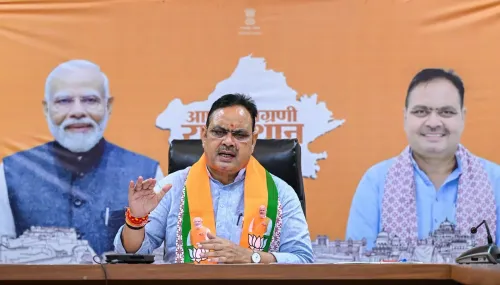
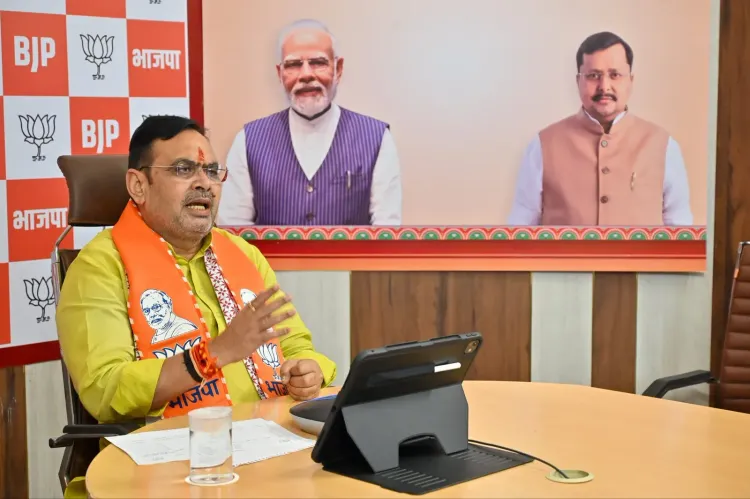
Rajasthan CM Bhajan Lal Sharma addressed state residents via video conferencing through Seva Sankalp Raths on 14 October 2026, using mobile outreach vehicles to deliver welfare scheme information to villages, aligned with PM Modi's Viksit Bharat vision.
Key Takeaways
Seva Sankalp Raths are mobile outreach vehicles deployed across Rajasthan to inform citizens about government welfare schemes and development works.
CM Bhajan Lal Sharma addressed citizens statewide via video conferencing through these raths on 14 October 2026 .
The campaign is framed as a tool to reach 'the person standing on the last rung of society' without discrimination.
The initiative builds on the nationally launched Viksit Bharat Sankalp Yatra model introduced in November 2023 , adapted for Rajasthan.
Sharma explicitly linked the outreach to PM Narendra Modi's vision of a developed India, with rural empowerment as its foundation.
The drive targets the structural problem of unclaimed welfare entitlements due to lack of awareness in rural and remote areas.
Village by village, wheel by wheel — Rajasthan Chief Minister Bhajan Lal Sharma on Wednesday, 14 October 2026 addressed citizens across the state via video conferencing through the Seva Sankalp Raths, mobile outreach vehicles touring the state to carry government welfare information directly to doorsteps. The initiative is the state's most visible bet on closing the information gap between government schemes and the people they are meant to serve.
What the Seva Sankalp Raths are doing on the ground
In his address, CM Sharma described the raths as a 'powerful medium' — sashakt madhyam — for reaching 'the person standing on the last rung of society' without discrimination. The outreach vehicles travel through Rajasthan's towns and villages, informing residents about the state government's development works, welfare schemes, and achievements, essentially acting as rolling information centres.
The model is not entirely new. The nationally launched Viksit Bharat Sankalp Yatra in November 2023 pioneered precisely this format — mobile vans fanning out to rural India to boost awareness and uptake of flagship central schemes. BJP-governed states, including Rajasthan, have since adapted and localised that template, embedding it into their own outreach architecture.
Rural development as the pillar of Viksit Bharat
Sharma explicitly tied the rath campaign to Prime Minister Narendra Modi's Viksit Bharat (Developed India) vision, stating that 'rural development is being given special priority' to realise that goal. His post asserts that the 'holistic development of villages and empowerment of rural citizens' is the very foundation on which a developed India must be built — framing the exercise not merely as administrative outreach but as a constitutional commitment to equity.
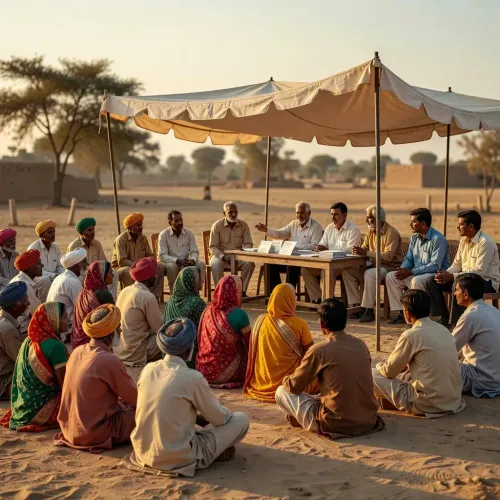
For a state as large and geographically diverse as Rajasthan — spanning the Thar Desert, Aravalli hill tracts, and densely populated eastern plains — physical outreach through mobile vehicles addresses a real structural challenge: welfare entitlements often go unclaimed simply because intended beneficiaries never hear about them.
The political logic of direct-to-village communication
The CM described this campaign as jansanvad — people-dialogue — and framed it as a journey of janshagidari (public participation) and janvishwas (public trust). The language is deliberate: these outreach drives double as political visibility exercises, putting the ruling government's brand in front of rural voters ahead of any electoral cycle, while simultaneously fulfilling a genuine governance function.
BJP-led states have consistently used this direct-communication model to reduce what analysts call 'information asymmetry' — the gap where a scheme exists on paper but its intended beneficiary has never heard of it. The Rajasthan iteration, under Sharma, who took charge in December 2023, is part of that broader pattern of integrating grassroots engagement with the national 2047 development goal.
The Seva Sankalp Raths are now the most tangible symbol of that commitment rolling through Rajasthan's villages — and whether their reach translates into measurable uptake of welfare schemes will be the real test of the exercise.
Point of View
Which would separate this from mere political theatre. As Rajasthan heads toward its next electoral cycle, the raths serve a dual purpose that is difficult to disentangle.
NationPress
14 Oct 2026
Frequently Asked Questions
What are Seva Sankalp Raths in Rajasthan?
Seva Sankalp Raths are mobile outreach vehicles deployed by the Rajasthan government to travel through towns and villages, informing citizens about government welfare schemes, development works, and government achievements.
What did CM Bhajan Lal Sharma say about Seva Sankalp Raths?
CM Sharma said the raths are a 'powerful medium' to reach every household and ensure welfare scheme benefits reach the person on the last rung of society without any discrimination.
How does the Seva Sankalp Rath campaign relate to Viksit Bharat?
CM Sharma linked the campaign directly to PM Narendra Modi's Viksit Bharat vision, stating that rural development and village empowerment are the foundation for building a developed India by 2047.
Is the Seva Sankalp Rath idea new or based on an earlier model?
The format draws from the Viksit Bharat Sankalp Yatra launched nationally in November 2023, which used mobile vans to boost awareness of central welfare schemes in villages. Rajasthan has adapted that model at the state level.
Why does Rajasthan need mobile outreach for welfare schemes?
Rajasthan's geographic diversity — spanning deserts, hills, and plains — means many rural residents remain unaware of their entitlements. Mobile outreach vehicles address the 'information asymmetry' that causes welfare benefits to go unclaimed.