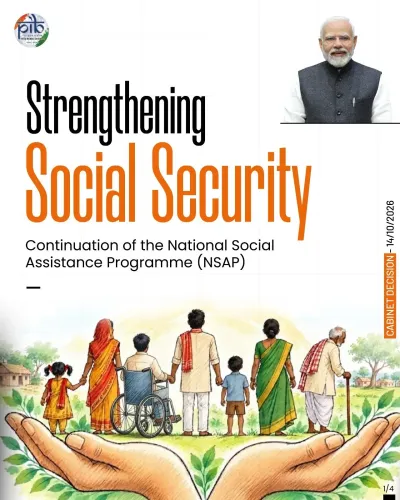
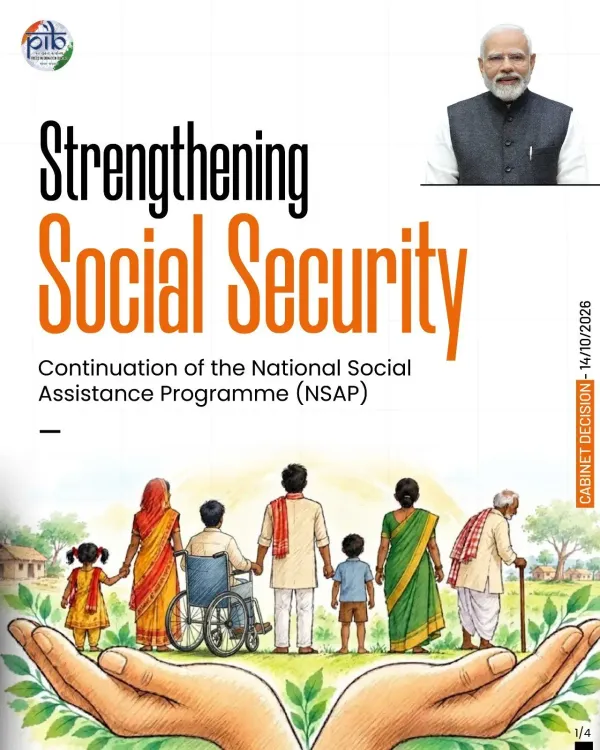
Cabinet Approves ₹53,428 Cr NSAP Extension, Expands Disability Cover
Synopsis
The Union Cabinet approved a ₹53,428 crore extension of NSAP for 2026–31, enhancing Divyangjan pensions, slashing the disability eligibility threshold from 80% to 40%, extending coverage from birth, and reaching 3.20 crore beneficiaries across all 36 States and UTs.
Key Takeaways
The Union Cabinet approved NSAP continuation with an outlay of ₹53,428 crore for 2026–27 to 2030–31 .
The disability benchmark for pension eligibility has been reduced from 80% to 40% , significantly widening the pool of eligible Divyangjan.
Eligibility now extends from birth , covering younger persons with disabilities who were previously excluded.
Enhanced Divyangjan pension stands at ₹375/month for ages 0–79 and ₹625/month for ages 80 and above.
The decision covers 3.20 crore beneficiaries across all 36 States and Union Territories .
NSAP, originally launched in August 1995 , provides non-contributory pensions to the elderly poor, widows, and persons with disabilities from BPL households.
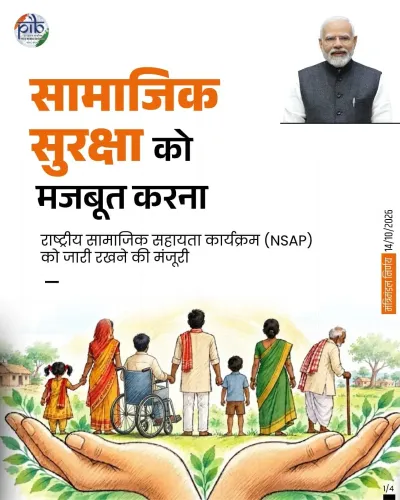
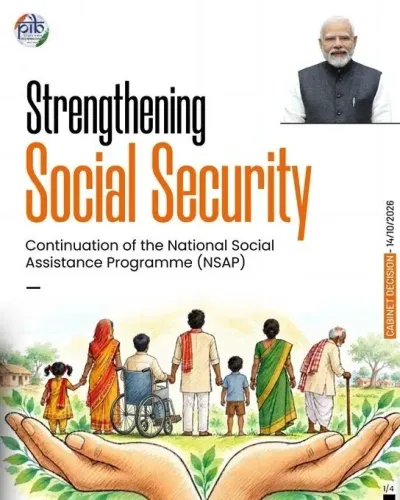
A welfare architecture first built in 1995 just got its most significant expansion in years. The Union Cabinet, chaired by Prime Minister Narendra Modi, on Wednesday, 14 October 2026, approved the continuation of the National Social Assistance Programme (NSAP) with a total outlay of ₹53,428 crore for the five-year period 2026–27 to 2030–31 — and, crucially, rewrote the rules on who gets in.
The disability threshold that changes everything
The headline number is big. But the structural shift is bigger. Under the revised framework, the benchmark disability threshold for pension eligibility has been cut from 80% to 40% — meaning millions of persons with disabilities who previously fell just outside the programme's reach will now qualify. Eligibility has also been extended from birth, closing a gap that had historically excluded younger Divyangjan from accessing any formal social security.
The revised monthly pension amounts reflect the same logic of inclusion: ₹375 per month for Divyangjan beneficiaries aged 0–79 years, and ₹625 per month for those aged 80 years and above. For households that live on the margins of subsistence, these transfers are not supplementary — they are foundational.
3.20 crore beneficiaries, 36 States and UTs
The Cabinet decision is projected to benefit 3.20 crore beneficiaries across all 36 States and Union Territories. NSAP, launched in August 1995 as a fully centrally funded non-contributory scheme, has historically provided pensions to three categories: the elderly poor, widows, and persons with disabilities from below-poverty-line households. The current extension continues that three-pillar structure while deepening access at the disability end — the segment that had faced the most restrictive entry conditions.
Union Health Minister J. P. Nadda, who announced the decision on X, framed it explicitly in the language of Antyodaya — the governing philosophy of reaching the very last person in line. 'The decision will benefit 3.20 crore beneficiaries across all 36 States and UTs, strengthening social security and ensuring a life of dignity for the vulnerable,' Nadda posted, adding a note of gratitude to PM Modi for his 'unwavering commitment to Antyodaya and inclusive welfare.'
What comes next: the 40% benchmark goes to the States
Cabinet approval is the starting gun, not the finish line. The critical next step is State and UT-level notification of the revised 40% disability benchmark and the birth-based eligibility rules — administrative orders that will determine how quickly enhanced pensions actually reach new beneficiaries. With the financial year already under way, the pace of state-level implementation will be the real test of how swiftly the ₹53,428 crore outlay translates into money in hand for India's most marginalised households.
Successive governments have periodically extended NSAP and nudged its coverage upward, but the shift from an 80% to a 40% disability threshold represents one of the more consequential eligibility reforms in the programme's three-decade history. Whether the expanded architecture delivers at scale now depends on the machinery of 36 state governments moving in step.
Point of View
Positioning the BJP-led Centre as the active architect of last-mile welfare rather than a passive administrator. The real policy test, however, will be implementation velocity: state-level notification and disbursement lag have historically been NSAP's biggest bottlenecks, and the transition from a 80% to a 40% benchmark will require fresh disability assessments and beneficiary enrolment at scale. If states move quickly, this becomes a genuine welfare milestone; if they stall, the gap between Cabinet approval and kitchen-table impact will define the narrative.
NationPress
15 Oct 2026
Frequently Asked Questions
What is the National Social Assistance Programme (NSAP)?
NSAP is a centrally funded, non-contributory social security scheme launched in August 1995 that provides monthly pensions to elderly persons, widows, and persons with disabilities from below-poverty-line households across India.
How much money has been approved for NSAP and for which period?
The Union Cabinet approved an outlay of ₹53,428 crore for NSAP covering the five-year period from 2026–27 to 2030–31.
What is the new disability threshold for NSAP pension eligibility?
The Cabinet has reduced the disability benchmark from 80% to 40%, meaning persons with a disability assessment of 40% or above from BPL households are now eligible, significantly expanding coverage.
How much will Divyangjan receive under the revised NSAP pension?
Divyangjan beneficiaries aged 0–79 years will receive ₹375 per month, while those aged 80 years and above will receive ₹625 per month under the enhanced NSAP structure.
How many people will benefit from the NSAP Cabinet decision?
The Cabinet decision is expected to benefit 3.20 crore beneficiaries across all 36 States and Union Territories of India.