CM Samrat Choudhary Backs NSAP Extension, Disability Pension Reform
Synopsis
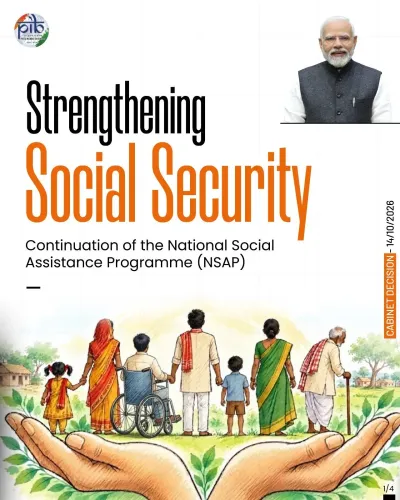
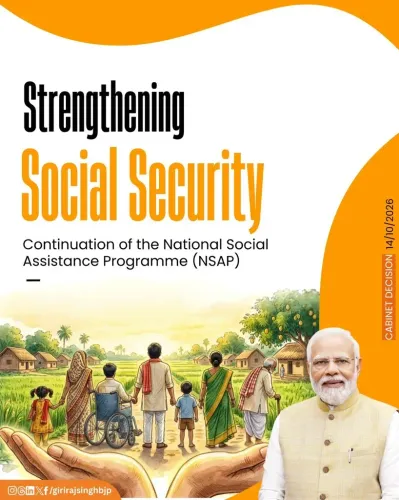
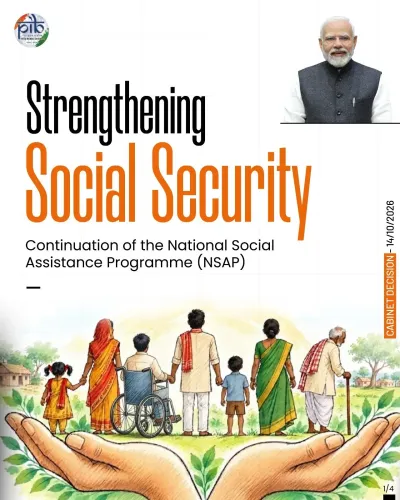
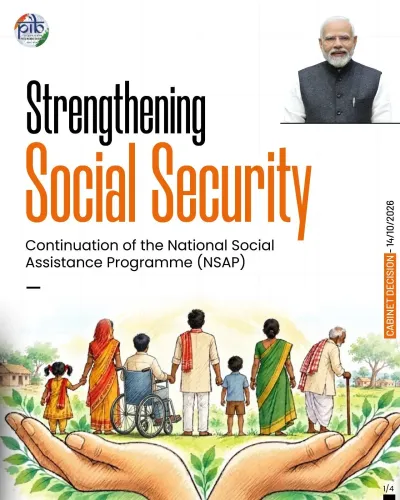
The Union Cabinet has approved NSAP's continuation from 2026-27 to 2030-31 with a ₹53,428 crore budget, cutting the disability pension threshold from 80% to 40% and covering congenital disabilities. Bihar CM Samrat Choudhary welcomed the decision as a step toward dignified lives for persons with disabilities.
Key Takeaways
NSAP extended for five years from 2026-27 to 2030-31 by the Union Cabinet under PM Narendra Modi.
Total budget allocated: ₹53,428 crore for the extended programme period.
Disability pension eligibility threshold reduced from 80% to 40% , widening the beneficiary pool significantly.
Persons with congenital (birth) disabilities explicitly brought under the NSAP pension scheme for the first time.
NSAP, launched in 1995 , is India's central government cash-transfer scheme covering the elderly poor, widows, and persons with disabilities.
Bihar CM Samrat Choudhary welcomed the decision, flagging its importance for vulnerable communities across the state.
Millions of India's most vulnerable citizens — elderly pensioners, widows, and persons with disabilities — are set to gain broader social security cover after the Union Cabinet cleared a landmark extension of the country's foundational welfare programme. Bihar Chief Minister Samrat Choudhary on Wednesday, October 14, 2026, welcomed the Cabinet's approval to continue the National Social Assistance Programme (NSAP) from 2026-27 through 2030-31, with a total budget of ₹53,428 crore.
Posting in Hindi, CM Choudhary called it 'an important decision in the direction of delivering social security benefits to every needy person in society and providing persons with disabilities opportunities for a dignified life.' He credited Prime Minister Narendra Modi for leading the cabinet decision.
The disability threshold that changes everything
The most consequential reform buried inside the NSAP renewal is a sharp cut in the eligibility bar for disability pensions. The minimum disability threshold for pension eligibility has been reduced from 80% to 40% — effectively doubling the potential pool of beneficiaries overnight. For context: under the old norm, only persons with near-total physical impairment qualified. At 40%, a far larger share of Indians living with moderate disabilities now have a legal claim to state support.
Equally significant: persons with congenital disabilities — those disabled from birth — have been explicitly brought under the pension scheme's ambit for the first time. Previously, procedural gaps left many congenital cases in a grey zone. The new provision closes that loophole.
NSAP at 31: a welfare backbone getting a fresh spine
Launched in 1995 as a centrally sponsored scheme, NSAP was designed to give the central government a direct channel for cash transfers to the elderly poor, widows, and persons with disabilities — groups that fall through the cracks of contributory social insurance. Over three decades, successive governments have periodically renewed it with incremental tweaks. This cycle's renewal, covering five years and backed by over ₹53,000 crore, is notably larger in ambition: the disability reforms alone represent a structural shift, not just a continuity roll.
For Bihar — a state with a large rural population, high poverty indices, and significant numbers of persons with disabilities — the revised NSAP guidelines carry particular weight. The question CM Choudhary and his administration will now face is how quickly state-level machinery can update rolls, onboard newly eligible beneficiaries, and potentially layer Bihar's own top-up transfers on the revised central floor.
What the expanded net means on the ground
The twin changes — lower disability threshold and inclusion of congenital cases — are expected to bring a substantial number of previously excluded individuals into the formal social security net. Persons with disabilities have historically faced compounding disadvantages: limited employment access, higher healthcare costs, and dependency on informal family support. A guaranteed pension, however modest, provides a floor that changes household economics and — crucially — confers official recognition of entitlement.
The next milestone to watch: state governments, starting with high-beneficiary states like Bihar, updating implementation guidelines for 2026-27, the first year of the renewed programme. Whether states add supplementary top-ups above the central pension rate will determine how meaningful the benefit feels in recipients' hands.
India just lowered the door for millions who were left standing outside. The real test is whether the door is wide enough — and whether the state machinery is fast enough to walk them through it.
Point of View
Durable social contract expanded just enough to generate new beneficiary cohorts. Lowering the disability threshold from 80% to 40% is the single most consequential structural change: it nearly doubles eligibility in a stroke, creating visible proof of delivery for a constituency that has historically been under-served. Bihar CM Choudhary's amplification of a central Cabinet decision — rather than a state-level scheme — reflects the BJP's coordinated top-down messaging strategy, where state leaders serve as regional loudspeakers for Central welfare announcements. The real policy test is implementation speed: NSAP's decades-long critique has been weak last-mile delivery, and the newly eligible disabled beneficiaries are often the hardest to enrol.
NationPress
14 Oct 2026
Frequently Asked Questions
What is NSAP and who does it cover?
The National Social Assistance Programme (NSAP), launched in 1995, is a central government scheme providing direct pension transfers to elderly poor, widows, and persons with disabilities who meet income and eligibility criteria.
What is the new disability percentage for NSAP pension eligibility?
The Union Cabinet has reduced the minimum disability threshold for NSAP pension eligibility from 80% to 40%, meaning persons with moderate disabilities now qualify for the scheme.
How much money has been approved for NSAP from 2026 to 2031?
The Union Cabinet approved a budget of ₹53,428 crore for NSAP covering the five-year period from 2026-27 to 2030-31.
Are people disabled from birth now covered under NSAP?
Yes. The Cabinet decision explicitly includes persons with congenital disabilities — those disabled from birth — within the NSAP pension scheme, a category that previously faced eligibility gaps.
Why did Bihar CM Samrat Choudhary post about an NSAP cabinet decision?
As Bihar Chief Minister and a senior BJP leader, Samrat Choudhary welcomed the Union Cabinet's decision, highlighting its significance for needy and disabled citizens — a major constituency in Bihar.