CM Dhami meets EEPC chief, eyes more investment in Uttarakhand
Synopsis
Uttarakhand Chief Minister Pushkar Singh Dhami met EEPC Chairman Pankaj Chaddha on 14 October 2026 to deliberate on industrial development, investment expansion, and youth employment — key priorities for a state battling out-migration and seeking to unlock its manufacturing potential.
Key Takeaways
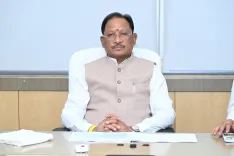
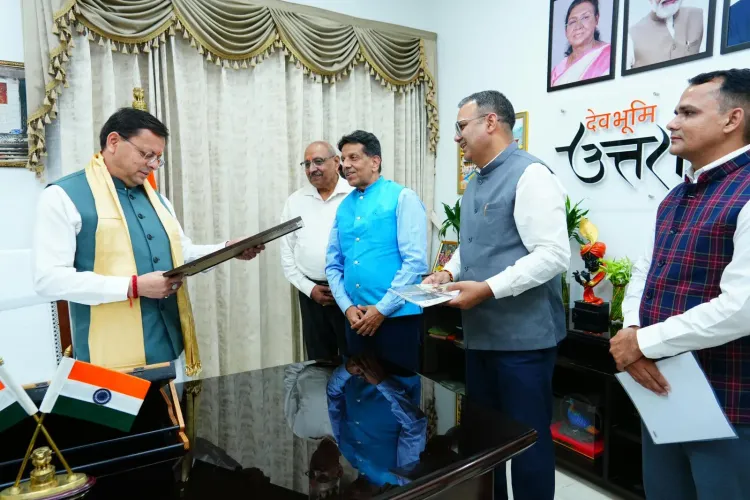
CM Pushkar Singh Dhami met EEPC Chairman Pankaj Chaddha at the Chief Minister's residence in Dehradun on 14 October 2026 .
Discussions covered industrial development, investment promotion, and creation of employment and self-employment opportunities for local youth.
Dhami emphasised using the state's own natural resources, local talent, and entrepreneurial capacity to strengthen Uttarakhand's economy.
The Engineering Export Promotion Council (EEPC) operates under India's Ministry of Commerce and Industry and promotes engineering goods exports.
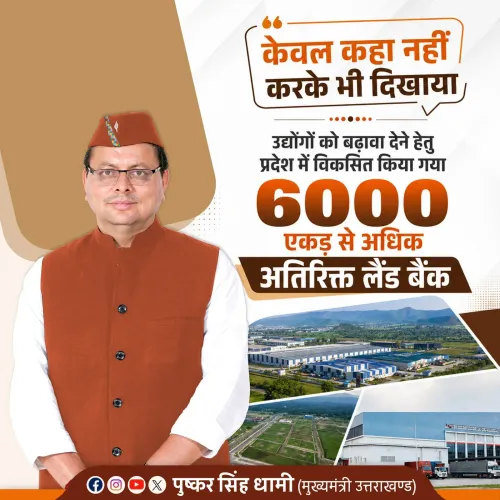
Uttarakhand's Industrial Policy of 2018 offered capital subsidies and tax benefits to attract manufacturing to the hill state.
No specific investment commitments or MoUs from the meeting have been confirmed; follow-up announcements are expected to be watched.
Industrial growth, fresh investment, and jobs for local youth — those were the three pillars on the table when Uttarakhand Chief Minister Pushkar Singh Dhami sat down with Engineering Export Promotion Council (EEPC) Chairman Pankaj Chaddha at the Chief Minister's residence in Dehradun on Wednesday, 14 October 2026.
The Chief Minister's Office confirmed the meeting, noting that Dhami and Chaddha held wide-ranging discussions on 'encouraging industrial development, expanding investment potential, and creating new employment avenues through industry' — औद्योगिक विकास को प्रोत्साहित करने, निवेश की संभावनाओं को बढ़ाने और उद्योगों के माध्यम से रोजगार के नए अवसर सृजित करने [encouraging industrial development, expanding investment possibilities, and creating new employment opportunities through industries].
Dhami's pitch: local talent, local resources, stronger economy
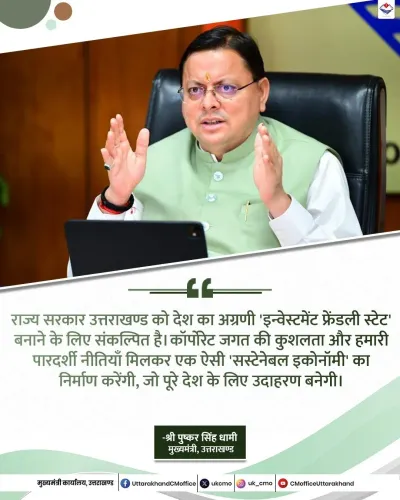
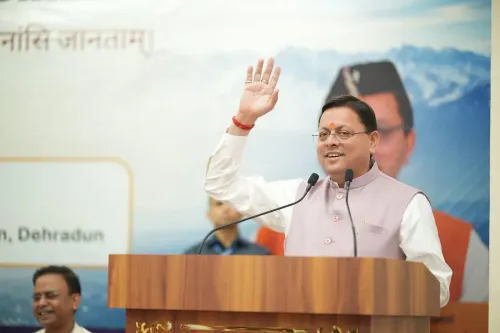
Speaking at the meeting, CM Dhami said the state government is 'continuously working to develop an industry-friendly environment and to encourage investment in Uttarakhand.' He framed the effort around unlocking what already exists inside the state — its natural resources, local talent, and entrepreneurial potential — rather than relying solely on outside capital.
'The government's endeavour is to strengthen the state's economy by making better use of the resources available in the state, local talent, and the possibilities of entrepreneurship,' Dhami said. Generating employment and self-employment opportunities for local youth alongside industrial development is listed as one of the government's stated priorities.
Why EEPC at the CM's table matters
The Engineering Export Promotion Council is an apex body under India's Ministry of Commerce and Industry that promotes engineering goods exports and connects exporters with state-level investment ecosystems. When its chairman walks into a Chief Minister's office, it typically signals a state's interest in drawing manufacturing units — particularly engineering and precision-parts sectors — into its industrial corridors.
Uttarakhand has been positioning itself as a manufacturing destination that offers proximity to the National Capital Region while still carrying the hill-area incentives first formalised under the Uttarakhand Industrial Policy of 2018, which included capital subsidies and tax benefits for units setting up in the state. Engagement with bodies like EEPC fits squarely into that arc, and into the broader national frameworks of Ease of Doing Business and Atmanirbhar Bharat.
The migration problem underneath the investment pitch
There is a sharper, harder edge to this conversation. Uttarakhand has long grappled with out-migration as young people leave hill districts for plains cities in search of work. Every industrial investment the state can anchor locally is, in practical terms, a bet against that demographic drain. Dhami's repeated emphasis on youth employment and self-employment is not incidental — it is the political and social logic that gives economic summits like this one their urgency.
No specific investment commitments or MoUs from Wednesday's meeting have been confirmed at this stage. What to watch: whether the Dhami-Chaddha dialogue translates into sector-specific incentive packages or a formal investor outreach event in the months ahead.
Point of View
The stakes are higher than a standard growth pitch: persistent out-migration means that every factory or enterprise anchored locally is also a social-policy intervention. Dhami's framing around local talent and self-employment suggests the government is acutely aware that raw GDP numbers will not satisfy voters if jobs keep leaving the hills. Whether this dialogue produces binding commitments or remains aspirational will determine whether it registers as genuine economic momentum or routine optics.
NationPress
15 Oct 2026
Frequently Asked Questions
Why did EEPC Chairman Pankaj Chaddha meet CM Dhami?
Pankaj Chaddha, Chairman of the Engineering Export Promotion Council, met CM Pushkar Singh Dhami on 14 October 2026 to discuss industrial development, investment opportunities, and job creation in Uttarakhand.
What is Uttarakhand's industrial policy?
Uttarakhand's Industrial Policy of 2018 offers capital subsidies and tax benefits to manufacturing units setting up in the state, aiming to attract investment to its hill regions.
What did CM Dhami say about youth employment in Uttarakhand?
CM Dhami said that generating employment and self-employment opportunities for local youth alongside industrial development is a top priority of the state government.
Did the Dhami-Chaddha meeting result in any investment deal?
No specific investment commitments or MoUs from the 14 October 2026 meeting have been confirmed; any follow-up announcements are yet to emerge.