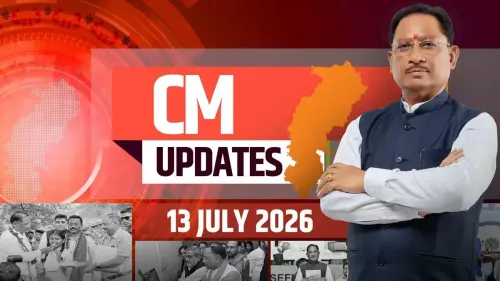
CM Sai Orders Healthcare Overhaul from PHCs to Dist Hospitals
Synopsis
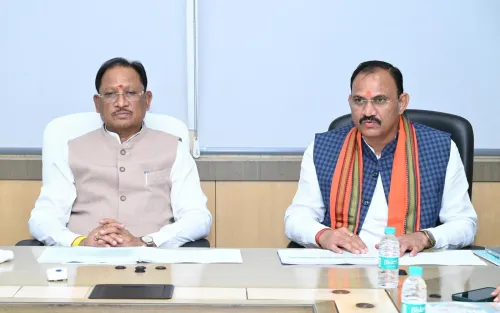
Chhattisgarh CM Vishnu Deo Sai chaired a health department review on October 14, directing full medicine stocks, diagnostics, and emergency services from district hospitals to PHCs, with a special focus on remote tribal forest regions.
Key Takeaways
CM Vishnu Deo Sai chaired a review meeting of the Health and Medical Education Department on October 14, 2026 .
He directed that medicines, diagnostic facilities, and emergency services must be operational at every tier — from district hospitals to Primary Health Centres .
The CM explicitly called for health infrastructure expansion to meet future demand.
Special focus was placed on remote forest areas (vananchal) , where access barriers are steepest for tribal communities .
The stated goal: no citizen should face a treatment barrier due to distance or resource shortage, whether in a city or a forest village.
Such reviews in Indian state governance often precede budget provisions or scheme rollouts for rural health infrastructure.
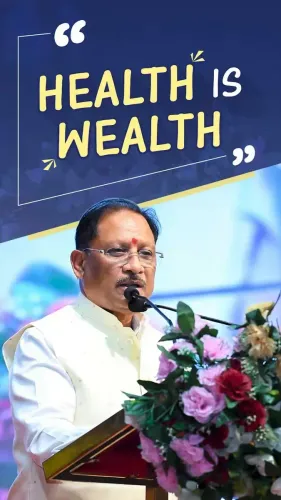
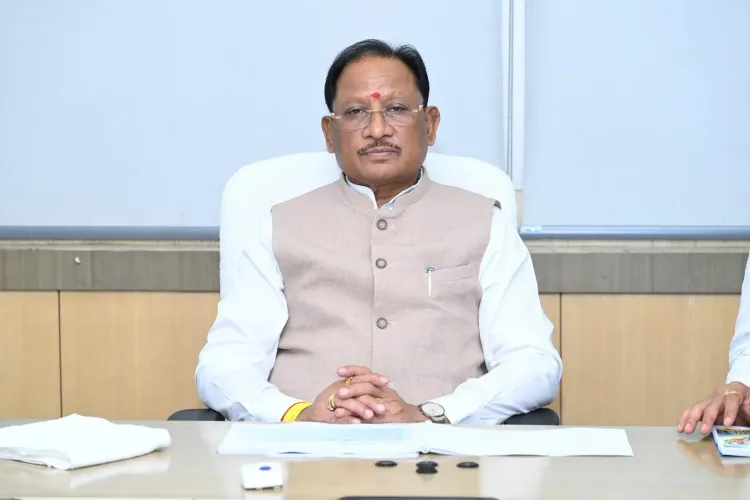
No distance, no shortage of resources — that is the standard Chhattisgarh Chief Minister Vishnu Deo Sai has set for every citizen in the state, from a city resident to a family living deep in the forest belt. On Wednesday, October 14, 2026, Sai chaired a review meeting of the Health and Medical Education Department and issued a sweeping directive: medicines, diagnostics, and emergency services must be fully functional at every level of the public health system, from district hospitals down to Primary Health Centres (PHCs).
What the CM directed — and why the chain matters
The instructions were explicit and tiered. Sai directed that the entire chain — district hospital, community health centre, primary health centre — must be stocked with essential medicines and equipped for investigations and emergency response. He also called for expanding health infrastructure to meet bhavishy ki zarooratein ('the needs of the future'), signalling that the review was not merely a compliance check but a forward-planning exercise.
The framing from the CM was sharp: 'Our goal is clear — neither distance nor lack of resources should be a barrier to treatment. Whether it is a city or a remote forest area, every citizen should receive timely, better, and quality treatment.' That phrase — suduR vananchal ('remote forest region') — is not incidental. Chhattisgarh is one of India's most heavily forested states, with a large Scheduled Tribe population whose access to healthcare has historically been constrained by terrain and infrastructure gaps.
Vananchal at the centre of Chhattisgarh's health challenge
The emphasis on tribal and forest regions places this directive squarely within a long-running governance challenge. Chhattisgarh's vananchal districts — spread across Bastar and other divisions — have PHCs that struggle with medicine stockouts, absent specialists, and absent emergency transport. The National Health Mission (NHM), launched in 2005, was designed precisely to address these rural infrastructure deficits, and state governments have periodically used review meetings to pressure departments into compliance with NHM norms.
What distinguishes Wednesday's meeting is its explicit pairing of near-term service delivery (medicines, diagnostics, emergency care now) with medium-term infrastructure expansion — a combination that often precedes budget-cycle allocations or scheme announcements in the next fiscal cycle.
The review-to-rollout pattern in Indian state health governance
Across Indian states, high-level health reviews of this kind frequently serve as the public signal before a concrete policy move: a supplementary budget provision, a new ambulance fleet, a bulk drug procurement order, or a district hospital upgrade list. Chhattisgarh has followed a similar pattern in previous administrations. Whether the Sai government follows Wednesday's directions with measurable targets and timelines is the test that healthcare advocates and rural communities will be watching.
The political logic is equally clear. A BJP government in a state with significant Adivasi voter populations has a direct stake in demonstrating that public health delivery reaches the last village — not just the district headquarters. Closing the urban-rural gap in healthcare is both a governance imperative and an electoral argument.
The orders are on record. The infrastructure expansion mandate is stated. Now the health department's follow-through — down to the last PHC medicine cabinet — will determine whether this review becomes a milestone or a memo.
Point of View
And addressing it is both a governance necessity and a BJP political priority in a state with a large Adivasi electorate. The real test will be whether the Health and Medical Education Department produces measurable targets, timelines, and monitoring mechanisms, or whether the directives remain aspirational. With the state's budget cycle approaching, this review could be the foundation for a dedicated health infrastructure push — or it could be absorbed into routine administrative churn without structural change.
NationPress
15 Oct 2026
Frequently Asked Questions
What did Chhattisgarh CM Vishnu Deo Sai announce for healthcare?
CM Vishnu Deo Sai directed the Health and Medical Education Department on October 14, 2026, to ensure medicines, diagnostics, and emergency services are fully available from district hospitals down to Primary Health Centres, and to expand health infrastructure for future needs.
What is the healthcare situation in Chhattisgarh's tribal areas?
Chhattisgarh's remote forest (vananchal) regions, including Bastar and other tribal districts, have long faced challenges including medicine stockouts, absence of specialists, and limited emergency transport, making healthcare access a persistent governance concern.
What is a Primary Health Centre (PHC) in India?
A Primary Health Centre is the first contact point of healthcare in rural India under the National Health Mission framework, providing basic outpatient care, maternal health services, and essential medicines to surrounding villages.
What is the National Health Mission and how does it relate to this?
The National Health Mission, launched in 2005, was designed to strengthen rural healthcare infrastructure including PHCs across India. State governments like Chhattisgarh are responsible for implementing NHM norms, and review meetings like Sai's are part of that accountability process.
Will Chhattisgarh's health review lead to new schemes or budget provisions?
State-level health review meetings of this nature in India often precede budget allocations or scheme announcements. Whether the Sai government follows Wednesday's directives with specific targets and funding will become clearer in the upcoming state budget cycle.