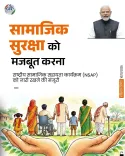
Cabinet clears ₹53,428 crore NSAP reboot, 3.20 crore to benefit by 2030-31

Synopsis
The Union Cabinet has cleared a ₹53,428 crore renewal of India's flagship social assistance programme for five years, covering 3.20 crore poor, elderly, widowed, and disabled citizens — and quietly doubled down on inclusion by slashing the disability eligibility threshold from 80% to 40%, potentially bringing in thousands of new beneficiaries who were previously shut out.
Key Takeaways
The Union Cabinet approved ₹53,428 crore for the National Social Assistance Programme (NSAP) for five years from 2026-27 to 2030-31 .
The scheme covers 3.20 crore beneficiaries across all 36 states and Union Territories .
NSAP is renamed Pradhan Mantri Samajik Sahayata Yojana ; all four sub-schemes have also been rebranded under a Pradhan Mantri prefix.
Disability pension eligibility threshold cut from 80 per cent to 40 per cent ; minimum age revised to from birth .
Divyangjan pension rates revised to ₹375/month (ages 0–79) and ₹625/month (80 and above).
Revised guidelines to be issued and implemented within three months .
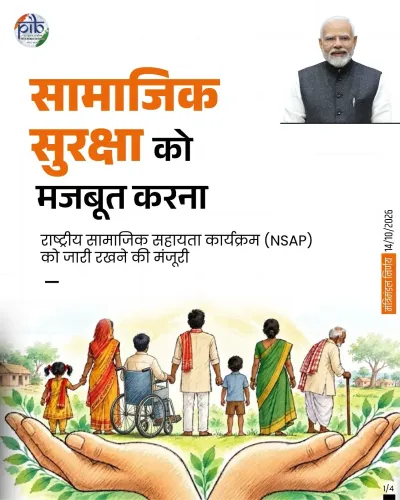
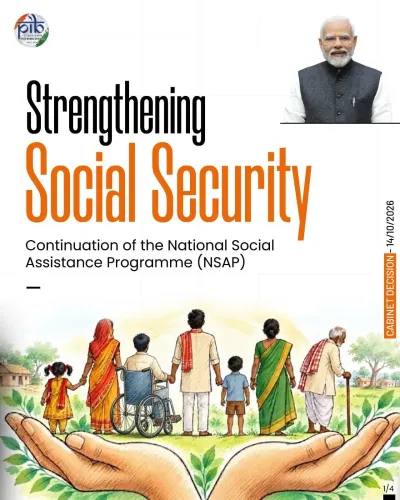
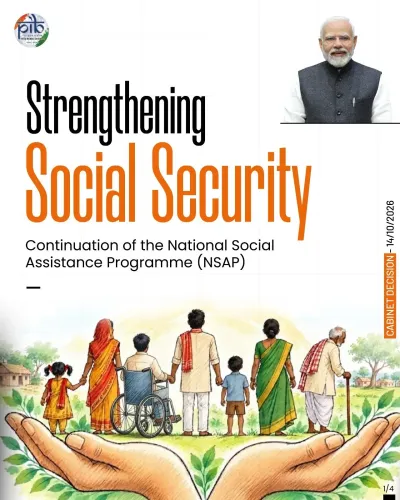
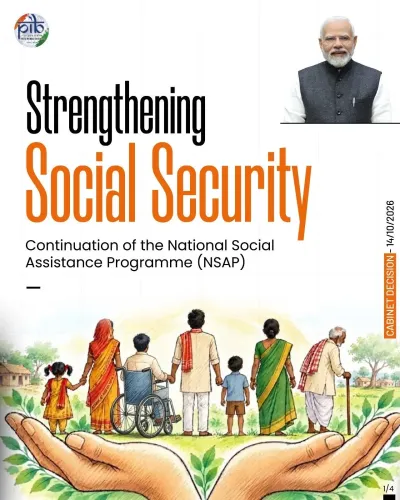
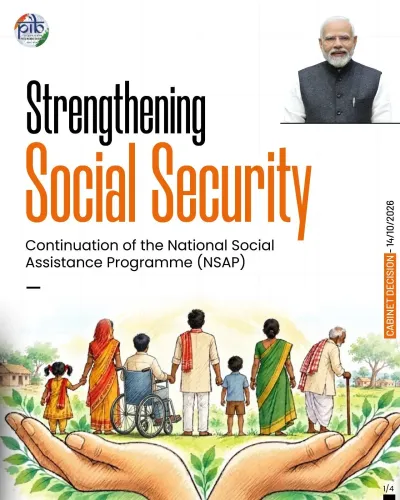
The Union Cabinet, chaired by Prime Minister Narendra Modi, on Wednesday, 14 October 2026, approved the continuation of the National Social Assistance Programme (NSAP) with a total outlay of ₹53,428 crore for five years from 2026-27 to 2030-31. The scheme will cover 3.20 crore beneficiaries across all 36 states and Union Territories, according to an official statement from the government.
New Names, Same Reach
Along with the financial renewal, the Cabinet approved a comprehensive rebranding of the programme and its sub-schemes. The National Social Assistance Programme (NSAP) will henceforth be known as the Pradhan Mantri Samajik Sahayata Yojana. The Indira Gandhi National Old Age Pension Scheme (IGNOAPS) has been renamed the Pradhan Mantri Vridhavastha Pension Yojana, while the Indira Gandhi National Widow Pension Scheme (IGNWPS) is now the Pradhan Mantri Vidhawa Pension Yojana.
Similarly, the Indira Gandhi National Disability Pension Scheme (IGNDPS) will now be called the Pradhan Mantri Divyangjan Pension Yojana, and the National Family Benefit Scheme has been rechristened the Pradhan Mantri Parivar Labh Yojana. The pension schemes for the elderly and widows, as well as the family benefit scheme, will continue in their existing form without structural changes.
Key Changes to Disability Pension
The most substantive policy shift involves the Divyangjan Pension Scheme. The benchmark disability threshold for eligibility has been reduced from 80 per cent to 40 per cent, significantly widening the pool of persons with disabilities who can qualify. Notably, the minimum age criterion for the disability pension has been revised to from birth, meaning children with qualifying disabilities are now eligible from day one.
The rate of assistance under the Divyangjan scheme has also been revised. Beneficiaries aged 0 to 79 years will receive ₹375 per month, while those aged 80 years and above will receive ₹625 per month. These changes are aligned with the Rights of Persons with Disability Act, 2016, which mandates that disability-related assistance be at least 25 per cent higher than assistance provided under comparable schemes for other categories. Updated guidelines covering the revised eligibility criteria, beneficiary numbers, and rates of assistance are to be issued and implemented within three months.
Background and Constitutional Basis
The NSAP was first launched on 15 August 1995 to fulfil the Centre's obligations under Article 41 of the Constitution's Directive Principles of State Policy, which directs the state to provide assistance to citizens in cases of old age, sickness, and disablement. The programme has been designed as a 100 per cent centrally funded initiative to ensure uniform availability of assistance across the country, regardless of a state's fiscal capacity.
This comes amid a broader push by the government to consolidate welfare delivery under unified, centrally branded schemes. The rebranding follows a pattern seen in other social sector programmes, where legacy scheme names have been aligned with a Pradhan Mantri prefix for greater visibility and political identification.
What Happens Next
The Department of Rural Development will issue revised operational guidelines within the stipulated three-month window. The expanded disability coverage, in particular, is expected to add a substantial number of new beneficiaries who were previously excluded under the stricter 80 per cent threshold. Implementation across all states and Union Territories will be closely watched, given the logistical complexity of reaching rural and remote beneficiaries at scale.
Point of View
But the genuinely consequential change is the easing of the disability threshold from 80% to 40%. That single adjustment could materially expand coverage for a population that has historically been underserved. What remains untested is whether the revised assistance rates — ₹375 and ₹625 a month — are sufficient given current inflation levels; the last substantive revision to NSAP pension rates was over a decade ago, and the gap between these figures and actual subsistence costs in urban or semi-urban settings is significant. The real accountability question is not the outlay, but whether disbursement infrastructure can absorb the expanded disability cohort within the promised three-month window.
NationPress
14 Oct 2026
Frequently Asked Questions
What is the Pradhan Mantri Samajik Sahayata Yojana?
It is the renamed version of the National Social Assistance Programme (NSAP), approved for continuation by the Union Cabinet on 14 October 2026. The scheme provides pension and financial assistance to elderly, widowed, and disabled persons below the poverty line, with a total outlay of ₹53,428 crore for 2026-27 to 2030-31.
Who are the 3.20 crore beneficiaries covered under the scheme?
The scheme covers poor households across all 36 states and Union Territories of India, including elderly persons, widows, persons with disabilities (divyangjan), and families that have suffered the death of a breadwinner. The coverage is funded entirely by the Centre to ensure uniform assistance nationwide.
What changed for disability pension eligibility?
The benchmark disability threshold for the Divyangjan pension has been reduced from 80 per cent to 40 per cent, consistent with the Rights of Persons with Disability Act, 2016. The minimum age for eligibility has also been revised to from birth, meaning children with qualifying disabilities can now receive assistance.
What are the new pension amounts under the Divyangjan scheme?
Beneficiaries aged 0 to 79 years will receive ₹375 per month, and those aged 80 years and above will receive ₹625 per month under the revised Pradhan Mantri Divyangjan Pension Yojana.
When will the revised guidelines come into effect?
The government has stated that guidelines covering the revised eligibility criteria, beneficiary numbers, and rates of assistance under the disability pension will be issued and implemented within three months of the Cabinet approval.