Nadda fires back at Kharge over 13.39 cr voter roll row
Synopsis
BJP national president J. P. Nadda accused Congress chief Mallikarjun Kharge of misrepresenting Election Commission data on 13.39 crore flagged voter roll entries, defending Home Minister Amit Shah and citing Congress's multi-decade losing streak in Gujarat, Tripura, and Bengal.
Key Takeaways
13.39 crore names in draft electoral rolls are flagged under the ASDD category — Absent, Shifted, Deceased, Duplicate — not yet finally deleted, per Nadda citing the Election Commission.
Breakdown: 2.80 crore deceased, 6.30 crore permanently shifted, 3.01 crore absent, 1.02 crore duplicate entries.
Nadda denied that Amit Shah ever called the 13.39 crore Indians 'infiltrators', calling the Congress framing a deliberate distortion.
The Special Intensive Revision (SIR) process began after the 2024 general elections , making it impossible, Nadda argues, for it to have influenced that outcome.
Nadda cited Congress's absence from power in Gujarat (31 years), Tripura (33 years), and West Bengal (54 years) as evidence of organic public rejection.
BJP projects NDA will win a fourth consecutive mandate in the 2029 general elections .
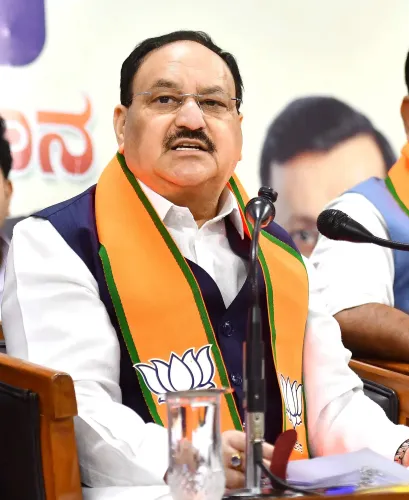
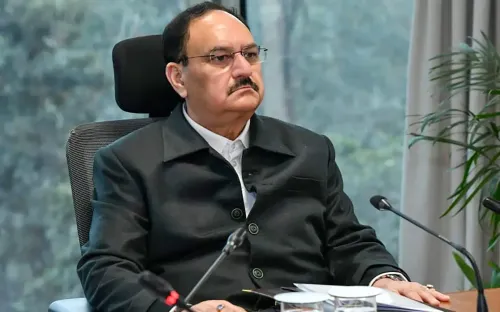
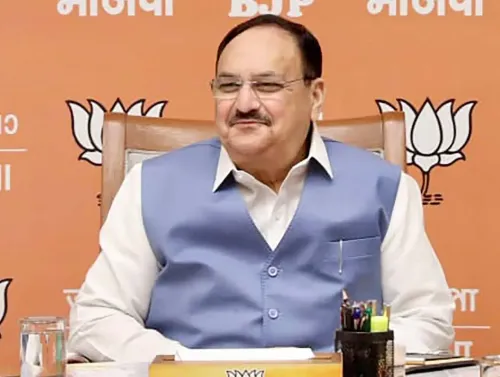
A sharp political exchange over India's electoral rolls escalated on Wednesday when Union Health Minister and BJP National President J. P. Nadda directly challenged Congress president Mallikarjun Kharge, accusing him of spreading falsehoods about the Election Commission's Special Intensive Revision (SIR) exercise and misrepresenting remarks by Union Home Minister Amit Shah.
The 13.39 crore figure — what the Election Commission actually said
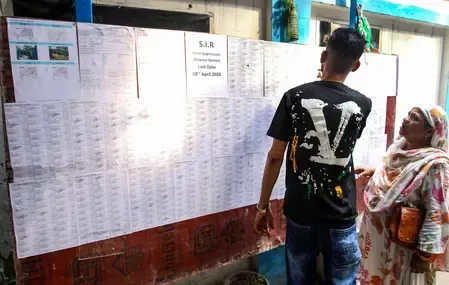
At the heart of the dispute is a figure of 13.39 crore names flagged in draft electoral rolls. Nadda, citing the Election Commission of India, insists these are not final deletions but entries marked under the ASDD category — Absent, Shifted, Deceased, and Duplicate — pending final verification. The breakdown he posted: 2.80 crore deceased, 6.30 crore permanently shifted, 3.01 crore absent, and 1.02 crore duplicate entries. His core argument is direct: calling this figure a mass deletion of legitimate voters is, in his words, a deliberate misrepresentation.
The Election Commission has historically conducted such periodic special summary revisions before major election cycles — exercises specifically designed to clean bloated rolls of invalid entries rather than to disenfranchise living, resident voters. Flagging entries for review and deleting them are two distinct administrative steps, and Nadda's post leans hard on that distinction.
Shah's alleged remark and Nadda's rebuttal
Nadda flatly denied that Amit Shah ever described the 13.39 crore Indians as 'infiltrators' (ghuspaiithiya). The Congress framing, he argues, deliberately conflates the government's longstanding position on undocumented infiltrators with a routine electoral roll revision — a conflation he calls politically motivated. Whether Shah's original remarks were framed in precisely those terms remains a matter of contested public record, but the BJP's counter-narrative is now fully on the table.
Congress's losing streak — the BJP's electoral counter-punch
Nadda did not stop at the electoral roll argument. He pivoted to what the BJP considers its strongest card: an unbroken record of Congress defeats across major states. Gujarat — no Congress win for 31 years. Tripura — no Congress Chief Minister for 33 years. West Bengal — no Congress victory for 54 years. Add to that rejections in Bihar, Uttar Pradesh, and Maharashtra, and Nadda's argument sharpens: the SIR controversy is not a policy concern but a distraction from structural electoral decline.
The timing is pointed. The SIR process began after the 2024 general elections, which the BJP-led NDA won with a decisive mandate. Framing that victory as a product of voter roll manipulation, Nadda says, is Congress's 'desperation' (hatasha) — not a credible democratic challenge.
2029 already in the frame
Nadda closed with a direct forecast: the NDA will return to power with a thumping majority in 2029, and Congress will suffer its fourth consecutive general election defeat. That is an aggressive projection — but it is also a strategic signal that the ruling party intends to turn every voter-roll debate into a referendum on the opposition's own credibility with the public.
The Election Commission's final word on how many of the 13.39 crore flagged entries are ultimately deleted — and how many are restored after field verification — will be the only number that cuts through this noise.
Point of View
While the BJP will counter by anchoring every such claim to its unbroken winning record across major states. Nadda's intervention signals that the BJP intends to fight on process facts — the ASDD categorisation distinction — rather than cede the 'disenfranchisement' narrative to Congress. The Election Commission's own final tally on deletions will be the decisive piece of evidence that neither side can spin away. Until that number lands, this dispute serves both parties: it energises the opposition base and lets the BJP reinforce its 'misinformation' counter-brand simultaneously.
NationPress
15 Oct 2026
Frequently Asked Questions
What are the 13.39 crore names flagged in India's electoral rolls?
According to the Election Commission of India as cited by BJP president J. P. Nadda, these are entries in draft electoral rolls marked under the ASDD (Absent, Shifted, Deceased, Duplicate) category — comprising 2.80 crore deceased, 6.30 crore permanently shifted, 3.01 crore absent, and 1.02 crore duplicate voters. They have not been finally deleted.
Did Amit Shah call 13.39 crore Indians infiltrators?
BJP national president J. P. Nadda explicitly denied this, stating Home Minister Amit Shah never described the 13.39 crore flagged electoral roll entries as 'infiltrators' and called the Congress characterisation a falsehood.
What is the Special Intensive Revision (SIR) of electoral rolls?
SIR is a periodic exercise conducted by the Election Commission of India to clean electoral rolls by identifying and reviewing entries that may belong to deceased persons, those who have permanently relocated, absentees, or duplicates. Nadda noted the current SIR began after the 2024 general elections.
How long has Congress been out of power in Gujarat, Tripura, and West Bengal?
According to J. P. Nadda's post, Congress has not won an election in Gujarat for 31 years, has not had a Chief Minister in Tripura for 33 years, and has not achieved a victory in West Bengal for 54 years.
What did Nadda predict for the 2029 general elections?
Nadda predicted the BJP-led NDA alliance will return to power with a thumping majority in 2029 and that Congress will suffer its fourth consecutive general election defeat.