JP Nadda accuses Kharge of lying on electoral rolls, defends Amit Shah
Synopsis
BJP president JP Nadda has directly called out Congress chief Mallikarjun Kharge for what he terms an outright lie — that Home Minister Amit Shah labelled 13.39 crore Indians 'infiltrators.' Nadda's rebuttal zeroes in on the ECI's ASDD categorisation, turning a technical electoral process into a high-stakes political confrontation with the 2029 general election already in view.
Key Takeaways
BJP president JP Nadda on 14 October 2026 accused Congress president Mallikarjun Kharge of spreading false claims about Home Minister Amit Shah and electoral rolls.
Nadda clarified that 13.39 crore names were flagged under the ASDD (absent/shifted/dead/duplicate) category — not a final voter exclusion list.
The breakdown: 2.80 crore deceased, 6.30 crore shifted, 3.01 crore absent, 1.02 crore duplicates.
Nadda noted Congress has not governed Gujarat for 31 years , Tripura for 33 years , and West Bengal for 54 years — all predating the SIR process.
Nadda predicted the NDA would win a 'massive majority' in 2029 , with the Congress facing its fourth straight national defeat.
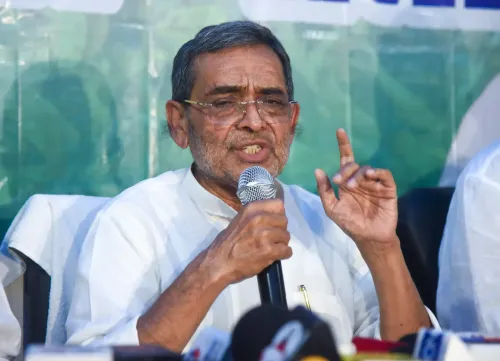
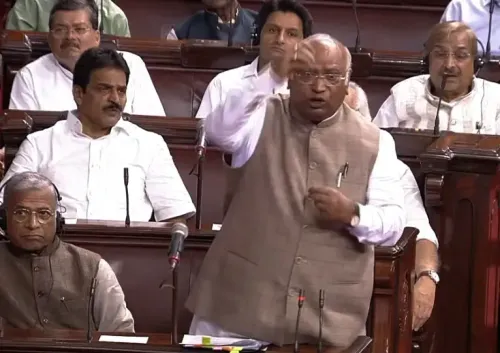
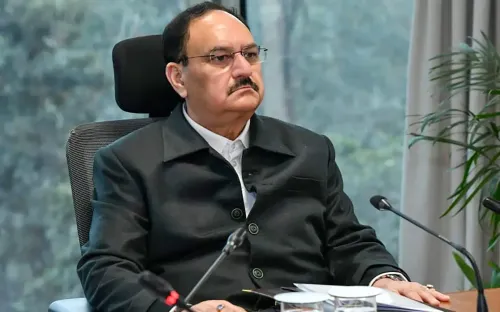
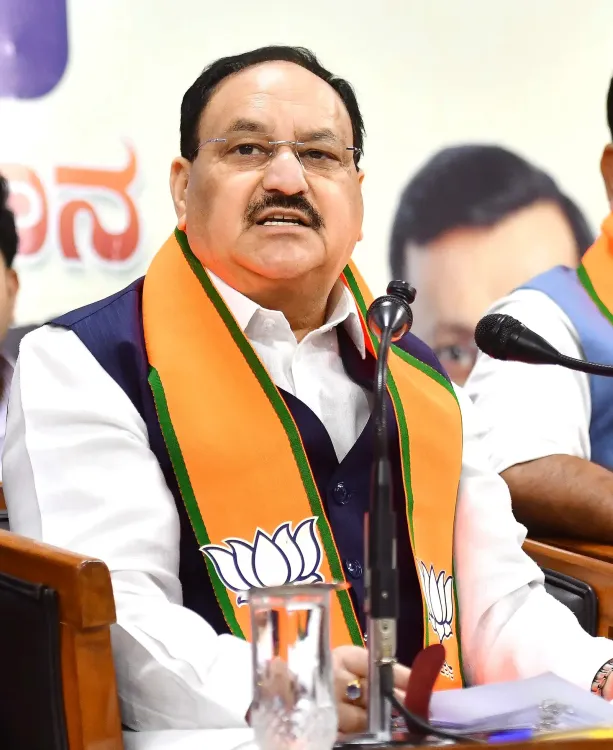
Bharatiya Janata Party (BJP) president and Union Health Minister JP Nadda on Wednesday, 14 October 2026, launched a sharp attack on Congress president Mallikarjun Kharge, accusing him of spreading falsehoods about Home Minister Amit Shah and the ongoing revision of electoral rolls. Nadda flatly denied that Shah had ever described 13.39 crore Indians as 'infiltrators,' calling the characterisation a deliberate distortion.
What Nadda Said About the ASDD Categories
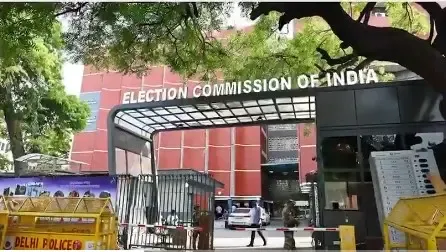
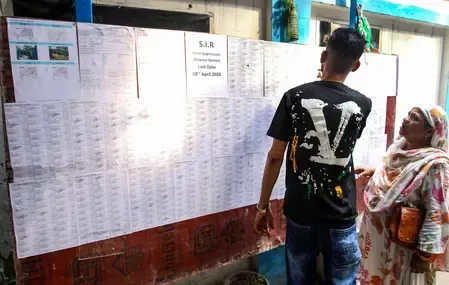
At the centre of the dispute is the Special Intensive Revision (SIR) process conducted by the Election Commission of India (ECI). Nadda clarified that the 13.39 crore names flagged in the draft electoral rolls were not a final exclusion list but were categorised under the absent/shifted/dead/duplicate (ASDD) classification — a standard ECI mechanism for cleaning voter databases.
According to Nadda, the breakdown stood as follows: 2.80 crore deceased persons, 6.30 crore who had permanently relocated, 3.01 crore marked absent, and 1.02 crore duplicates. He argued that attributing political motives to a routine electoral housekeeping exercise was misleading.
BJP's Electoral Record Cited as Counter-Argument
Nadda dismissed the Congress charge that the BJP's popularity was artificially manufactured through the SIR process, pointing out that the mechanism only came into effect after 2024. He noted that the Congress had failed to win power in Gujarat for 31 years, had not produced a Chief Minister in Tripura for 33 years, and had not secured a victory in West Bengal for 54 years — all predating SIR by decades.
He further argued that Congress's repeated losses in states such as Bihar, Uttar Pradesh, and Maharashtra reflected a genuine erosion of public trust that could not be reversed through what he called 'misleading propaganda and negative politics.'
Nadda's Message to Rahul Gandhi and the Opposition
Nadda directly addressed Congress leader Rahul Gandhi, urging the party to focus on rebuilding voter confidence rather than using SIR as, in his words, 'a pretext to shield infiltrators and spread confusion.' The remark sharpens the BJP's line that the Congress is defending the status quo on voter rolls for political benefit.
Reiterating confidence in the ruling alliance, Nadda declared that public trust remained with Prime Minister Narendra Modi, the BJP, and the National Democratic Alliance (NDA). He predicted that the NDA would form the government with a 'massive majority' in 2029, while the Congress, he said, would suffer its fourth consecutive national electoral defeat.
'The reality of the public mandate cannot be altered by mere allegations,' Nadda said.
The Broader Political Context
The exchange is part of an intensifying national debate over electoral roll integrity ahead of scheduled assembly elections in several states. The ECI's SIR process — which involves door-to-door verification of voter registrations — has become a flashpoint, with the Congress alleging selective deletions and the BJP defending it as a legitimate cleansing exercise. This is not the first time the two parties have clashed over electoral roll methodology; similar disputes arose during the 2019 and 2024 general election cycles. With 2029 on the horizon, the stakes around the credibility of voter lists are only likely to rise.
Point of View
Nadda attempts to reframe a politically charged allegation as an administrative misreading. But the underlying tension is real: large-scale voter-roll revisions ahead of elections always carry the risk of disenfranchisement, and the Congress's demand for transparency is not unreasonable on its face. What is missing from Nadda's rebuttal is an independent verification mechanism — the ECI's own assurances about the ASDD process have historically been difficult for ordinary voters to scrutinise. The 2029 framing is deliberate: both parties are already fighting the next general election on the credibility of electoral institutions, and the voter-roll dispute is a proxy for that larger contest.
NationPress
15 Oct 2026
Frequently Asked Questions
What did JP Nadda accuse Mallikarjun Kharge of?
Nadda accused Kharge of spreading false claims by alleging that Home Minister Amit Shah had labelled 13.39 crore Indians as 'infiltrators.' Nadda argued that Shah made no such statement and that the figure relates to a routine ECI voter-roll category, not an exclusion list.
What is the ASDD category in the electoral rolls?
ASDD stands for absent/shifted/dead/duplicate — a standard Election Commission of India classification used during voter-list revisions to flag entries that may need to be removed or updated. According to Nadda, the 13.39 crore flagged names fall into this administrative category, not a final deletion list.
What is the Special Intensive Revision (SIR) process?
The Special Intensive Revision is an ECI-conducted exercise involving door-to-door verification of voter registrations to ensure electoral rolls are accurate and up to date. Nadda stated that SIR only came into force after 2024, making it irrelevant to BJP's earlier electoral dominance in states like Gujarat and Tripura.
Why is the Congress contesting the electoral roll revision?
The Congress, led by Kharge, has alleged that the revision process is being used selectively and could lead to the deletion of genuine voters — particularly from marginalised communities. The BJP has rejected these claims as politically motivated misinformation.
What did Nadda say about the 2029 general election?
Nadda predicted that the NDA would win the 2029 general election with a massive majority, while the Congress would suffer its fourth consecutive national defeat. He linked Congress's repeated state-level losses — including in Gujarat, Tripura, and West Bengal — to a broader erosion of public trust that predates the SIR process.